MY sister is getting married soon and we could not be more excited to welcome a new member into the family.
Though the date is fast approaching, my sister and her fiancé have seamlessly prepared almost everything without burdening the family too much.
While I understand where my sister’s strong will comes from, I could not just sit back and do nothing.
So when my father was looking for someone who could make a large batch of tuak, I instantly thought of my maternal grandmother.
Personally, I think her tuak is the best I have ever had. Her recipe was passed down from her mother and has been in the family for generations.
To make the tuak for my sister’s wedding even more special, I wanted to make the entire batch myself.
Here’s a glimpse of my experience learning the entire process from my grandmother as she, in turn, passed down her ‘special’ recipe to me.
The traditional rice wine
The Dayak have always treasured every bit of their traditions and culture. Tuak is no exception.
The traditional rice-based alcoholic drink is widely known as tuak, but among the Bidayuh, particularly where I come from in Serian, we call it injok.
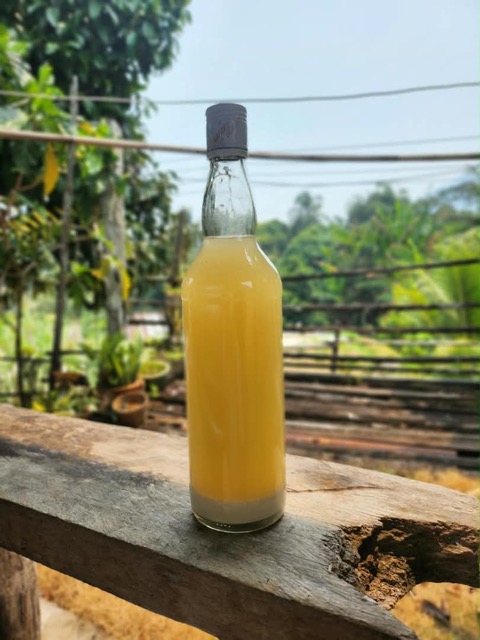
So, for the purpose of this article — and since this is my story after all — let’s call it injok.
The taste, strength and process of making injok can vary from one family to another, with recipes and techniques often passed down through generations.
While preparing the ingredients, my grandmother told me there were also certain traditional beliefs or taboos to observe when making injok.
In this modern day and age, some of them may sound a little strange. But then again, injok has been around for generations.
Besides, my grandmother has been making it for more than 30 years. I figured she knew better than I did.
“Never eat or drink anything sour before making injok. Don’t place the water container near anything sour.
“And don’t make injok if someone has died in the area where you are making it,” she told me.
But those are the beliefs she follows. After all, different families may have their own taboos when it comes to making injok.
It has to be the right ragi
My grandmother has always made the same amount of injok. Never less, never more. Her ingredients have never changed either.
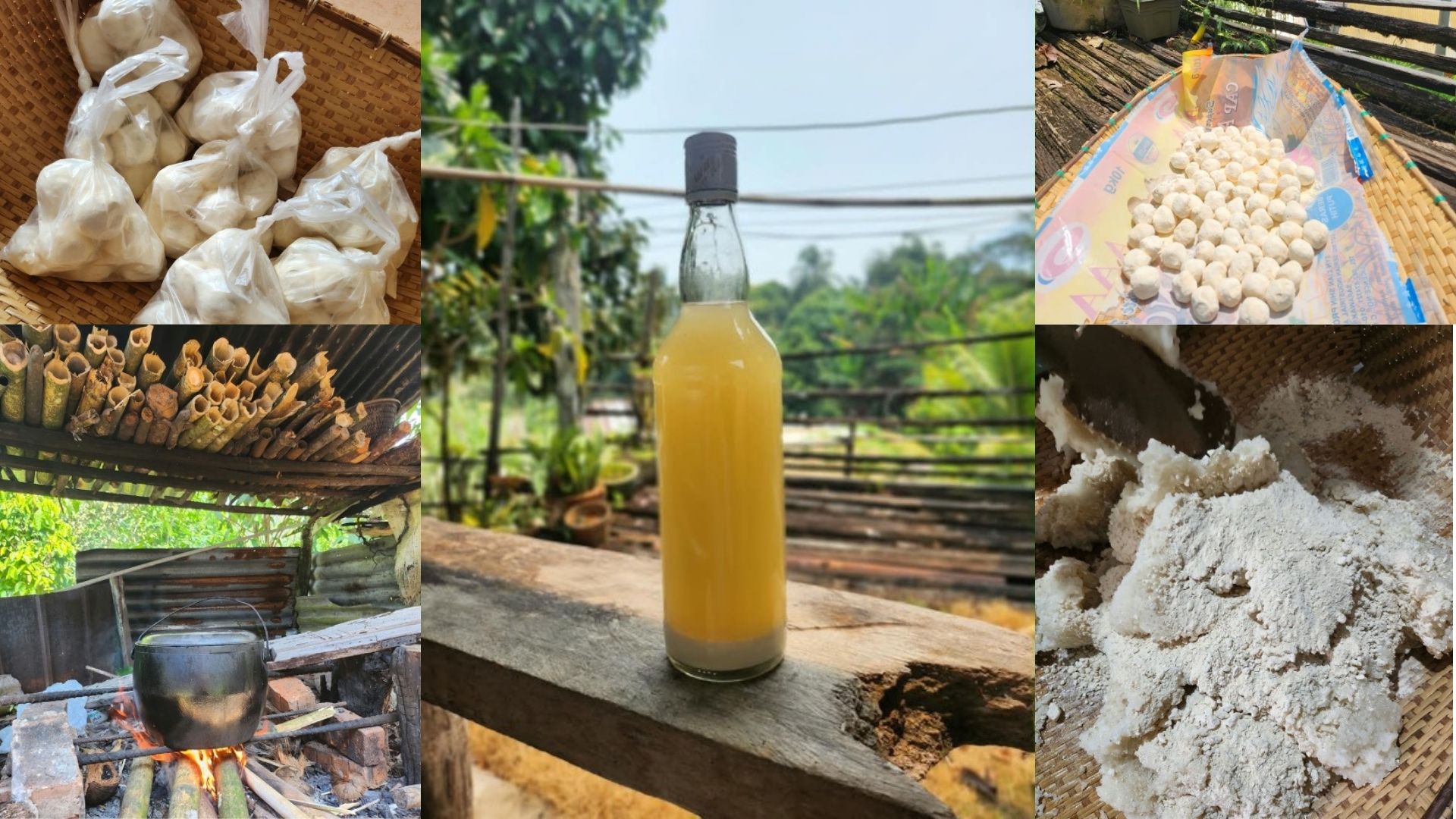
She specifically told me that for her version of injok, I would need four kilogrammes of glutinous rice, four packets of ragi — a traditional fermentation starter — and about four to five kilogrammes of sugar.
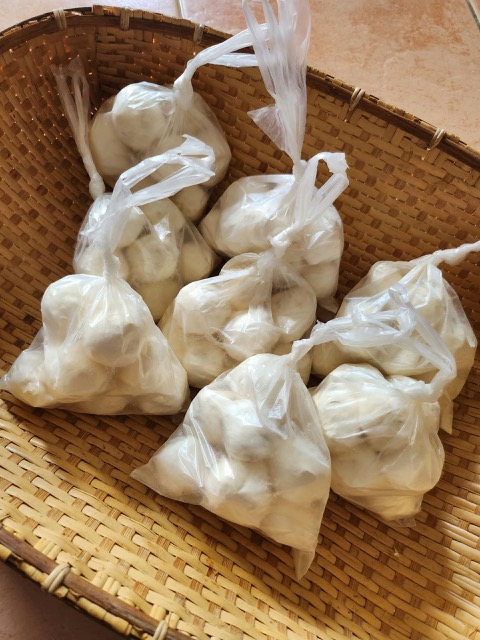
It sounded simple enough, but apparently, my grandmother was quite particular about her ingredients. She only wanted the ragi from one old Chinese shop in Serian town.
When we got there, however, the shop was still closed. I tried convincing her to use another type of ragi, particularly the flatter ones commonly sold elsewhere.
We went from shop to shop looking for it but had no luck. At one point, a shopkeeper jokingly told us: “Tak apalah, tak payah minum tuak. Minum langkau saja.” (It’s okay, no need for tuak. Just have langkau instead)
It was then that it struck me — unlike other alcoholic beverages, injok was not something you could easily find on shop shelves.
With no other choice, we waited for my grandmother’s preferred shop to open.
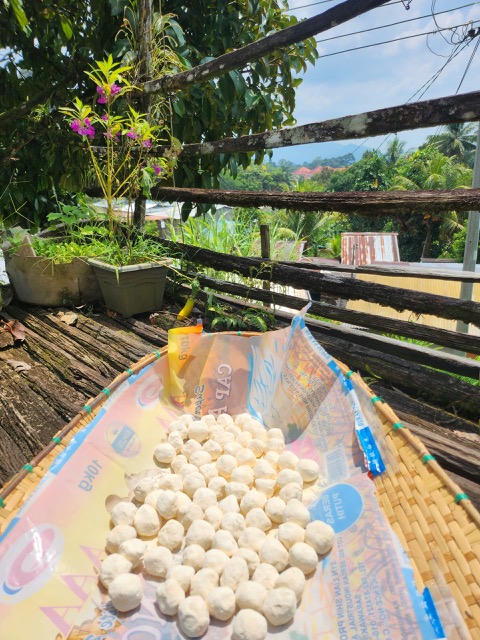
When it finally did, even my grandmother was surprised by the size of the ragi balls.
Each was now only about the size of a ping-pong ball — roughly half the size of what she remembered buying in the past.
“They used to be much bigger. The world really has changed. Looks like we have to double the amount of ragi.
“Last time, 10 big ragi balls cost me RM10. Now, they have shrunk to half the size, but the price remains the same,” she sighed.
From rice to fermentation
With the ingredient hunt finally over, we rushed home to begin my ‘learning’ process.
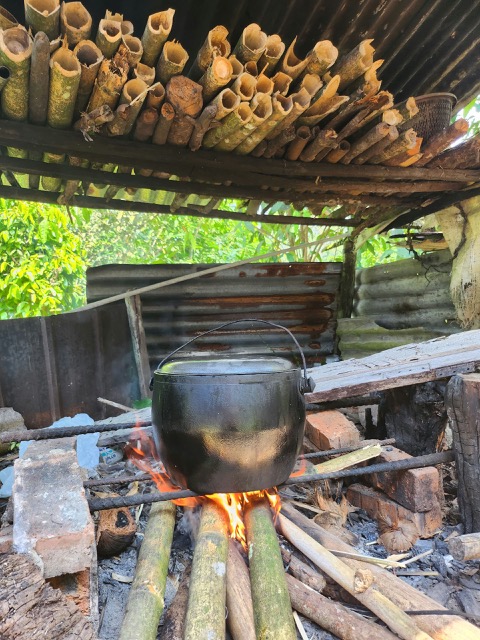
While I washed the glutinous rice to remove any impurities and excess starch, my grandmother started a wood fire behind the house. Yes, a wood fire.
“We could cook the glutinous rice in a regular rice cooker, but it would take us ages. Cooking it over a wood fire is simply faster,” she told me.
And there I was thinking it had something to do with the flavour or perhaps another taboo.
To my surprise, it took only about 30 minutes to cook.
The cooked glutinous rice was then spread over a traditional winnowing tray, or tampi as we call it in Bidayuh, to help it cool faster.
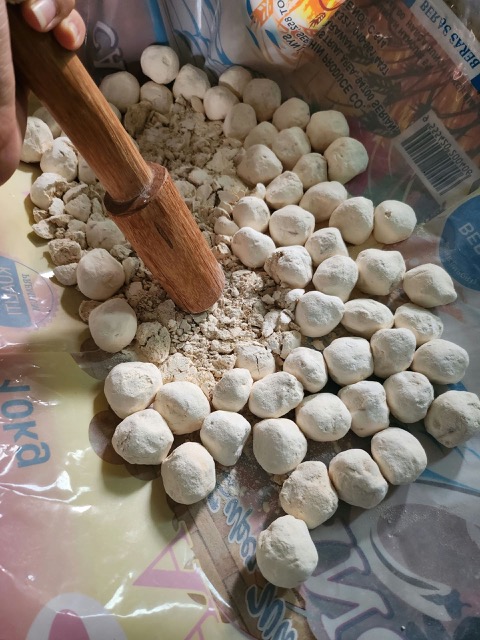
Meanwhile, the ragi balls were left to dry under the sun, making them easier to pound into a fine powder later.
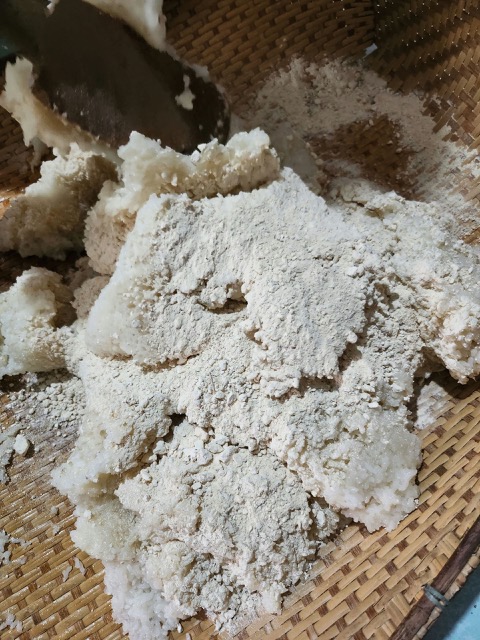
Once the glutinous rice had completely cooled, the powdered ragi was sprinkled over it before everything was mixed thoroughly.
The final step of this first phase was to transfer the mixture into a large plastic container, where it would be left to ferment.
My grandmother said people nowadays simply use plastic containers, unlike in the past when traditional earthenware jars, or tempayan, were used.
“Back then, we didn’t have plastic containers, so people used tempayan.
“For me, it has nothing to do with the flavour. It is simply what we use to store the injok,” she said.
The waiting game
I’m not sure about other families, but for my grandmother’s recipe, she said the mixture should be left to ferment for four nights before the sugar syrup was added.
Not a night less, not a night more.
And just like any other Asian mother, my grandmother relied on the art of “agak-agak” — estimating by instinct, feel and sight rather than following precise measurements.
I had bought eight kilogrammes of sugar for the batch, but that did not mean we were going to use all of them.
As she brought two large pots of water to a boil, she added the sugar based on her own estimation.
In the end, she used about five kilogrammes.
Once the syrup had completely cooled, it was poured into the plastic container with the fermented glutinous rice.
Then came another four nights of waiting.
When I asked whether she had ever considered making infused injok, my grandmother said she preferred to keep hers original.
“I’ve tried infused injok before, but for me, nothing beats the taste of the original rice injok’,” she said.
After the second four-night wait, my first batch of injok was finally ready to be bottled.
My grandmother was particular about this too. The injok had to go into glass bottles, never plastic ones.
By the end of it, we had filled 22 bottles.
They have since been sent to my father’s house, where they now sit waiting for my sister’s wedding day.
What started as my small contribution to her wedding turned into a chance to learn a family recipe that had passed from my great-grandmother to my grandmother, and now to me.
Whether my first batch tastes as good as my grandmother’s, I will leave that to the wedding guests to decide.
But at least the next time my father needs someone to make a large batch of injok, he knows he has another person to call.