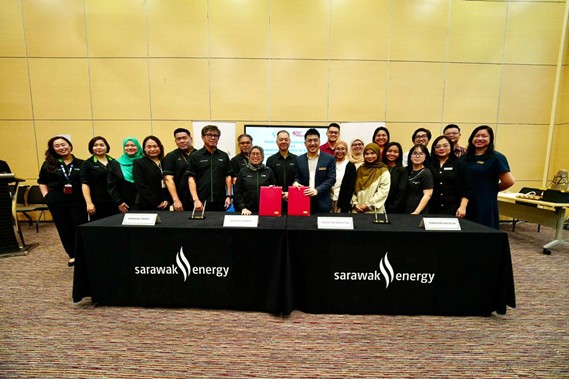
KUCHING: The federal government should consider Sarawak’s standardised assessment, developed with Cambridge University Press and Assessment (CUPA), as a national model to strengthen the country’s education system.
Universiti Malaysia Sarawak (Unimas) senior lecturer in Economics, Dr Dzul Hadzwan Husaini, said the assessment, mandatory for all Primary 6 and Form 3 students in Sarawak, could serve as a benchmark to fill the gap left by the abolition of Primary School Achievement Test (UPSR) and Lower Secondary Assessment (PMR).
“The decision to abolish public exams aimed to reduce academic pressure but created a void in performance benchmarks.
“I propose that a new formative and diagnostic assessment mechanism be introduced to provide students and teachers with a clear direction.
“Sarawak’s Ujian Penilaian–Dual Language Programme (UP-DLP) assessment should be emulated and used as a national reference model in developing a quality assessment system and strengthening education through evaluation.”
In supporting the Education (Amendment) Bill 2025, which makes secondary education compulsory, Dzul described it as a strategic step to address dropouts and ensure equitable access.
However, he said its success depends on tackling the root causes of dropouts, particularly poor mastery of basic literacy and numeracy skills (3M).
“Much of the curriculum content is too complex and unsuitable for primary school pupils. The focus must return to mastering the basics of 3M.
“If this foundation is not built, students will lose interest and confidence to continue their studies at the secondary level.”
Citing the Programme for International Student Assessment (PISA) 2022 report, he noted Malaysia’s decline in Mathematics, Reading, and Science compared to 2018, with performance lagging behind Vietnam and Thailand.
He urged curriculum reviews to ensure primary content matches student ability, and called for intervention programmes combining academic recovery, psychosocial support, and early risk detection, especially in rural areas.
He also proposed more investment in rural secondary schools and stronger Technical and Vocational Education and Training (TVET) pathways for non-academic students.
“Making secondary education compulsory is a bold step, but its effectiveness depends greatly on addressing the root causes of dropout issues.
“Our education system must be responsive and centred on the needs of students. If the foundations are strong, I am confident that more Malaysian children will remain in school and contribute to the nation’s future.”