“Olakaseh.”
That was the first word I said to my son when the doctor placed him in my arms.
You would think that after nine months of preparation, some other profound word would have been uttered — not his name, not “hello” — but something so Sarawakian instead. The word loosely translates as “poor thing”.
And somehow, as though he understood that it was his cue to enter the world properly, Rafael let out his first cry.
If a wish-granting genie were to ask me what I would want for my first Mother’s Day, I would ask to be taken back to those early days of motherhood.
I would hold those blissful newborn months differently — be less afraid and less uncertain while navigating that strange new territory.
I would slow down and soak it all in more than I did the first time.
I would endure the broken sleep with a fresh kind of enthusiasm, knowing now just how fleeting those nights were.
Because no one really warns you how quickly your first baby grows.
They say it, of course, but they say it so casually and lightly, as though it is something you can simply acknowledge and move past.
“Enjoy every moment,” and “They grow up so fast,” they say.
You nod politely, thinking you understand what they mean — but you do not.
Not until you find yourself awake at odd hours of the night, scrolling through photos of your newborn — pausing at each one, studying the tiny hands, the soft cheeks, the stillness — and wondering where that version of your baby went.
Not until you realise you are grieving something that was never really lost, just transformed.
No one tells you that part of motherhood involves quietly mourning versions of your child who still exist.
There are moments in the day when I catch a quiet glimpse of the kind of mother I am slowly becoming.
Not in the big, celebrated milestones that everyone talks about, but in the small, almost unnoticed spaces in between — where time seems to pause just long enough for me to take it all in.
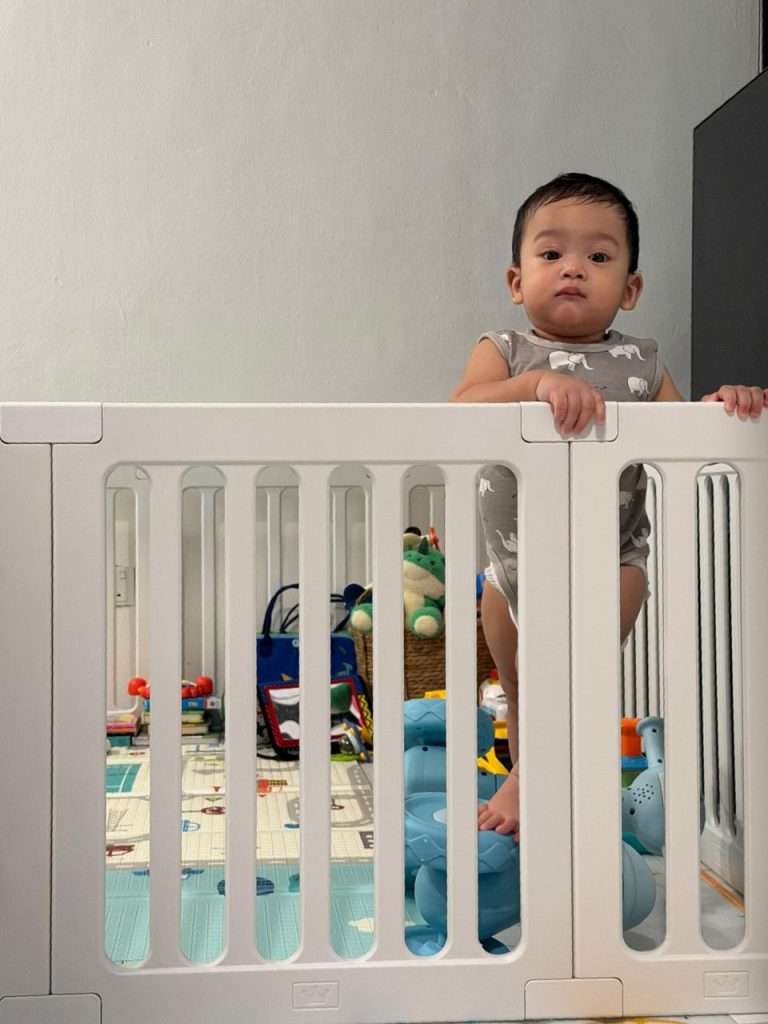
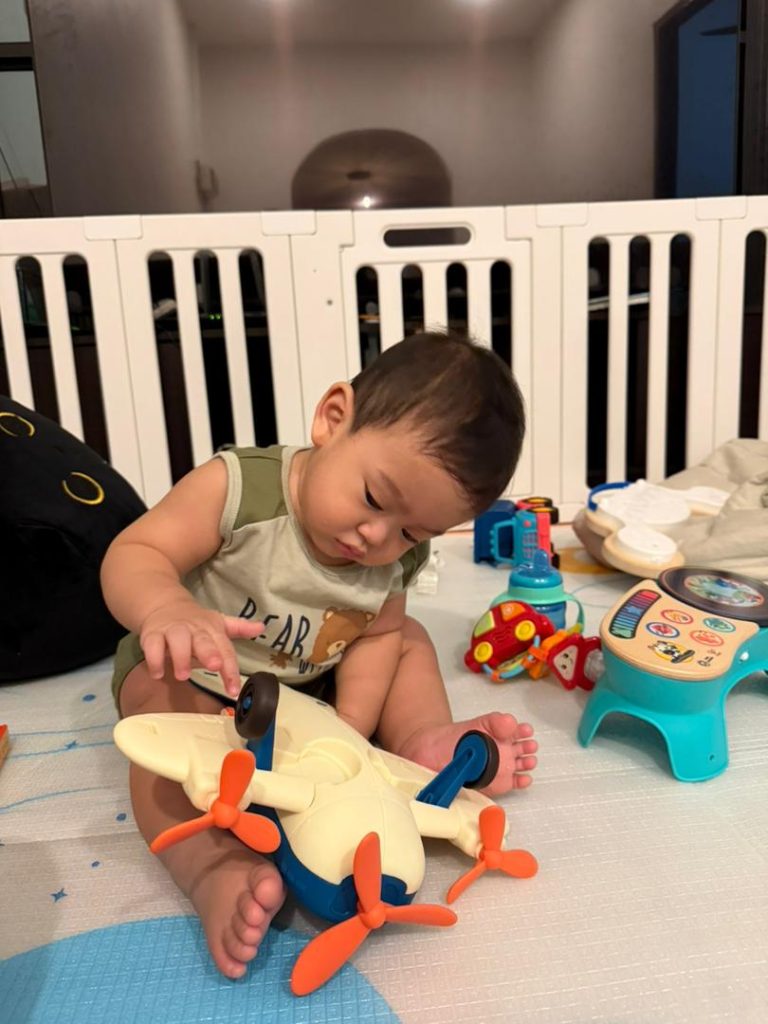
Sometimes it is something as simple as watching Rafael sit in his playpen, flipping through the pages of a book — sometimes upside down — as though he fully understands every word and picture within it.
And just like that, my mind drifts back to not so long ago, when he was barely two months old, lying in my arms as I read those same books to him.
Back then, he needed me to turn the pages.
Now, he sits on his own, deciding when to turn the page, when to linger and when to move on.
Motherhood, it turns out, carries a quiet and unexpected kind of heartbreak.
And yet, in between those moments of stillness and reflection, life does not pause.
Emails still need replies, stories still need filing, and calls still come in — relentless and unbothered by nap times, feeding schedules or the unpredictable rhythm of a baby’s day.
There are times when Rafael’s soft babble becomes the uninvited — but strangely comforting — background to a phone call.
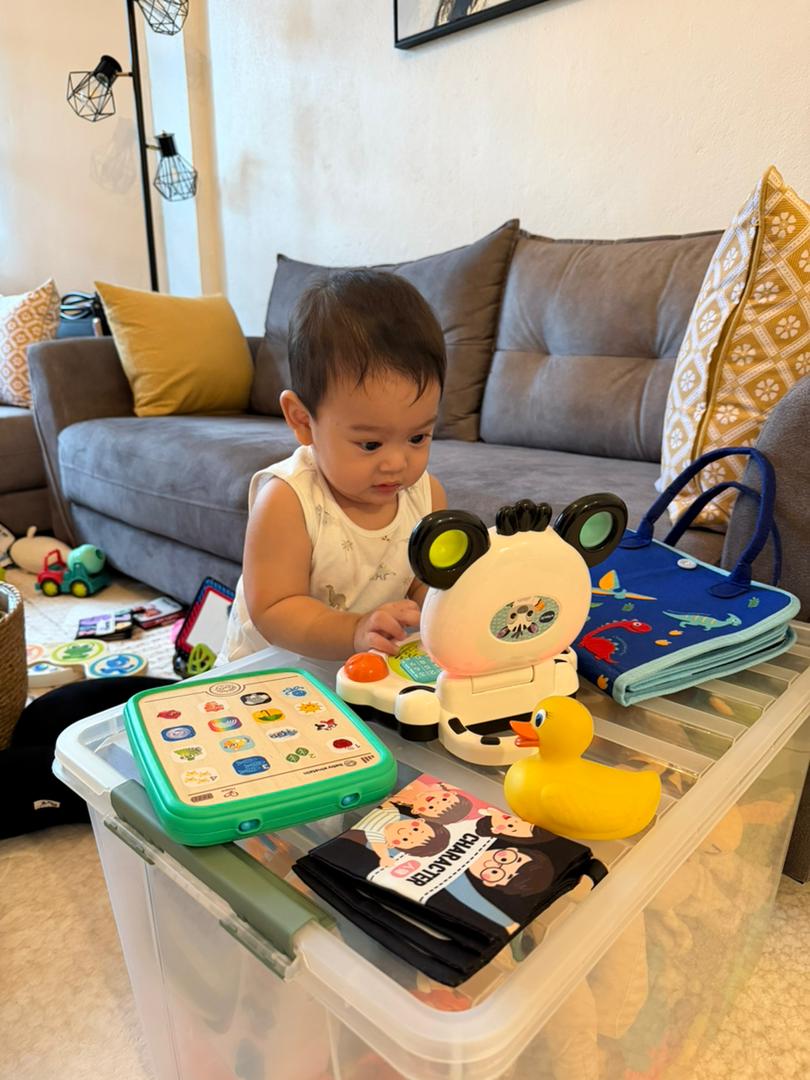
Other times, I glance over and see him tapping away on his toy laptop with an intensity that suggests he, too, has deadlines to meet.
It is adorable, but also slightly concerning.
Because it dawns on me that he is watching, observing, absorbing and learning in ways that go far beyond what I can see.
And suddenly, motherhood feels less like something I am actively doing and more like something I am constantly and quietly modelling.
I suppose it is easier for him to copy me than his father.
After all, we cannot exactly park a Beechcraft King Air in our living room for daily demonstrations of what flying an aircraft looks like.
If motherhood has taught me anything so far, it is this: certainty is overrated.
I once believed instinct would guide me clearly through every cry, every decision and every milestone.
Instead, it often feels like being handed a lifelong assignment without a briefing, instructions or a clear endpoint — except that everything always feels urgent.
Just when I begin to feel as though I am finding my footing, Rafael changes again.
A new phase, a new rhythm, a new personality emerging almost overnight.
Lately, that personality comes with strong opinions.
Rafael has discovered that he can say “no” — not with words, but with a firm and deliberate shake of his head that leaves very little room for interpretation.
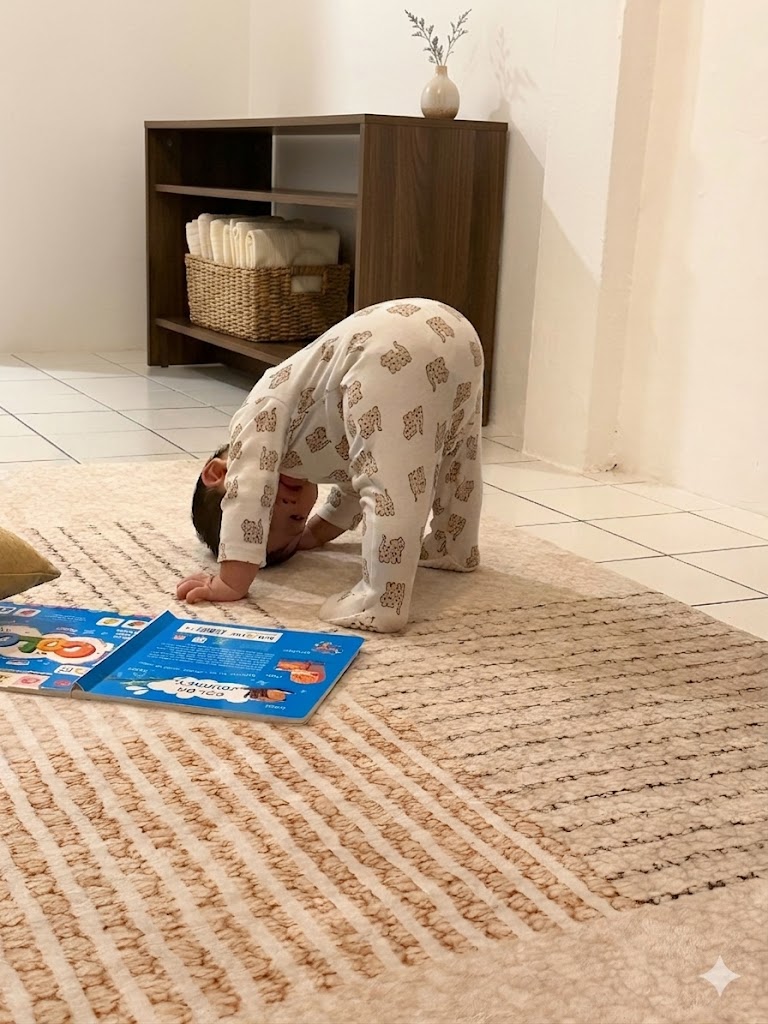
If he does not want something, he makes it known.
If he does not want to sleep, he makes it even clearer.
I used to think tantrums arrived with the so-called “terrible twos”.
Apparently, no one informed him of that timeline.
He has already become remarkably skilled in what I can only describe as crocodile tears — appearing at just the right moment, convincing enough to make you pause and question your own decisions.
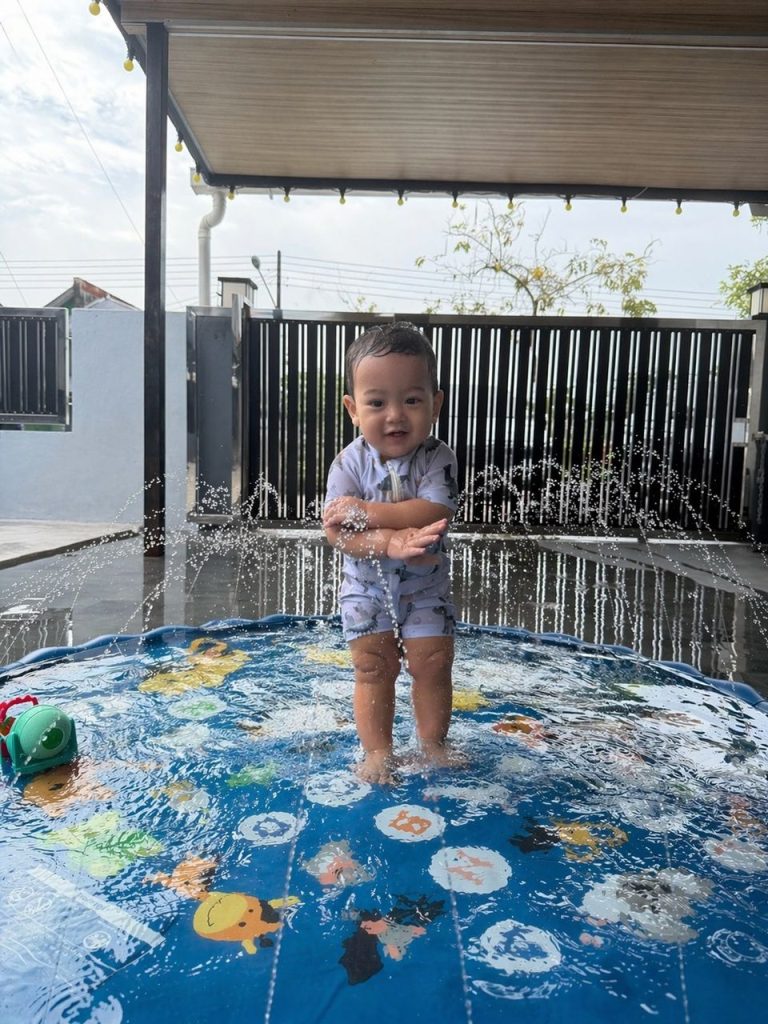
At the same time, he moves through the world with a kind of fearless curiosity.
He is not afraid of strangers — especially pretty girls, who seem to gravitate towards him anyway.
And when he is not charming them, he is busy conducting what I have come to recognise as his daily “physics experiments”.
There is a method and pattern to it, even if it appears chaotic.
He bangs his toys together, throws them, watches where they land, walks over to retrieve them, and repeats the entire process again and again — as though testing a theory only he understands.
More often than not, this results in most of his toys being flung out of his playpen, leaving me to pick them up while he watches, quietly satisfied with the outcome of his “research”.
I cannot wait for the day those experiments evolve into learning how to put his toys away.
While my mother would rather keep him close and protected, I often joke that I am raising him like a kampung chicken — free-range, curious and given the space to explore.
Not because I am any less careful, but because I am learning that growth often happens in those small moments when you step back just enough to let them try.
Rafael, in his own determined way, has certainly taken that space and run with it — quite literally.
He began crawling at just four months old, and before I could fully process that stage, he had already decided it was time to move on.
By the time he turned eight months, he was walking as though he had somewhere to be and no time to wait.
At his most recent check-up, he insisted on walking into the paediatrician’s room on his own.
What I thought would be a simple, proud moment turned into a slightly longer journey than expected.
He kept stopping to wave at strangers, taking wrong turns and wandering off with the confidence of someone who clearly had a destination in mind — but not quite the right one.
And yet, there he was — determined, unbothered and entirely convinced he knew where he was going.
Much of what I understand about motherhood is shaped by the woman who raised me.
My mother is the eldest of 12 siblings, and responsibility came early.
Caring for others was not something she learned; it was something she lived, day in and day out, long before motherhood was officially hers.
When it was finally her turn to have a family of her own, she decided two children were enough.
So my sister and I were raised with structure, attentiveness and a steadiness that reflected the years she had already spent looking after others.
Now, watching her with Rafael, I see that same instinct come alive again.
She is gentle, cautious and deeply protective.
She coddles him, carries him and is always ready to step in at the slightest sign of discomfort.
She does not like to see him fall, hear him cry or experience any inconvenience at all.
And then there is me — letting Rafael roam free like a kampung chicken, with the occasional bumps and tumbles that sometimes leave him with a few bruises.
Like a true modern mother, I have an app that logs Rafael’s sleep, milk intake, meals and even how many wet nappies he has had.
It tells me when his next nap should be, when bedtime is approaching, and occasionally makes me feel as though I am managing a very small and unpredictable project.
The app might suggest it is time for him to nap, but Rafael often has other plans.
He would much rather continue playing or making laps around the house, even though it is painfully obvious he is running on fumes.
My mother, on the other hand, keeps things simple.
“He will sleep when he is tired and done playing,” she says.
No app, no reminders, no data — just instinct.
Somehow, she says it with a level of certainty I am still trying to learn.
People often ask when we will have a second baby.
“Not so soon,” we say.
Beneath that answer lies something more difficult to articulate, because this — right now — feels like a bubble.
One filled with firsts, uncertainty and discovery that I am not quite ready to let go of.
I know that if there is a second or third child one day, things will be different.
We will be more experienced, more prepared and less uncertain — perhaps confident enough to call ourselves “pros”.
That thought always brings with it a quiet sadness and the realisation that Rafael will always be the one we learned on, through trial and error.
Before I became a mother, I did not know it was possible to feel this kind of love.
To be needed so completely. To be loved so purely and honestly, without expectation.
Maybe he did not get the “perfect” version of me, but he got something else.
He got all my firsts — my learning, my uncertainty and my wonder.
Even on the busiest days, when the newsroom calls and deadlines do not wait, there is one thing I know for certain: Rafael comes first.
I hope that as he grows, he will always know that he is loved deeply and unconditionally — even as I am still learning, every single day, what it truly means to be his mother.