KUCHING: Sarawak is pushing forward with wide-ranging financial reforms aimed at strengthening transparency, accountability, and efficiency in the management of public resources.
Premier Datuk Patinggi Tan Sri Abang Johari Tun Openg stressed that while revenue generation is important, effective management of resources will determine the pace and quality of Sarawak’s development.
“In 2019, we introduced a five per cent sales tax on petroleum products, which has since contributed RM28.5 billion to the State’s coffers. But raising revenue is only part of the equation.
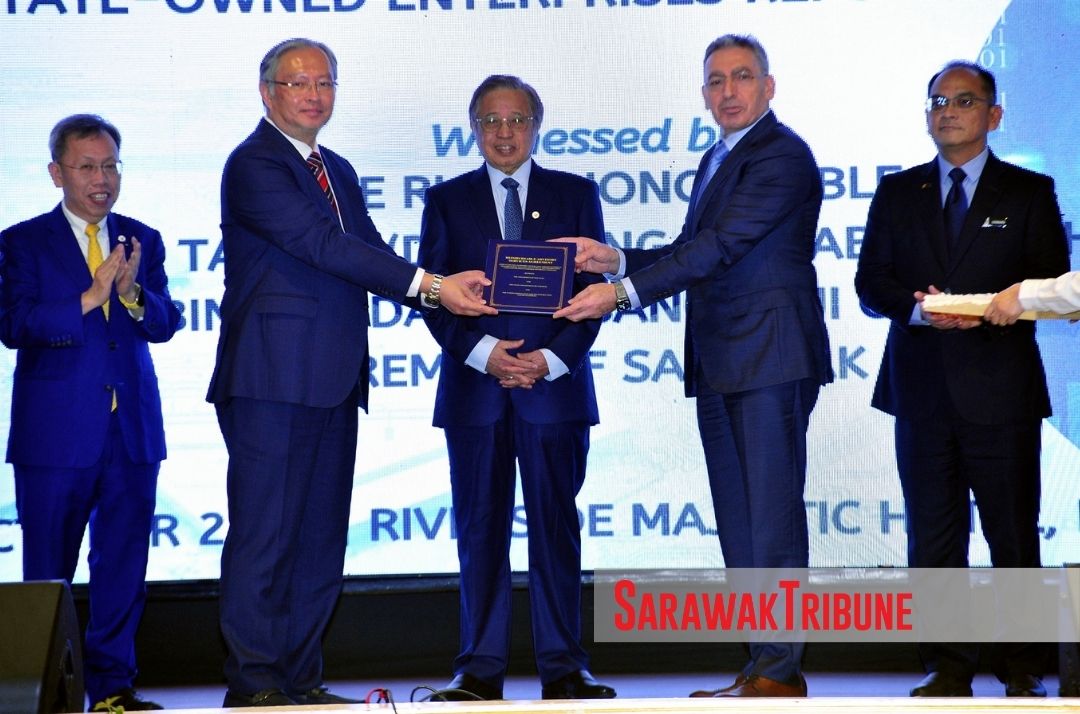
“The real challenge is to manage these resources efficiently and deliver tangible results for the people,” he said at the Memorandum of Agreement (MoA) signing between the World Bank and Ministry of Finance (MOF) on Result-Based Budgeting and SOES Transformation at Riverside Majestic Hotel today.
Under the 12th Malaysia Plan, RM40 billion has been allocated for Sarawak’s development agenda, with further allocations expected in the 13th Plan to ensure the State remains ready and well-resourced to sustain momentum toward its 2030 vision.
To this end, Sarawak has engaged the World Bank to support reforms through the Public Financial Management Transformation Programme, which focuses on managing fiscal risks and introducing Results-Based Budgeting (RBB).
“RBB is not simply a new way of preparing budgets; it is a new way of governing.
“It links every ringgit spent to measurable outcomes and shifts the focus from what we are spending on to what we are achieving,” he said, adding that this approach embeds accountability at all levels of government.
He called on ministries, departments, and State-owned enterprises to align their programmes with Sarawak’s Post COVID-19 Development Strategy (PCDS) 2030, stressing that resource allocation must be guided by results rather than inputs.
In parallel, Sarawak is also advancing the adoption of the Malaysian Public Sector Accounting Standards (MPSAS) across statutory bodies and local authorities, moving away from the Malaysian Private Entities Reporting Standard (MPERS).
He said adopting MPSAS will strengthen financial transparency, enhance accountability, and ensure that public accounts reflect the State’s custodial role over resources.
“This is why the gradual shift from cash accounting to accrual accounting under MPSAS is so critical.
“Accrual accounting provides a complete and transparent view of our financial position, showing not only what we spend today, but also what we owe tomorrow,” he said.
He reiterated that these reforms are key to building trust in Sarawak’s financial management and ensuring that public funds are channelled effectively for the long-term benefit of the people.