KUALA LUMPUR: Efforts to ensure Malaysia’s financial stability must be renewed with every generation as the country faces an uncertain global environment.
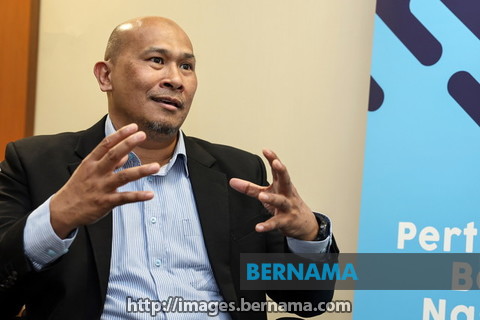
Finance Minister II Datuk Seri Amir Hamzah Azizan reminded industry leaders that stability is built through effort and foresight.
“August reminds us of the spirit of Merdeka and reminds us that resilience and self-determination are not inherited, they are earned.
These qualities are built and renewed through the effort of each generation,” he said. He said this during the National Resolution Symposium (NRS) 2025 held at Connexion Conference & Event Centre here yesterday.
He noted that the Asian Financial Crisis in 1997 fundamentally reshaped Malaysia’s banking system, prompting consolidation, tighter regulation and the creation of Perbadanan Insurans Deposit Malaysia (PIDM).
He added that the Global Financial Crisis in 2008 further underlined the need for reform, strengthening macro-prudential rules and resolution frameworks so that confidence could be preserved without bailouts.
“Today, the results are evident. Commercial banking assets reached RM3.61 trillion in 2024, nearly eight times the level recorded in 1998.
“The resilience is no coincidence. It is the result of reforms, sound regulation, and prudent risk management. It also stems from an industry that prioritises stability,” he said.
Amir Hamzah said that recent bank failures abroad, such as Silicon Valley Bank and Credit Suisse, are reminders of how quickly instability can spread.
Resolution readiness, he stressed, must remain a nonnegotiable priority, embedded in governance, strategy and institutional culture. “Uncertainty is no longer a distant possibility, but a present reality.
Financial stability hinges not only on the strength of individual institutions, but also on the industry’s collective readiness to respond swiftly and effectively to disruptions,” he said. Regional risks, he added, are growing in step with crossborder financial integration.
A recent ASEAN+3 Macroeconomic Research Office paper showed a surge in intra-regional financial intermediation, raising both systemic and contagion risks. This, he said, underscored the need for closer collaboration across ASEAN.
He welcomed the ASEAN Deposit Insurers and Resolution Authorities Roundtable, hosted by PIDM, as a timely effort to strengthen the region’s crisisresponse capabilities. Looking ahead, he said that financial resilience must also support Malaysia’s long-term growth ambitions.
“By 2030, the country aspires not only to become a high-income nation but also to rank among the world’s top 30 economies.” He said the 13th Malaysia Plan (2026–2030) and the MADANI Economic Framework form complementary strategies for achieving this, focusing on productivity, digitalisation, highvalue sectors, inclusivity and governance.
“The financial sector plays a critical role in realising this vision, from supporting small businesses to driving digital innovation and advancing Islamic finance,” he said. As this year marks PIDM’s 20th anniversary, he commended the agency for building public trust, safeguarded depositors and strengthened resolution planning over the past two decades.
He reaffirmed the government’s support for PIDM’s mission, stressing that the stability enjoyed today is the product of foresight and preparation. “Let the seeds of our readiness be sown today, with foresight and resolve, so that the fruits of financial stability may be harvested for generations to come,” he said.