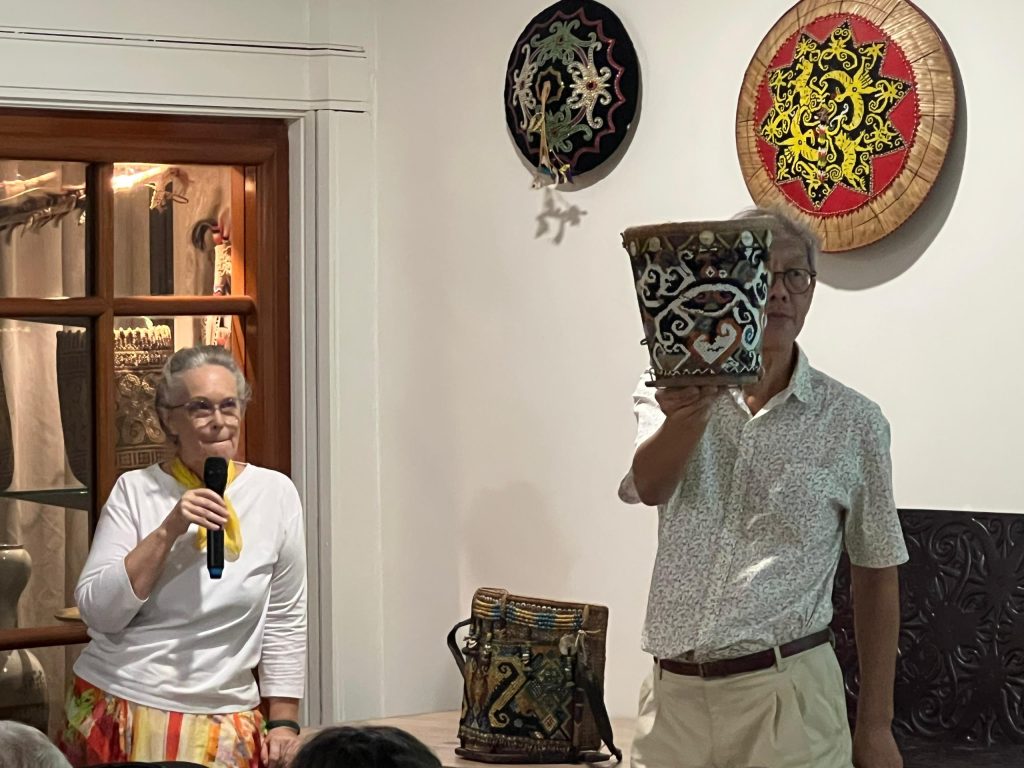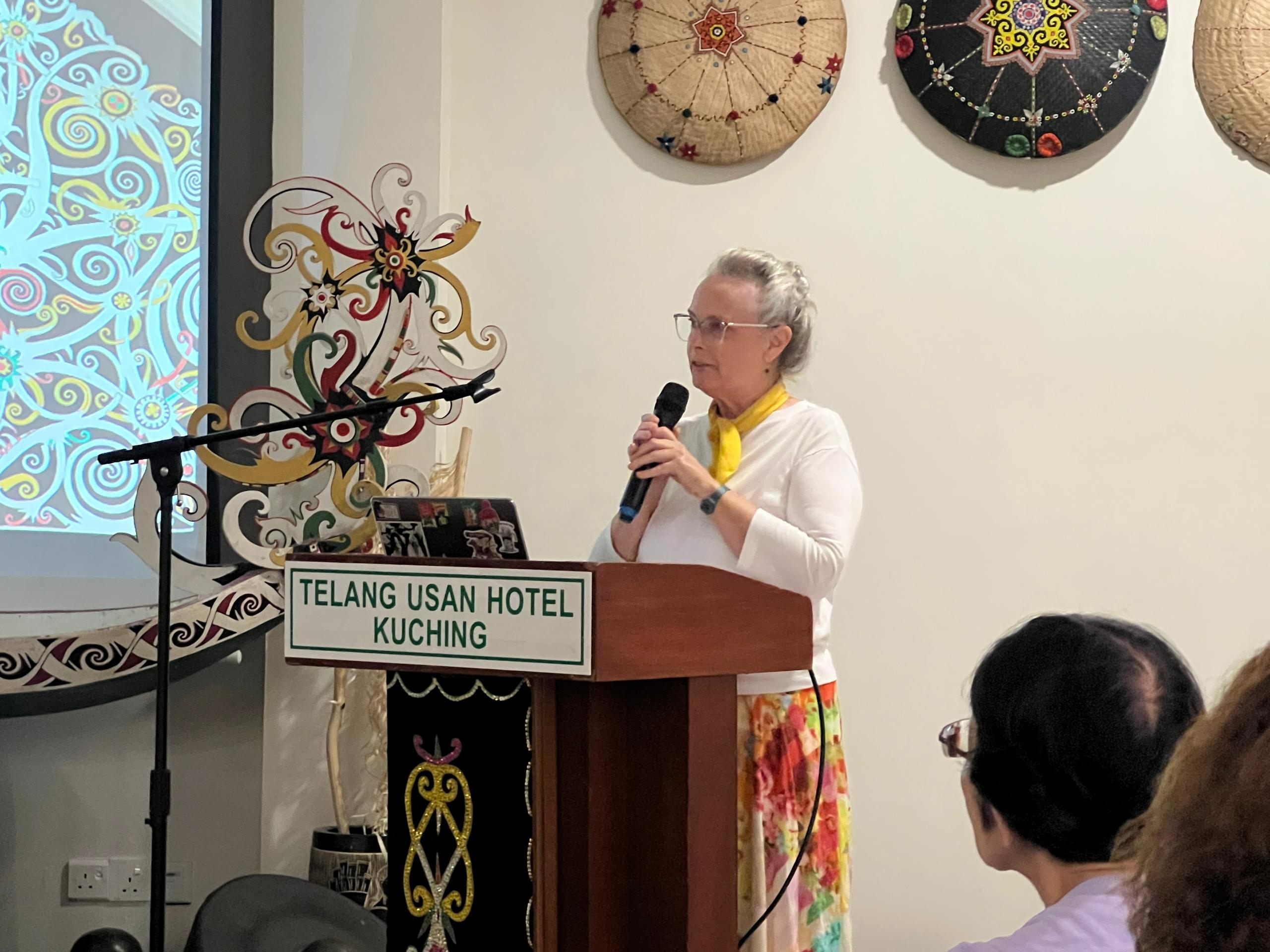
KUCHING: The Friends of Sarawak Museum held a captivating talk yesterday (April 12) at Telang Usan Hotel, where Dr Louise Macul unveiled the long-forgotten stories behind the 1960s murals housed in the Old Sarawak Museum.
The talk, part of the “Museum Talks: Rethinking Roots” series, drew an engaged audience curious about one of Kuching’s most overlooked cultural treasures.
For decades, the only information available about the murals was a tiny sign that read “mural painted Long Nawang, 1960” — but Macul’s research has finally given them a proper history.
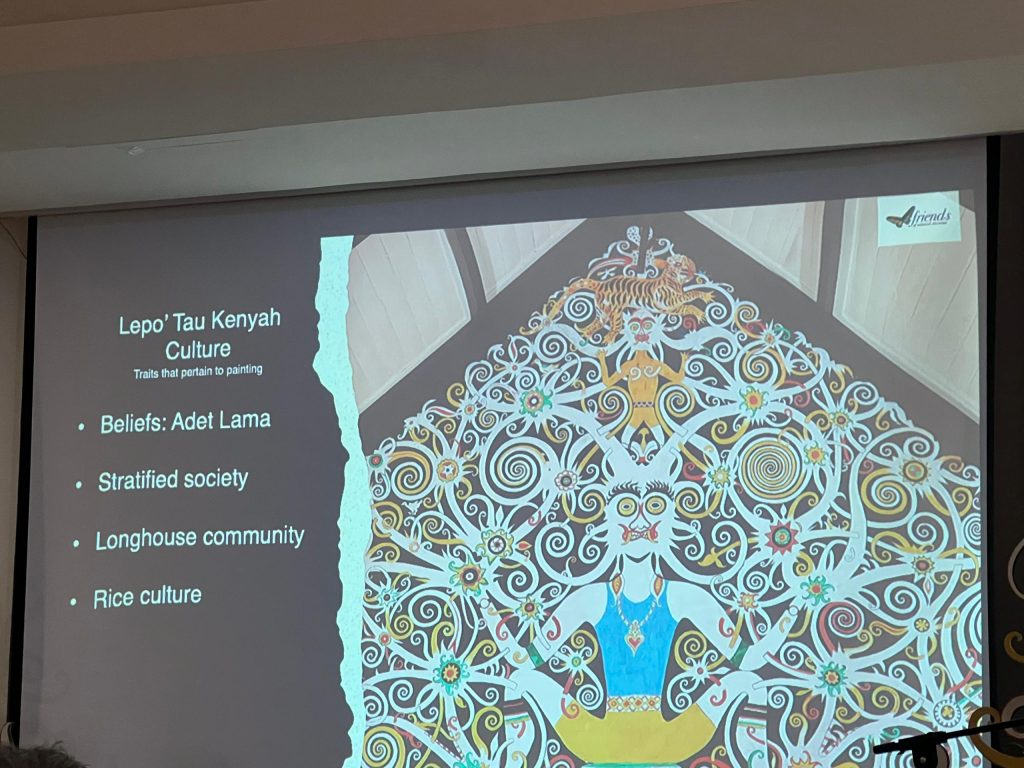
The murals were commissioned by Tom Harrisson, the museum’s curator from 1947 to 1966, who was first inspired by a magnificent Tree of Life painting on a longhouse wall when he was airdropped into central Borneo during World War II.
Around 60 Lepo’ Tau Kenyah men had crossed from Long Nawang in Kalimantan, Indonesia into Sarawak seeking work, driven by the pressures of the Indonesia-Malaysia confrontation and communist unrest near the border.
Harrisson seized the opportunity, inviting a group of artists — Aban Pangin, Saging Laing, Bilong, Bawe Laing, and Gun Along — to paint the murals, which were completed in 1960.
Macul tracked down elders from Long Nawang in Miri in 2020 to confirm the artists’ names, finally solving a mystery that had puzzled museum staff for generations.
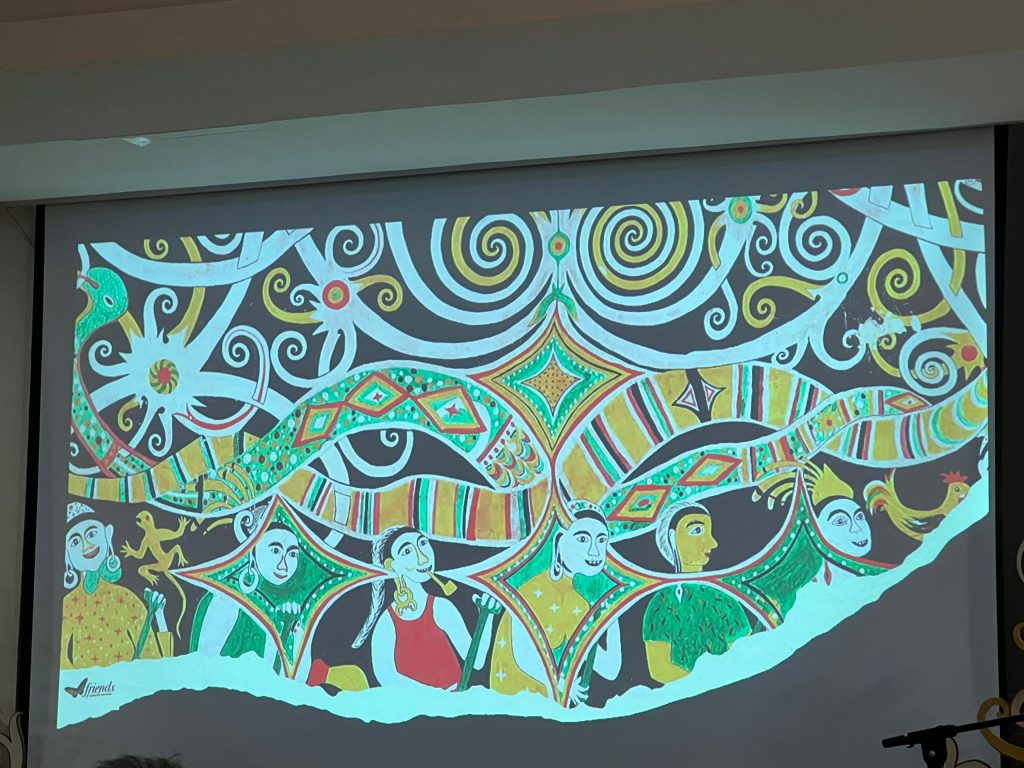
“The four murals are rich in cultural meaning — featuring aristocratic motifs such as the tiger, hornbill, and the Tree of Life, all rooted in the Lepo’ Tau Kenyah belief system known as Adet Lama,” she explained.
One mural remains a particular enigma, appearing to depict an epic river journey while incorporating urban details like a beaded handbag, suggesting the artists wove their observations of modern Kuching into their traditional art.
Macul also shed light on Tusau Padan, a celebrated Lepo’ Tau Kenyah artist who was part of the original group but instead worked in timber — later becoming famous for his carvings, music, and paintings, some of which are displayed in the very hotel that hosted the talk.
“Harrisson was driven by a deep anxiety about the loss of indigenous traditions in what he called the ‘atomic age’, practising salvage ethnography to preserve the culture before modernisation erased it,” she noted.
The murals are now undergoing conservation as part of the museum’s ongoing restoration.
Macul urged the public to visit, reminding the audience that these paintings are not merely decorations — they are, in her words, the footprints of Sarawak’s history.