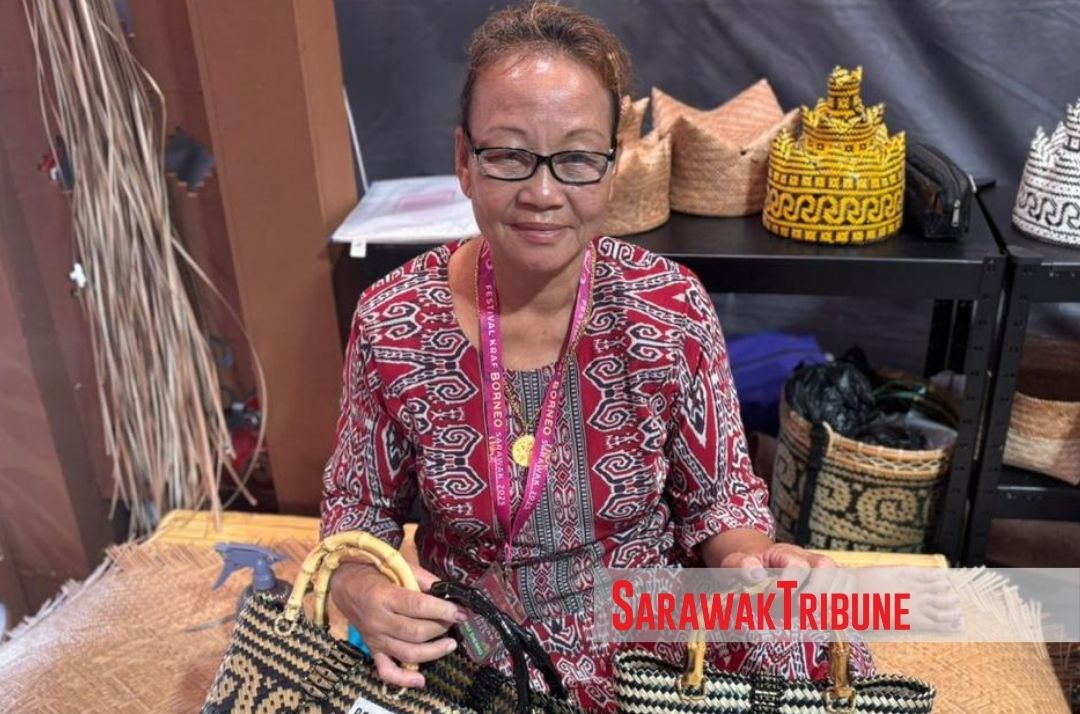
KUCHING: On a spread of intricately patterned ‘tikar bemban’ (bemban mat), surrounded by festival chatter, a woman lets her hands dance gracefully as she weaves together the dried leaves, one strand at a time.
Now in her late sixties, each gentle and precise movement of her hands brings every anyaman (weave) together in a neat and beautiful pattern.
Since the age of 45, housewife Kinchah Gapor has made ‘anyaman bemban’ (bemban weaving) her main source of livelihood.
Kinchah shared that her passion for learning the art of weaving was born from her deep love for handicrafts since her younger days.
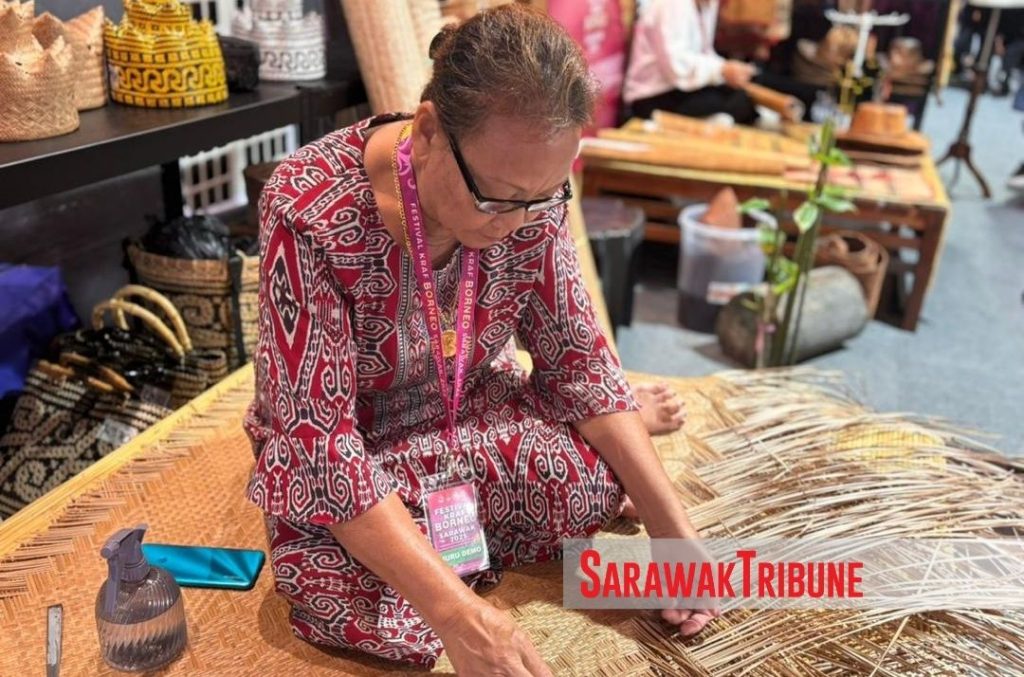
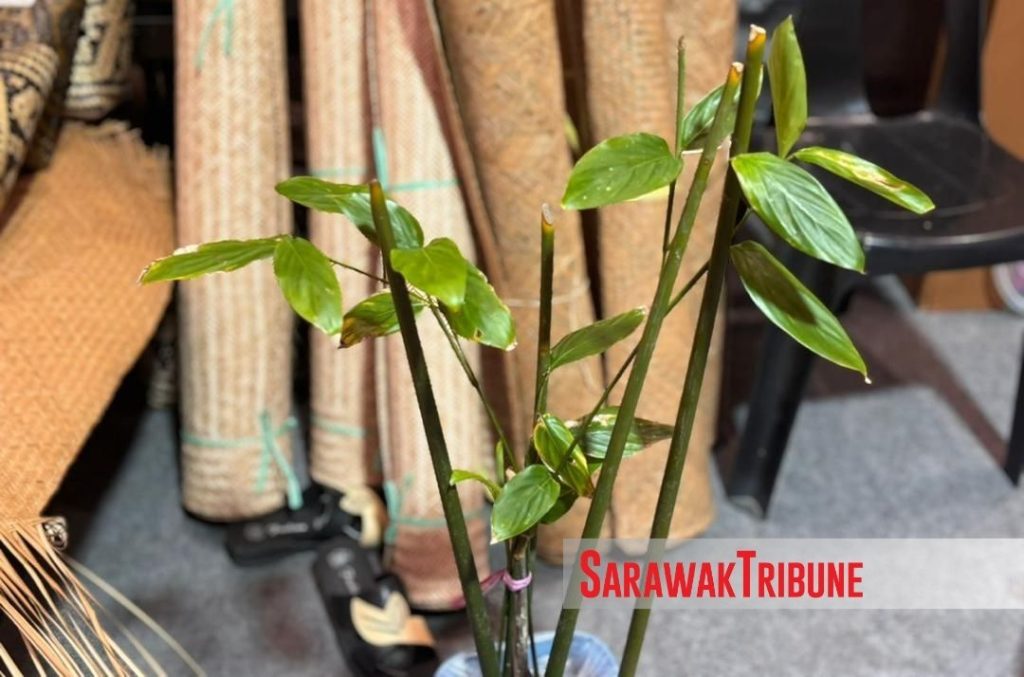
“Since there are plenty of bemban plants growing in our garden, I saw it as an opportunity to supplement my family’s income.
“As a housewife, I view it as a key source of raw material for making mats and other woven crafts,” she told Sarawak Tribune when met at the Borneo Craft Festival Sarawak 2025 at the Kuching Waterfront here.
She added that every piece of bemban she uses is planted in their own small garden.
“My husband helps to cut and bring home the bemban stems, while I handle the processing, drying and weaving.
“I’m fortunate to have a farmer husband who can grow our own bemban trees in our garden,” she added.
However, she said the process of harvesting bemban is not easy as it depends heavily on the weather.
“The weather is one of our main challenges, because when it rains, the bemban leaves cannot be properly dried.
“This, in turn, affects the quality of the leaves used for weaving,” she said.
Although only a small-scale entrepreneur from Simunjan, Kinchah is grateful that her handmade creations have gained recognition.
“Even though I come from a village, I’m thankful that my weaving has caught the attention of buyers from across Sarawak.
“Whenever I take part in exhibitions and craft festivals held around the state, many visitors—especially from outside—are drawn to my work and eventually buy my products,” she said.
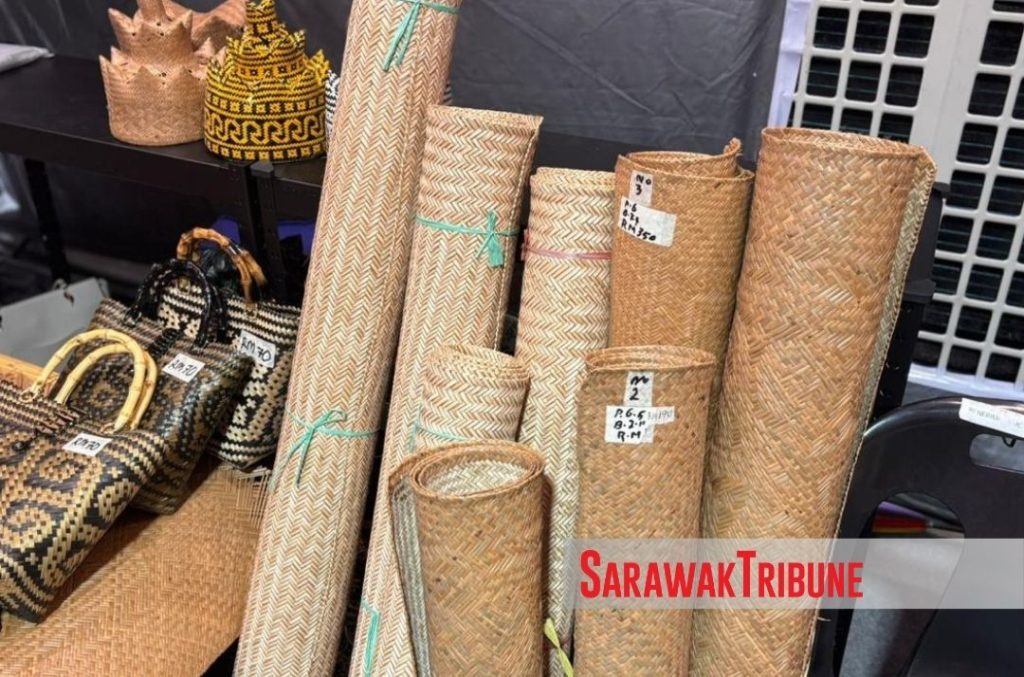
Apart from mat-making, Kinchah is also skilled in creating various other handicrafts based on customer requests.
“One of my strengths is the ability to replicate or recreate designs and weaving styles requested by customers.
Especially during festive seasons such as Gawai or official ceremonies, orders usually increase, with many asking for unique and intricate patterns,” she added.
Her woven mats are priced between RM250 and RM350 each, depending on the design and level of craftsmanship.
“In a month, I can earn up to RM1,000 depending on the number of orders received.
For simpler designs, I can finish two or three mats a week, while those with complex patterns can take up to a month,” she said.
Speaking on the continuity of bemban mat weaving heritage among the younger generation, Kinchah believes that this traditional craft must be preserved so it does not fade with time.
“Even when we are old, we should never stop learning. I myself only started weaving at the age of 45.
I hope the younger generation will continue this heritage, and I am open to conducting classes or workshops to teach those who are interested,” she said.
Those interested in purchasing Kinchah’s woven crafts can contact her at 014-6579745.