PERCHED dramatically above cascading waterfalls in Hunan’s misty mountains, Furong Ancient Town blends natural splendour, traditional Tujia architecture, and centuries of history into one unforgettable destination. Once a quiet village, it now enchants visitors with its stilted houses, lantern-lit streets, and vibrant cultural heritage.
A town suspended in time and mist
Across China, many ancient towns and cities have been developed into tourist attractions by government bodies and travel agencies, drawing both domestic and international visitors. During my recent journey through the Hunan and Hubei provinces in south-central China, I visited at least five such destinations.
Unfortunately, several of these towns felt rather similar – overly commercialised and lacking genuine character, with a primary focus on selling local products along streets made to appear historic.
However, Furong Ancient Town stood out as a captivating exception, radiating a unique charm of its own.
Located in Yongshun County, within the Xiangxi Tujia and Miao Autonomous Prefecture of Hunan Province, Furong Ancient Town lies approximately 80 kilometres (km) from Zhangjiajie and 115 km from Fenghuang Ancient Town.
Nestled amidst the lush mountains of western Hunan, Furong was originally known as Wangcun, or Wang Village. It was renamed Furong (meaning ‘Hibiscus’) after the 1986 Chinese film Furong Town, which was filmed on location and brought the town national attention.


Natural Splendour
Furong’s most iconic feature is its breathtaking waterfall, which cascades 60 metres (m) in height and 40 m in width beneath ancient shophouses and traditional residences, eventually merging into the Youshui River.
Dubbed ‘The Thousand-Year-Old Town Hanging Over the Waterfalls’, the view becomes even more magical at dusk, when colourful lights illuminate the falls, the water’s surface, and the lantern-lined alleys – creating a dreamlike scene that draws both photographers and romantics.
During my visit, the river was relatively low due to the dry season, which made the waterfall less dramatic.
“The waterfalls are at their most spectacular between June and September, when the water level peaks,” my tour guide explained.
I also enjoyed a tranquil river cruise, soaking in the natural beauty along the riverbanks.
Several viewing platforms have been constructed throughout the town, offering visitors various vantage points of the falls – an especially welcome feature for photography enthusiasts.
Numerous hotels, inns, and homestays are located near the waterfalls and throughout the town, allowing visitors to stay overnight and experience the enchanting nightscapes and serene surroundings.


Architectural Heritage
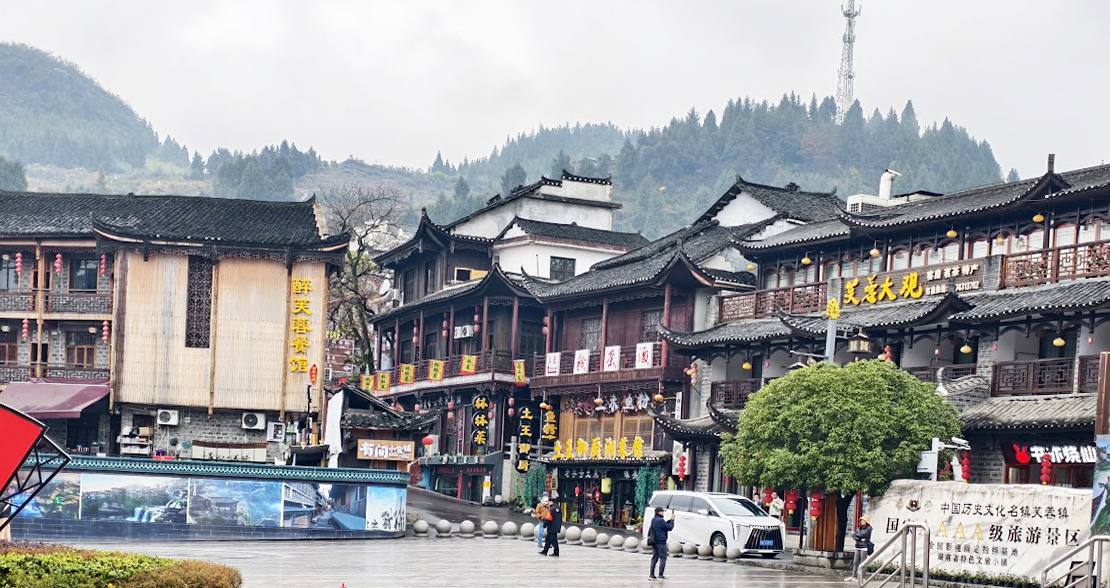
Furong’s stone-paved streets are lined with Ming and Qing dynasty shophouses, distinguished by their sloping tiled roofs and intricate wooden carvings. Today, these historic buildings house family-run businesses selling local crafts, herbal medicines, silverware, souvenirs, and snacks.
The Tujia people’s iconic ‘diaojiaolou‘ – multi-storey stilted wooden houses – cling to the cliffs on both sides of the river. These structures are remarkable feats of architecture, reflecting the community’s clever adaptation to the mountainous terrain.
Spanning the river is the Tu Wang Bridge, a classic ‘Wind and Rain Bridge’ complete with a roof, benches, and dragon-adorned pillars – an excellent representation of Tujia and Miao architectural style.


Cultural and Historical Riches
Tujia culture is vibrantly alive in Furong through its festivals, traditional music, and dance performances. Women don elaborate costumes adorned with silver jewellery, showcasing generations of artistry and cultural pride.
A key historical relic is the Xizhou Bronze Pillar, a four-metre-tall, 2,500-kilogram monument inscribed with a peace treaty dated 940 AD. The treaty was made between the Chu Kingdom and the governor of Xizhou Prefecture (now part of southeastern Yongshun County).
This pillar symbolises the region’s complex political history during the turbulent Warring States Period.
Furong Ancient Town is more than just a preserved relic with fascinating architecture—it is a living cultural destination enhanced by awe-inspiring natural beauty.