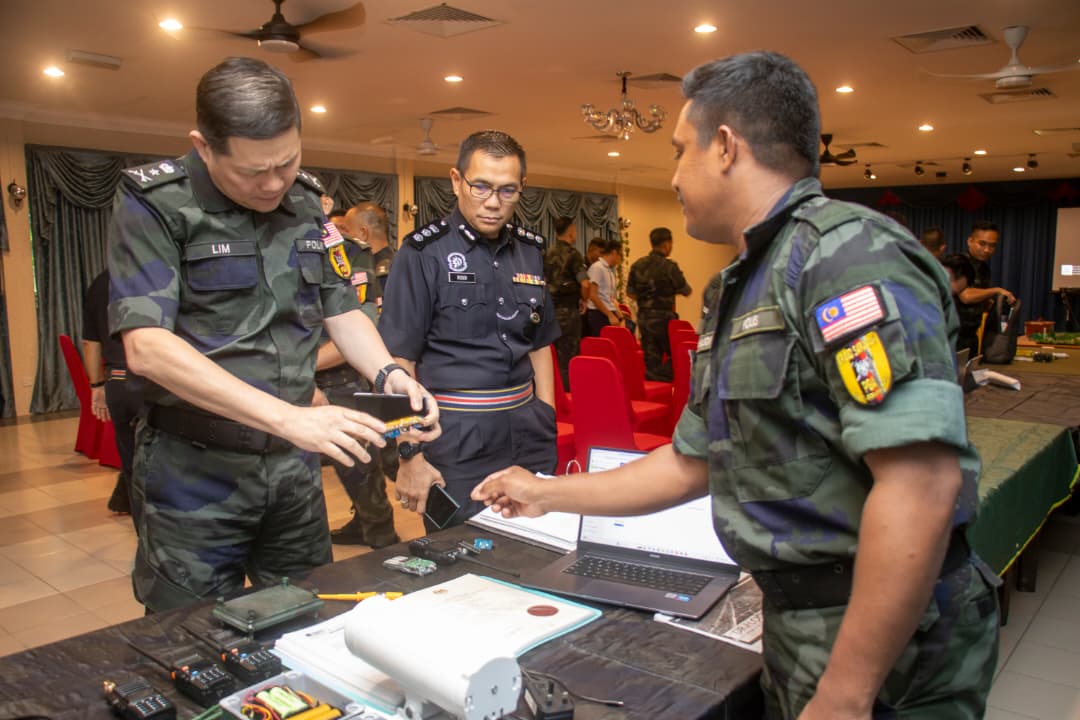
KUCHING: The General Operations Force (GOF) Sarawak Brigade has developed an early warning sensor capable of detecting sudden “kepala air” (water surge) incidents from as far as 5 km upstream.
The brigade said the system was designed and built entirely by its own personnel, including the coding, detection algorithms and overall programming architecture.
The device can identify sudden changes in water level, pressure and current movement well before the surge reaches vulnerable locations such as riverside villages, picnic areas and campsites.
“With early detection, warnings can be issued much sooner, allowing the public to evacuate and take necessary precautions before the surge reaches high-risk locations.
“Another key feature of this system is its ability to detect and calculate the speed of the incoming surge.
“By analysing changes in water levels and pressure across multiple sensor points, the system can estimate the velocity of the current, predict its arrival time at specific areas, and assess the level of risk based on the speed and strength of the flow,” the brigade said in a statement.
Sudden water surges typically occur when heavy rainfall upstream triggers a rapid downstream flow, often without prior warning to communities in lower-lying areas.
In many cases, alerts are only issued after the strong current has arrived, increasing the risk of casualties and property damage, particularly at popular riverside recreational spots.
According to the brigade, the added capability to measure surge velocity enables authorities to issue more precise and risk-based warnings.
The system was also engineered to operate in challenging environments, including hilly terrain, interior river routes, dense forest areas and remote settlements.
It functions independently of full internet coverage by using alternative communication channels suitable for locations with limited connectivity.
“This capability makes the system particularly relevant for a state like Sarawak, which has vast rural areas and an extensive river network.
“With a detection range of up to five kilometres, the ability to measure the speed of the surge and the capacity to operate without internet connectivity, this innovation has the potential to set a new benchmark for disaster early warning systems in Malaysia.
“This initiative by the Sarawak Brigade GOF proves that local expertise is capable of developing practical and effective technology that can truly save lives,” the brigade added.