MIRI: Malaysia’s long-standing gap in grassroots football development was thrust into sharp focus in the remote highlands of Bario as former national captain, Datuk Santokh Singh, led a high-profile initiative to bring structured training to one of the country’s most isolated communities.
The launch of the Royal Selangor Club (RSC) Soccer Section’s Rural Community Football Outreach Programme marks a deliberate attempt to extend the national talent pipeline beyond its traditional urban base where access to coaching, facilities and exposure has long been concentrated.
“There is no greater pride than wearing a jersey with the state or country’s flag next to your heart,” Santokh said.
“Young people here must believe that they can represent Sarawak and Malaysia but belief must be matched with opportunity.”
A central figure in Malaysia’s footballing peak, Santokh was part of the squad that competed at the 1974 Asian Games in Tehran and qualified for the 1980 Moscow Olympics.
He was joined by former international, Vincent Thambyrajah, who once faced English Premier League side, Arsenal, and K. Balasingam, a member of Malaysia’s 1975 Hockey World Cup semi-final team.
Together, their involvement signals an effort not merely to inspire, but to transfer experience and competitive standards to a generation largely removed from elite pathways.
Yet the initiative also exposes a deeper structural imbalance.
For decades, rural regions such as Bario, located deep in the Kelabit Highlands, have remained on the margins of Malaysia’s football ecosystem.
Talented players often emerge informally but without sustained access to coaching or scouting networks, many fail to progress beyond the local level.
RSC Soccer Section representative, Collin Swee, acknowledged the disparity, framing the programme as a corrective intervention.
“This is about access and belief. Structured development has historically been urban-centric. What we are doing here is creating a pathway where none previously existed,” he said.
Crucially, the programme is anchored by local leadership.
Former Malaysian international and Sarawak captain, Bobby Pian, a native of Bario, will oversee player development, a move aimed at ensuring continuity and cultural alignment rather than reliance on periodic external engagement.
The launch blended symbolism with execution.
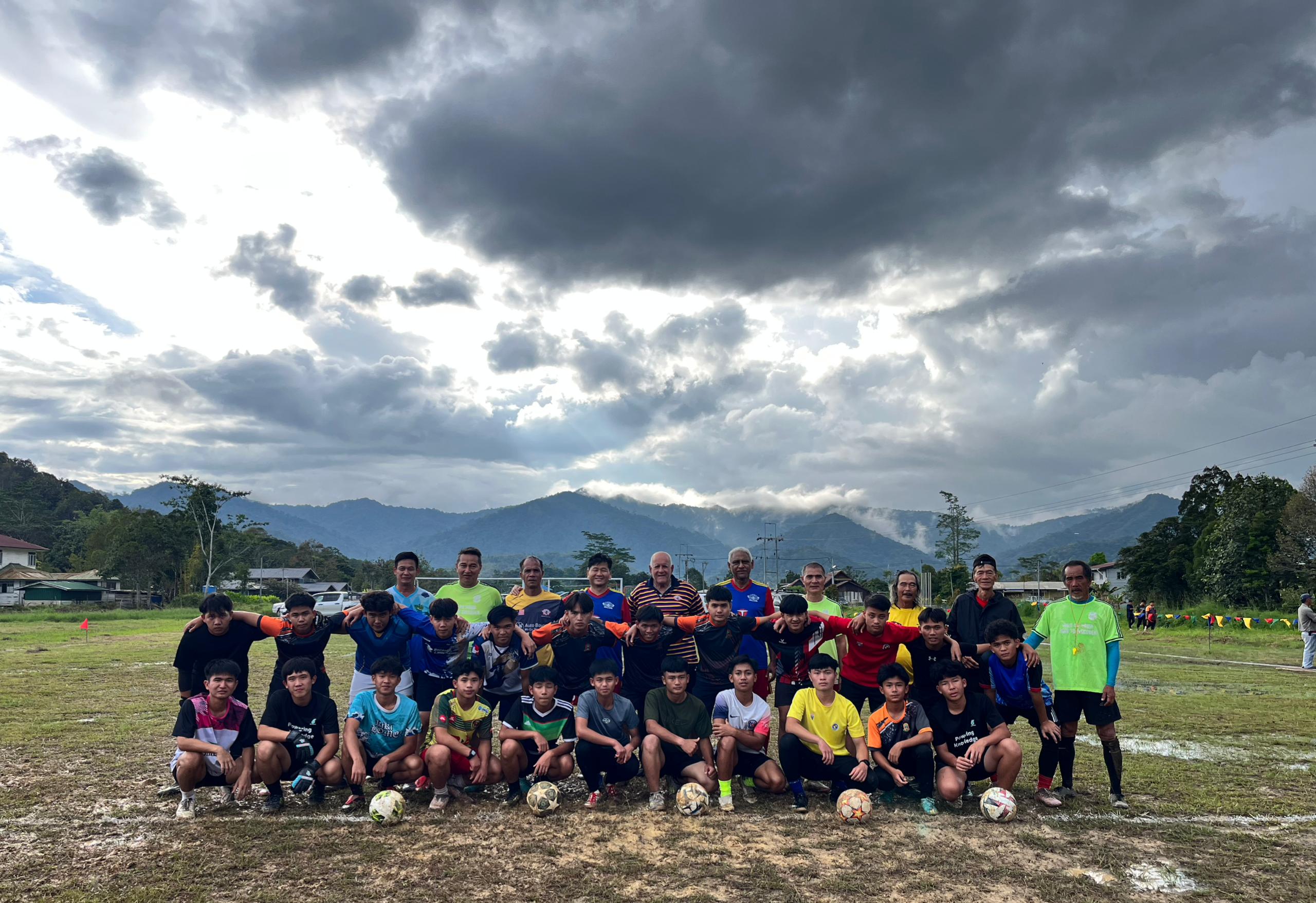
A ceremonial kick-off and veterans’ exhibition match drew community participation but the emphasis quickly shifted to delivery: the first youth academy training session involving 25 students from SMK Bario and surrounding villages.
Organisers insist the modest intake is intentional, prioritising depth of training over scale in what is effectively a pilot model.
If successful, the Bario initiative could form the basis of a replicable framework for rural football development nationwide, a prospect that aligns with broader ambitions to strengthen integration between East and West Malaysia through sport.
However, the challenge is not conceptual but operational.
Grassroots programmes in remote areas have historically struggled with sustainability, constrained by funding limitations, infrastructure gaps and logistical barriers.
Without consistent investment and monitoring, such initiatives risk fading after initial momentum.
Against that backdrop, the Bario programme represents both opportunity and test case.
For the youths who took to the field this week, it offers a rare entry point into structured football.
For Malaysian football, it raises a more fundamental question: whether the system is prepared to systematically invest in talent beyond its urban comfort zone.