HIS interest in farming developed from a young age, influenced by family and early exposure to agricultural activities.
Like most children in the rural areas in the old days, Toking Saek grew up assisting his parents, learning farming skills and developing a connection to the land.
Spending time on the farm, helping with tasks like planting, harvesting, or caring for animals, fostered his love for agriculture.
When he pursued his secondary education, he often helped his agriculture teacher with tasks like feeding animals, tending crops or maintaining farm equipment.
This early exposure not only instilled a passion for farming in him, but also provided valuable practical experience, making it a natural progression to pursue farming as his career.
Toking, 64, said his farmer grandparents and parents had passed down the traditional knowledge and practices to him, creating a sense of continuity and a desire to continue the family legacy.
“Positive experiences with farming, such as seeing the results of my work, enjoying the outdoors, and feeling connected to nature, further strengthened my interest.
“As I grew up, I saw farming as a natural path to make a living from the various agriculture activities and continue my family’s tradition,” he told Sarawak Tribune at his home.
Toking believes that an early foundation in farming can make a significant difference in a young person’s decision to pursue farming as a career or vocation nowadays.
He said growing up on a farm could instill valuable life skills such as hard work, responsibility and an appreciation for nature.
“I have gone through it and that is why I am still a farmer. I have never worked elsewhere or been an employee.
“I raised all my five children and have sent them to obtain their primary, secondary and tertiary education. Now, all of them are working but I still do farming. Sometimes, my wife helps me, especially with harvesting,” he said.
Toking said understanding the processes of planting, growing and harvesting was the key to farming, even if it were to be done in the backyard like his.
He acknowledged that the demands of farm life often fostered a strong sense of responsibility and dedication to the land they had and the plants they wanted to plant.
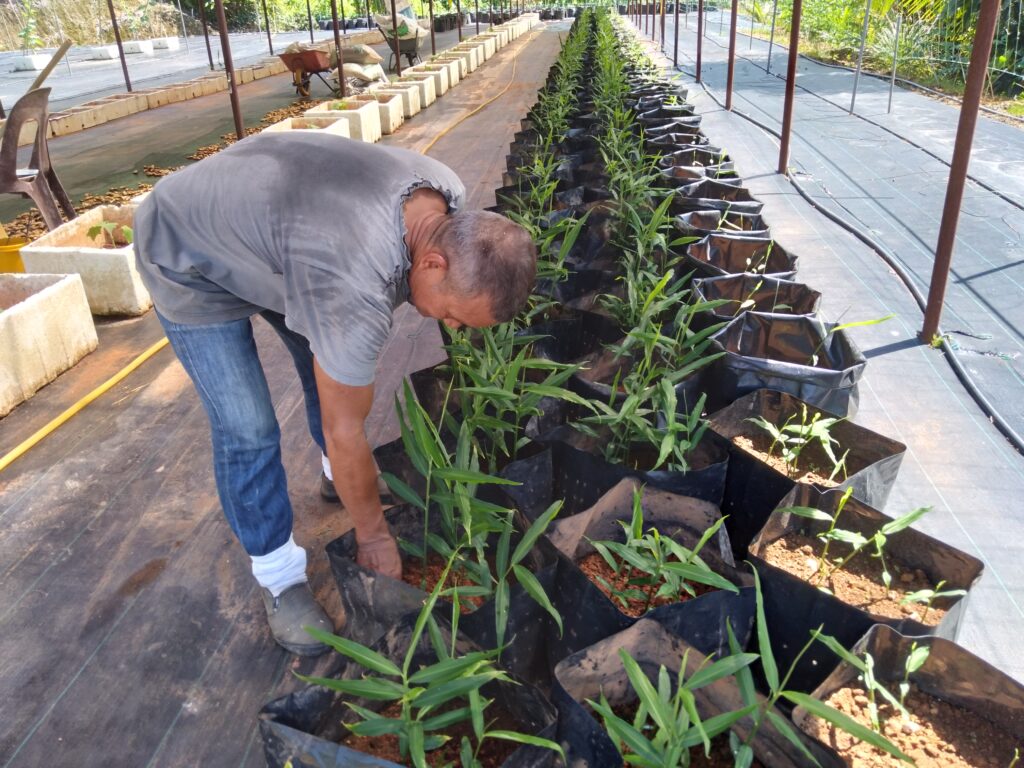
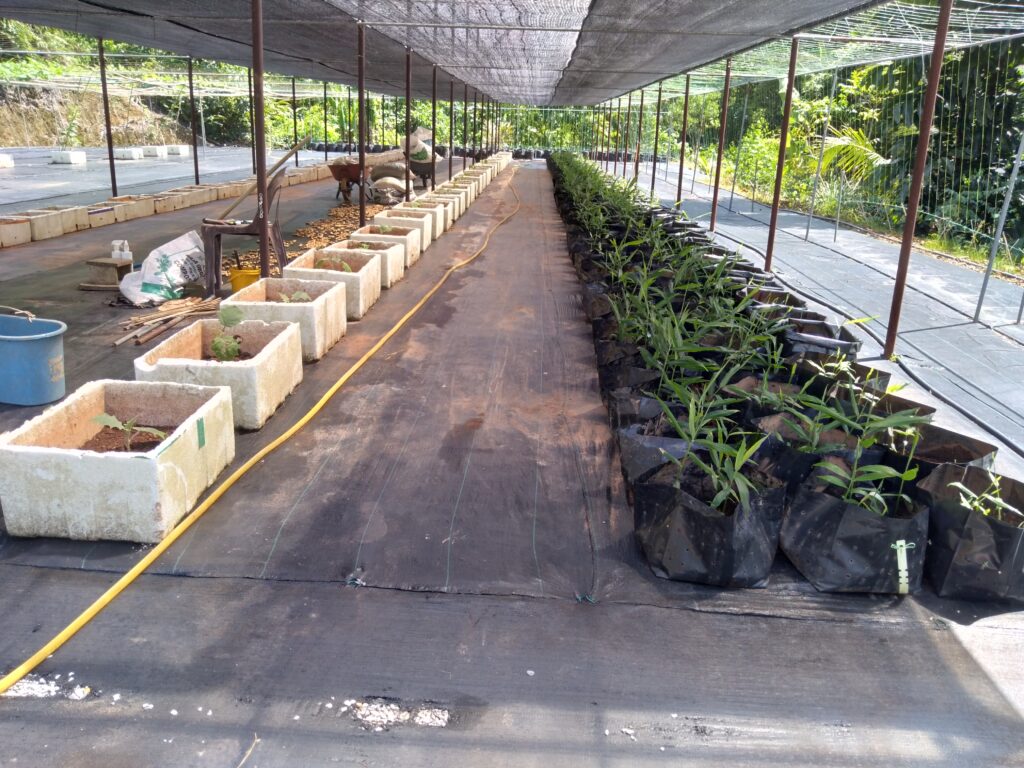
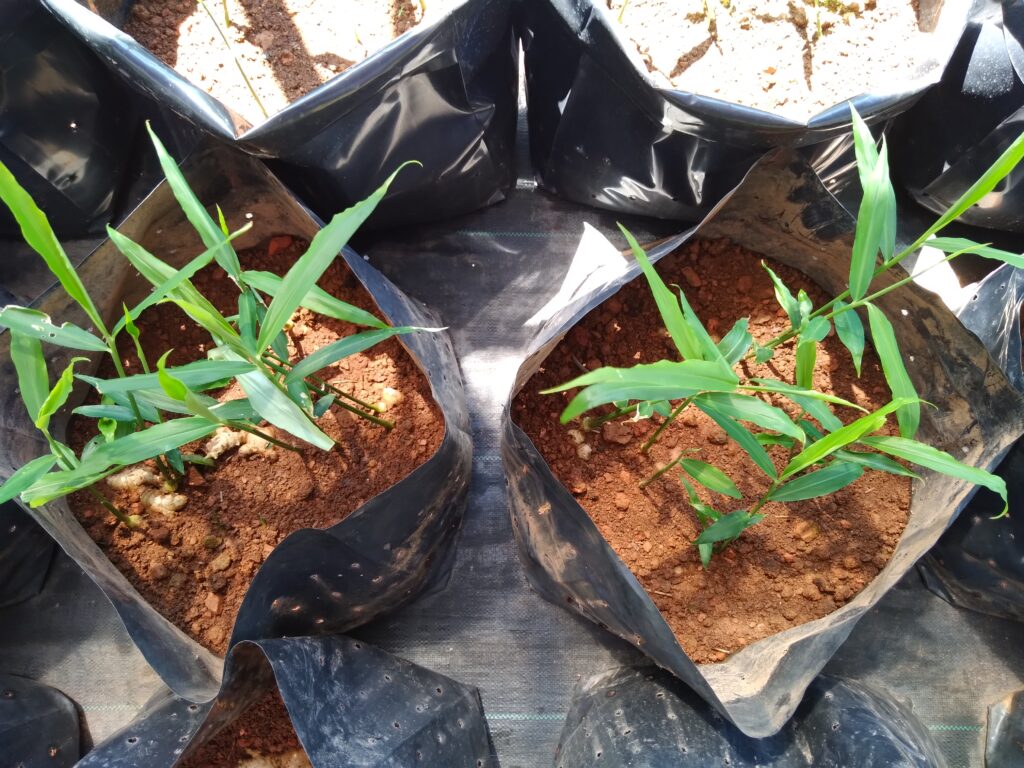
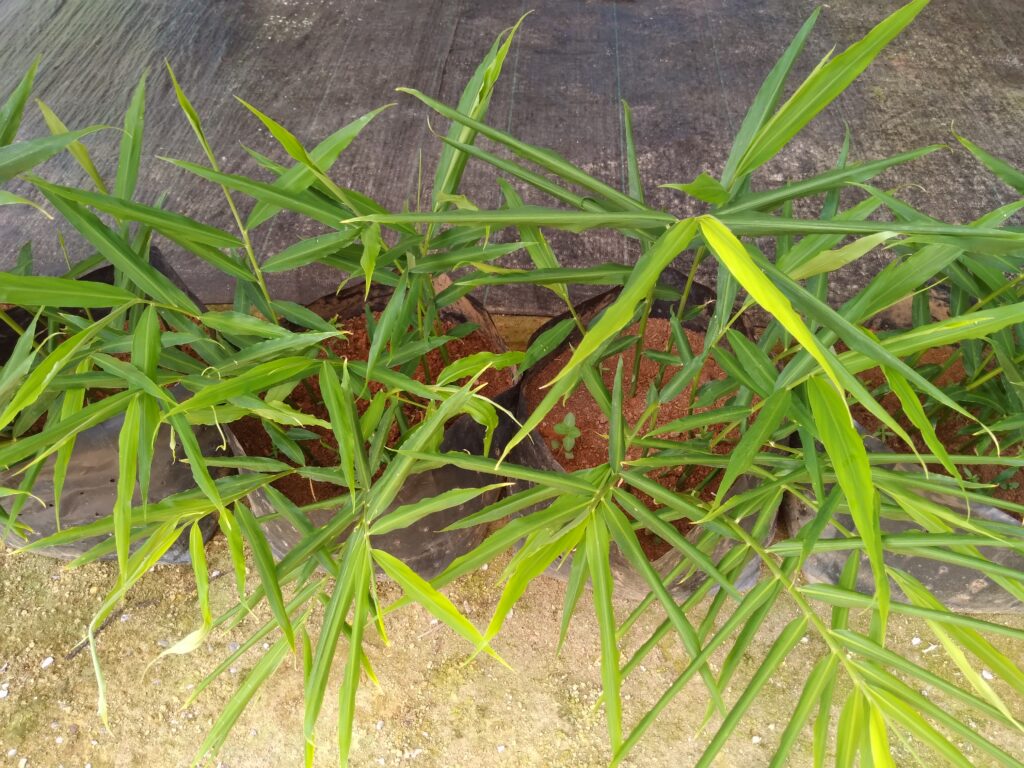
Today, Toking has planted about 300 gingers in polythene bags using modern techniques and plans to plant 1,000 in stages so that he can have continuous production.
He decided to plant gingers because they thrived in warm, humid climates like in Sarawak.
“It’s easier to plant and manage gingers. They can be grown from rhizomes (underground stems) which are aplenty in the market.
“Aside from that, they are versatile in cooking and have medicinal properties. In Sarawak, you can expect good yields from these plants due to the warm, tropical climate,” he said.
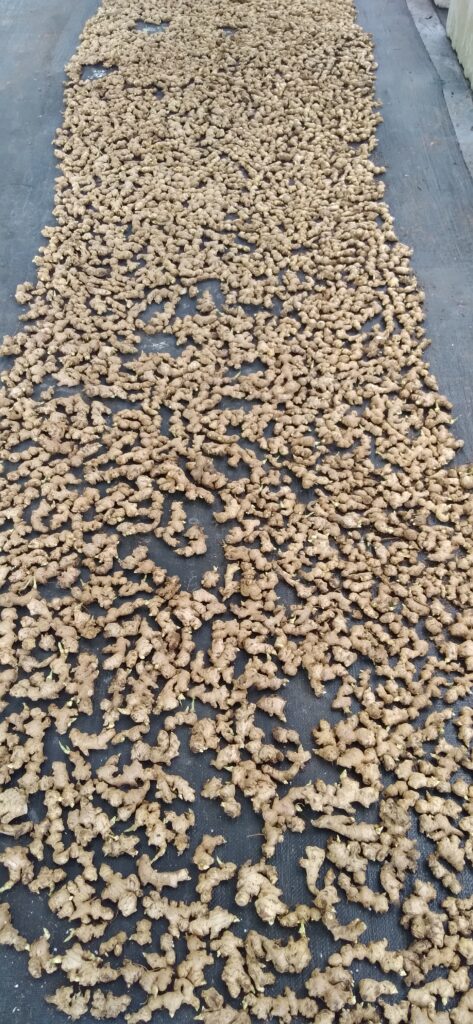
Toking, who practises modern farming techniques, said ginger plants were typically ready for harvest between eight and 10 months after planting.
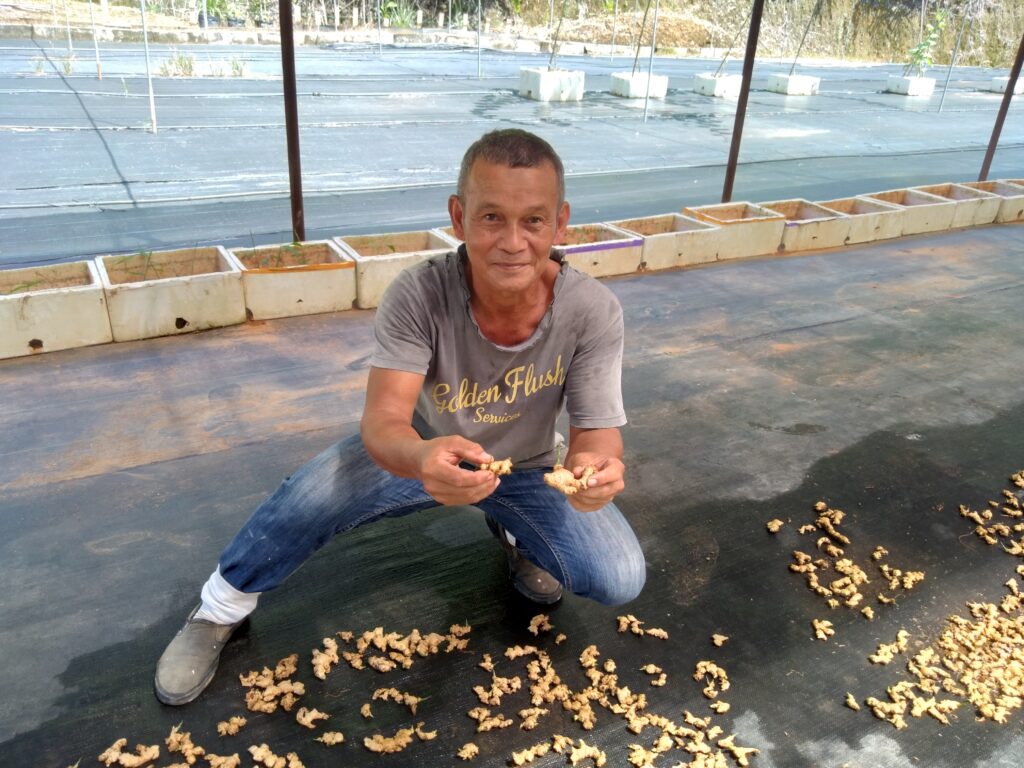
He, however, said they could be harvested earlier, even at four months, for young ginger, which was also known as green ginger.
“The best time to harvest ginger is when the leaves begin to turn yellow and the stems start to fall over, indicating the rhizomes have matured,” he said.
Driven by both culinary and medicinal uses, the demand for ginger in Sarawak as a whole is significant.
There is a strong local market for fresh gingers and also an increasing export potential, particularly for gingers used in health products.
Toking actually started his modern agriculture practices that could generate income by grafting fruit trees like durian, rambutan and mangoes.
He did quite well, having produced and sold a few thousand saplings.
Grafting ensures desirable traits, such as disease resistance and fruit quality, are passed on to the new tree. It also allows for faster fruiting and can help in managing tree size.
However, he decided not to continue with his fruit tree grafting when the business experienced fluctuations in demand due to changes in consumer preferences, economic conditions and depletion of mother plants.
He said the mother plants kept growing, thus making it difficult to collect the best shoot and branches for grafting.
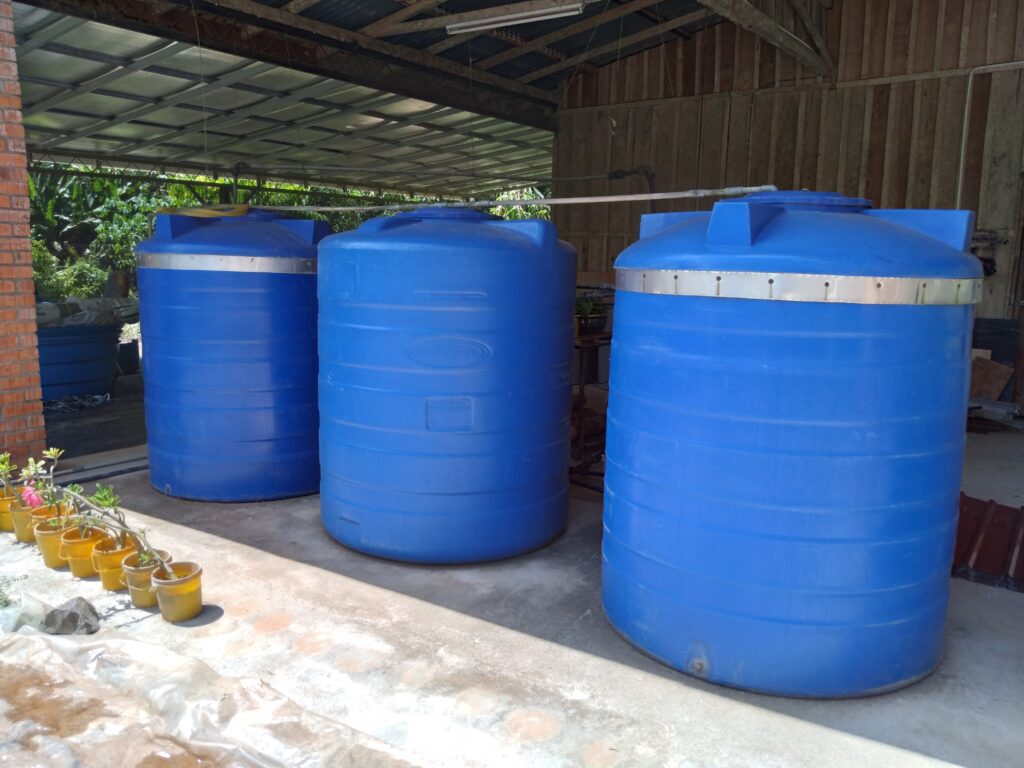
He then ventured into fish rearing in concrete tanks. He constructed six tanks; each with a capacity to accommodate between 500 and 1000 fish, mostly tilapia.
After about three years, he ventured into chili planting using the fertigation system.
This method allows for precise and efficient application of nutrients, often resulting in increased yields and improved water and fertiliser use.
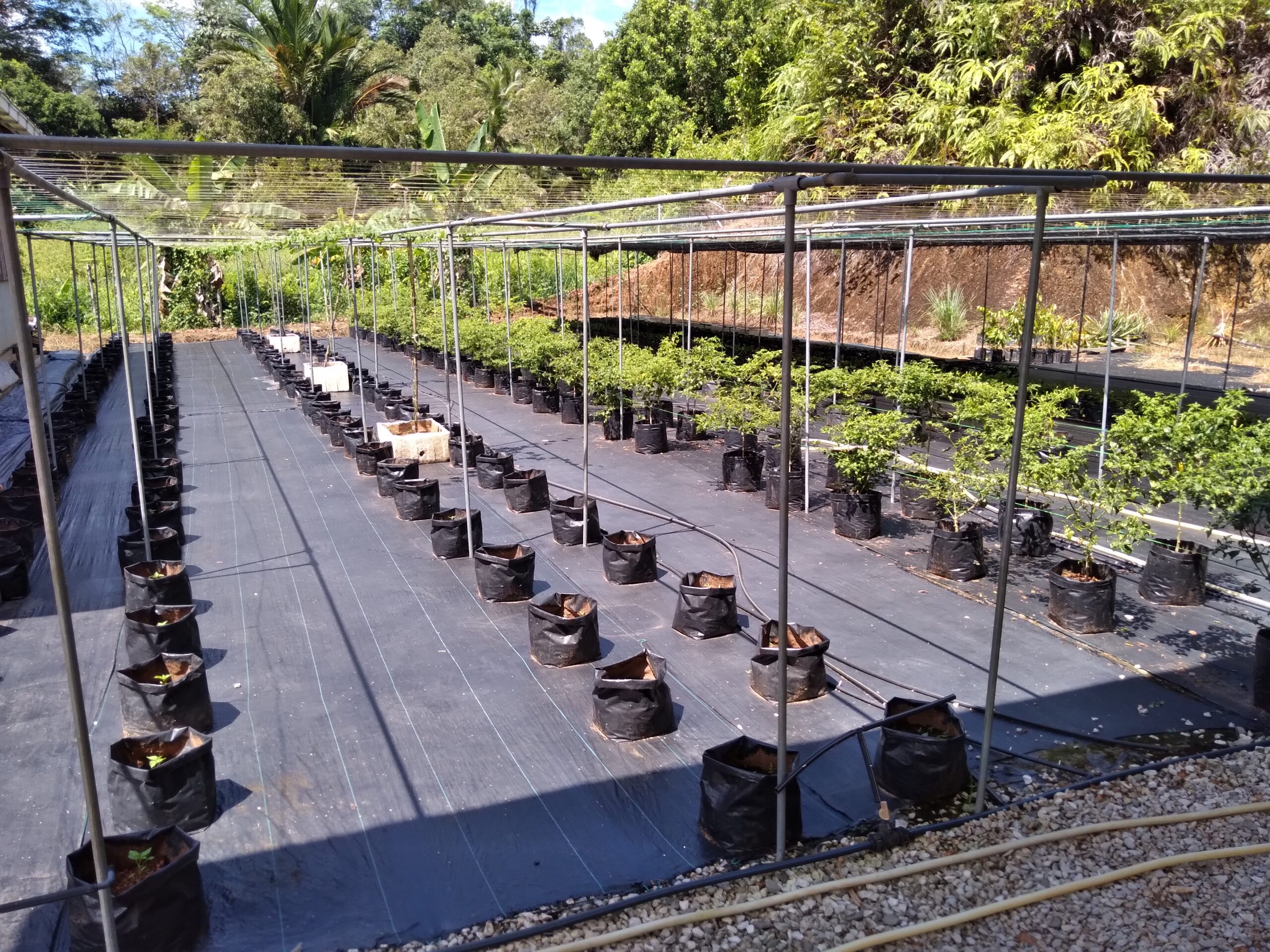
Toking planted 5,000 plants but reduced the number due to the drastic hike in the fertiliser and pesticide prices coupled with the fluctuating prices of chili in the local market and diseases.
“My biggest investment so far is in acquiring the fertigation system’s equipment. For a fertigation system to function properly, expensive components, including pumps, injectors, tanks, and controllers, are typically required.
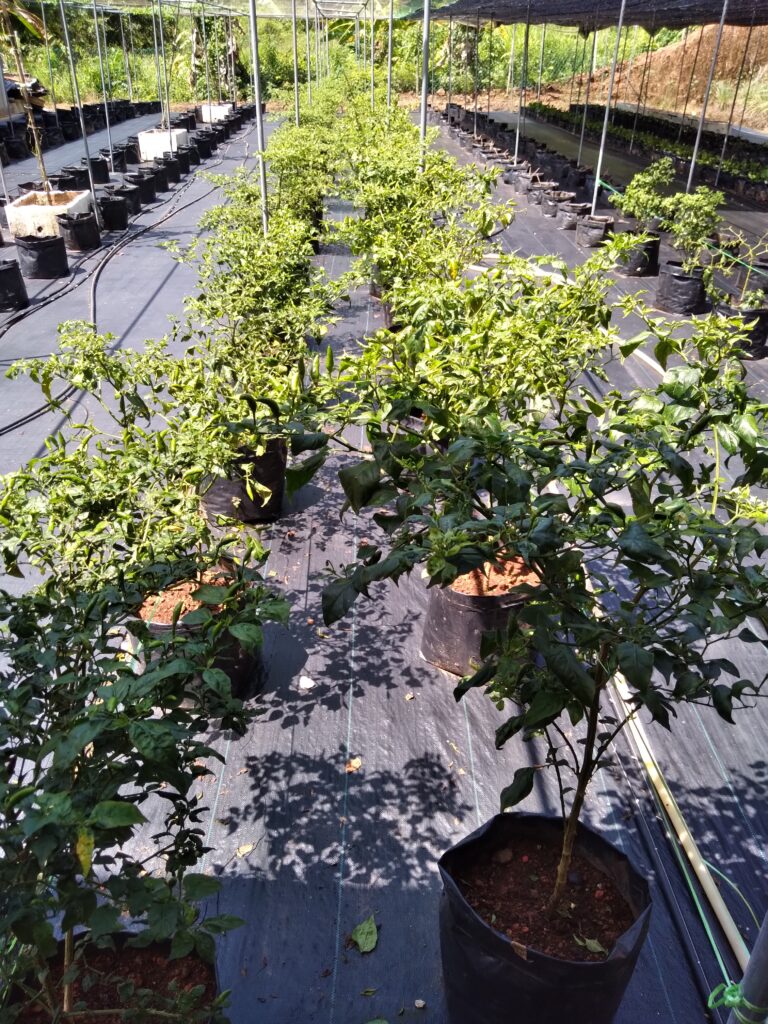
“I managed to cover the investment cost and got a good return from chili panting but to sustain the same number of trees now is more costly because of the drastic increase in the price of AB fertiliser and pesticides.
“Chili plants are also susceptible to diseases caused by both insects and fungi. These diseases can significantly impact yield and fruit quality,” he said.
Toking pointed out that among the common fungal diseases in chili plants were anthracnose, powdery mildew, phytophthora blight, fusarium wilt and cercospora leaf spot while the insect pests that always attacked chili plants included thrips, aphids and spider mites, white flies and fruit borers.
He said climate change, which brought unpredictable weather patterns, including excessive rainfall or drought, also could negatively affect chili growth and fruit setting, adding that high temperatures and too much rain could cause flowers to drop and fruits to rot.
“I still plant chili now but on a smaller scale because it is easier to manage few plants. I still have customers who call me to ask for chili.
“Now, I only have about 50 chili plants, which are just good enough to meet the demand of my regular customers.
“Since I still have the fertigation system’s equipment, I plan to plant 1000 chilies of local species, locally named as chili burung, in stages” he said, adding that he had planted 200 seedlings into the polythene bags under the first stage.
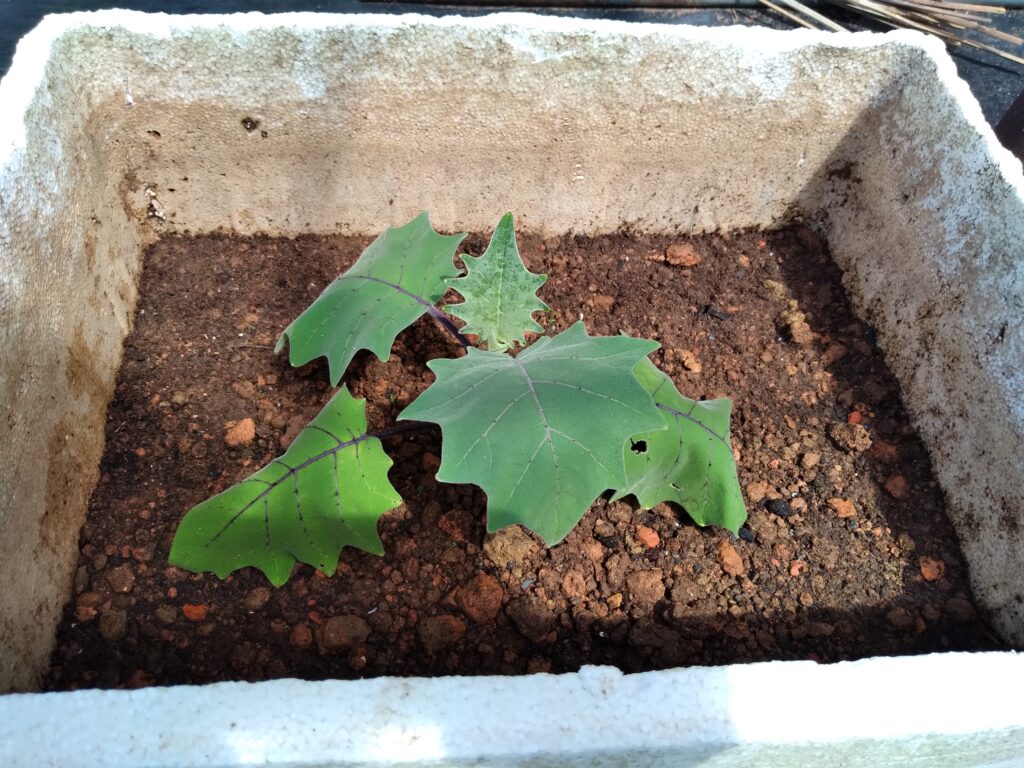
Aside from gingers and chili plants, Toking also plants ‘terung asam’ or ‘terung dayak’ and other vegetables including the water gourd on the empty land at his backyard.
Most of the plants that he has now are planted in polythene bags.