THE world is entering a period of heightened uncertainty, with risks multiplying and policy frameworks that may no longer be enough to cope.
These observations were aired during the opening panel session on ‘An Increasingly Uncertain World’ at the National Resolution Symposium 2025, hosted by Perbadanan Insurans Deposit Malaysia (PIDM) in Kuala Lumpur.
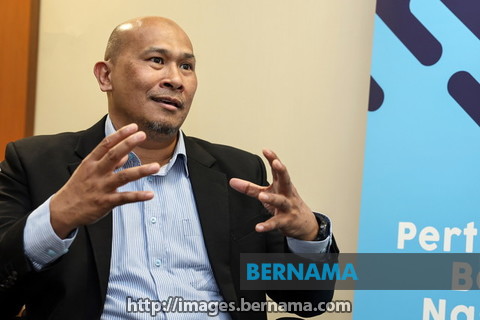
The session was moderated by Bank Negara Malaysia technical adviser Datuk Jessica Chew and featured Asia School of Business president Dr Joe Cherian, former Acting Comptroller of the Currency Michael Hsu, and Standard Chartered Malaysia and Axiata Group chairman Tan Sri Shahril Ridza Ridzuan.
Risk versus uncertainty
Cherian drew a sharp line between what can be measured and what cannot.
“Risk is what we can measure based on historical data and models. You can quantify the magnitude of an outcome and the probability of it happening.
“But uncertainty is the measurement of unquantifiable outcomes. When you can’t measure, it’s hard to make policy.
“What’s going on in our world now is uncertainty. The risk part we can all measure,” he said.
He then turned to the United States to illustrate how these uncertainties were already playing out.
Consumption was weakening, government transfers had been cut, and universities were feeling the impact.
“Overall, if you look at the change in GDP, it’s going to be negative. Which means there could be a recession in America,” he said.
He also warned that inflation would compound these pressures.
“There’s bound to be inflation. Tariffs at the border with no substitutes mean consumers pay the price. Walmart and Target shelves are emptier, and car prices are rising.
“Imported models could go up by as much as US$10,000, domestic cars by US$3,000 because they rely on imported parts. Unless negotiations take place, the worst is yet to come.”
Institutions under pressure
Shifting the discussion to governance, Hsu said the credibility of public institutions in the United States had shifted.
“For quite a while, it’s been a process with a strong focus on the rule of law, the Administrative Procedure Act, notice and comment.
“These things were seen as the way to get to outcomes. But there is now a sense that the process has not led to good outcomes. And there’s a very strong focus on outcomes, period.
“That means a willingness to bypass or ignore processes, to ignore norms, to achieve certain outcomes. That is why the US today feels very transactional,” he said.
He cautioned that the second half of the year would be a turning point.
“If the outcomes do not deliver, then there will be a backlash. If they do, then expect more of the current approach. But that concerns me because there is a lot of uncertainty in the way the US is approaching things now.”
To him, the lesson was clear: institutions must keep their options open.
“If you don’t know, as an institution, what you need to do in order to restore confidence, you need options. Maybe you have to sell something, maybe you have to raise capital, maybe you have to do something else.
“The whole purpose of that planning is to have lots of options because you’re not sure. One of the hardest options for any company to contemplate is selling a major operation. In many cases, that is often the most confidence-inspiring one.
“Barclays sold its investment management firm in 2009, which was a crown jewel, but that is how Barclays survived. AIG was unable to sell certain businesses, which then required a government bailout,” he said.
Balancing regulation with innovation
Turning to regulation, Shahril said it remained vital but must not become rigid.
“The better role of regulation has always been in terms of really curbing excesses. Where we are today is in quite a good spot. But uncertainties we are faced with are inherently global in nature. Nation-states always act in their own best interests.
“Over the last few decades, yes, they have come together in frameworks that are positive for trade and growth. But as that moves apart, governments will have to think about what makes sense from a sovereign development point of view,” he said.
He added that flexibility was critical in responding to technological change.
“Where I think we could be more flexible is not so much to what’s going on in the world but to what’s happening in terms of changes to the industry, in terms of technology, with AI and everything else.
“It is important to allow financial institutions and industries to become a bit more creative when thinking about solutions, whether for risk management or for growth.”
Boards, he said, were beginning to think differently.
“In the past you didn’t usually have boards that thought about pre-events or final events. But markets change. Increasingly I’ve seen better practice around boards thinking about responding effectively to shifts in the market.
“The strategy you had a year ago may not be fit for purpose a year later. Having that flexibility of approach and a culture of understanding customer needs, and moving on to do something different, is probably the best strategy,” he said.
Adding to this, Cherian added that in times of uncertainty, optionality was itself valuable.
“Think of flexibility as optionality. When you buy insurance, you protect yourself against adverse states of nature. In times of uncertainty, optionality is very useful.
“As long as you’re not violating the law or being imprudent, it is prudent to provide flexibility because flexibility has value,” he said.
Geopolitical risks and inequality
Cherian also addressed global fragmentation.
“Trading blocs are falling. ASEAN has been around for a long time, but we’re still not that strong a bloc. We have been negotiating individually instead of as a bloc, unlike the EU.
“EU–ASEAN, EU–China, ASEAN–China trade is going to start increasing. We’ve got to come up with policies flexible enough to take advantage of such trading activities,” he said.
He noted that the growing gap between rich and poor was a threat to stability.
“The rich are getting disproportionately richer, and the poor are hitting a rock. In Singapore, Malaysia, even the US, this creates social unrest. That is not good for nations or economies.”
He also suggested ways to cut costs in trade.
“A lot of trade takes place in US dollars. If central banks already do swaps during times of crisis, why not as a daily activity? There is no need to round-trip through US dollars. I’m not saying boycott the dollar. It’s just that you could reduce your transaction costs.”
Hsu agreed but added that new technologies were intensifying competition.
“If you look at something like the Basel framework, there is inertia and cooperation will likely continue. But if you look at crypto, stablecoins, AI, these are new. There isn’t much practice of international cooperation. These are areas targeted for national competition,” he said.
Operational resilience and boards’ role
Hsu pointed out that the biggest risks ahead may not be financial in nature.
“As technology features more and more in banking, my biggest fear is that the scenarios we need to plan for are operational. Systems going down. Things are not working. That’s something you can’t just solve with capital and liquidity.
“It requires a different skill set. On the cyber side we’ve had some of these exercises, but it is going to get more complicated, especially if AI really becomes integrated into finance,” he said.
Meanwhile, Cherian said boards needed to resist the temptation to micro-manage.
“Boards should be thinking of the big picture. Don’t get distracted by micro-managing. Don’t lose track of commitments to sustainability, uplifting the poor, saving the environment. Worry about governance and strategy, and let senior management do the daily tasks.”
Shahril agreed, saying bank boards in particular tended to get pulled into detail.
“For some reason bank boards are expected to know customer payment processes and details. That is not a great use of board members’ time. Boards should focus on strategic and existential issues and leave processes to management.”
Hsu added that regulators also had to clarify board roles.
“In the US there was a concerted effort to separate board expectations from senior management. The purpose of the board is to provide direction and oversight. Everything else should be automated or delegated. Regulators sometimes lose sight of that.”