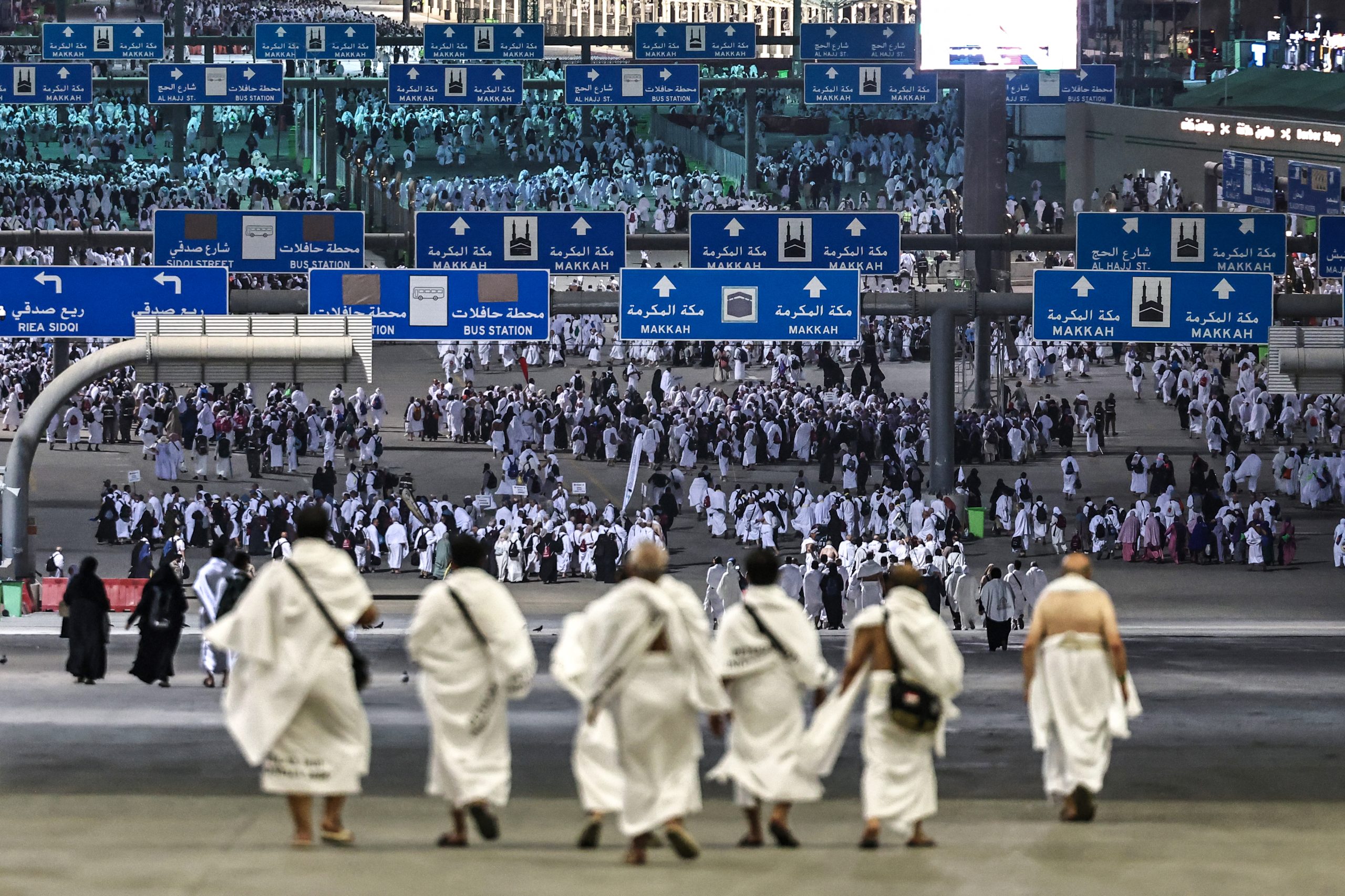
MINA (Saudi Arabia): With the early morning hours of Eid Al-Adha, pilgrims in Mina began wearing their traditional attire once again after days spent in ihram garments, Saudi Press Agency (SPA) reported.
As pilgrims from Asian, African, and Arab countries donned their national dress in celebration of the holiday, in a scene reflecting the diversity of Islamic cultures that gather annually in the holy sites of Makkah.
Along the pathways leading to pilgrims’ camps, African turbans, embroidered robes, and traditional Asian garments were visible among pilgrims, many of whom exchanged Eid greetings in their local languages and took group photos commemorating Eid moments in the holy sites.
Nigerian pilgrim Adam Mohammed explained that wearing traditional attire on Eid day is a long-standing custom among many pilgrims from his country, noting that the occasion provides them an opportunity to showcase their local culture and introduce their customs to pilgrims from other nations.
At one of the pilgrims’ camps, an Indian pilgrim travelling with his family recounted that his family wore traditional Indian clothing and exchanged customary sweets after completing the rituals, noting that performing Haj this year gave the occasion an unforgettable character.
He added that his children were keen to take photos in their traditional attire to send to relatives in India, affirming that Eid in the holy sites carries spiritual and social sentiments that transcend language and geography.
Meanwhile, a Moroccan pilgrim expressed his happiness with the atmosphere during Eid days, affirming that he did not feel like a stranger despite being far from his homeland due to the sense of familiarity and closeness among Muslims of different nationalities.
The manifestations of Eid are not limited to clothing alone but also extend to the social customs and stories that pilgrims bring from their home countries, as many exchange traditional foods and symbolic gifts within the camps.
Haj remains one of the most prominent occasions where Islamic cultures are displayed naturally, as people from around the world gather in one place, preserving their customs and traditions while united by the spirit and purposes of the ritual. – BERNAMA-SPA