KOTA SAMARAHAN: Sarawak has set a clear target to develop a new generation of semiconductor professionals by 2030 to meet the surging local and global demand for high-tech expertise.
Minister of Education, Innovation and Talent Development Datuk Seri Roland Sagah Wee Inn said this ambition is underpinned by the state’s Semiconductor Roadmap, which places human capital at the centre of its industrial ecosystem.
He emphasised that no matter how advanced the infrastructure or how strong investor interest may be, the industry cannot progress without a skilled workforce.
“We have adopted a structured and industry-led approach to talent development.
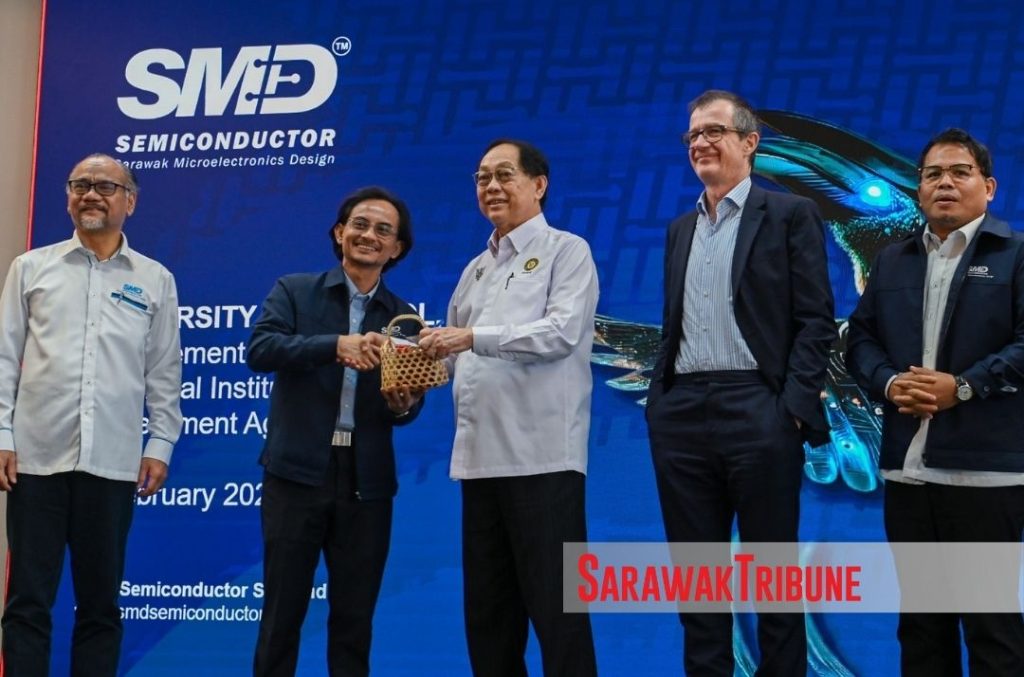
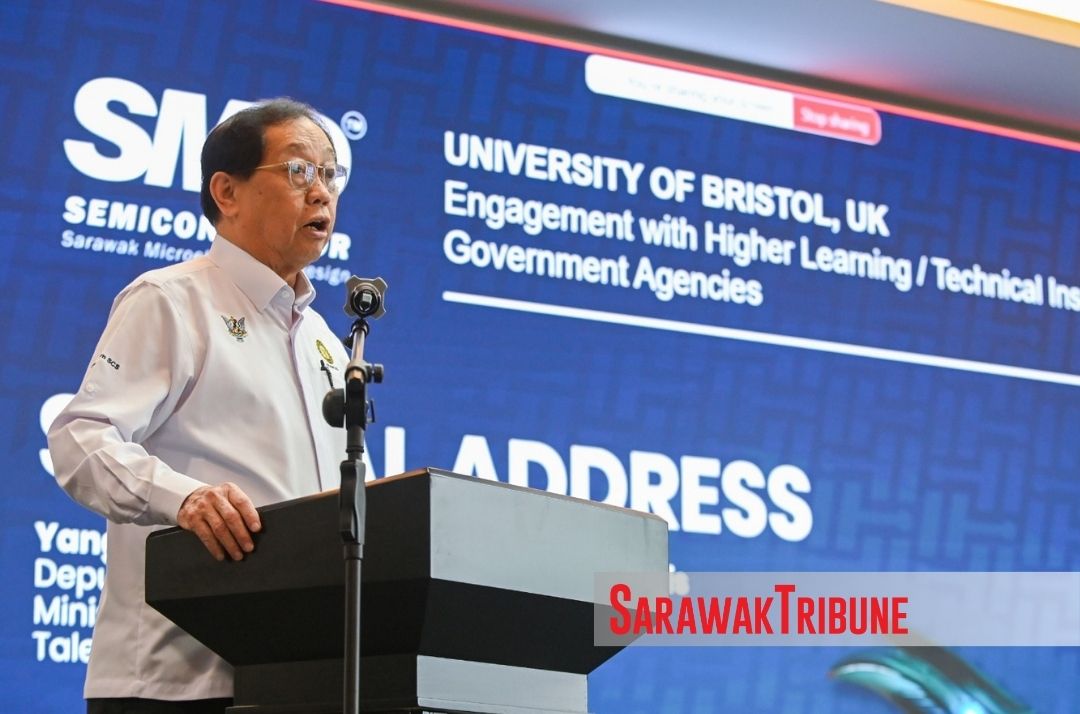
“Our objective is to ensure that Sarawak’s semiconductor growth is driven by Sarawakian talent and supported by strong global partnerships,” he said in his speech read out by his deputy Datuk Francis Harden Hollis at the launch of the SMD Semiconductor Engagement with Higher Learning/Technical Institutions and Government Agencies at SMD Academy on Thursday.
Highlighting the significance of the collaboration, Sagah noted that the University of Bristol’s expertise in advanced semiconductor research would allow local institutions to benchmark their curricula against global standards.
“This engagement connects global academic excellence with Sarawak’s local institutions.
“It ensures our education ecosystem remains relevant, competitive, and future-ready,” he added.
The minister also pointed out several key pillars currently driving this talent pipeline, including the CENTEXS-SMD Semiconductor Mastery Programme.
The programme focuses on high-value areas such as Integrated Circuit (IC) design, moving beyond theory into real-world industrial practice.
In addition, Sagah revealed that the state is diversifying its technical horizons by exploring opportunities in the aerospace sector.
“Through our institutions and skills-focused platforms, we are developing aerospace-related education and training.
“This reflects Sarawak’s broader strategy to build transferable engineering capabilities that support multiple high-value industries,” he said.
He also commended SMD Semiconductor for its leadership in bridging the gap between academia and industry, and urged stakeholders to actively engage with the University of Bristol in areas such as applied research and curriculum alignment.