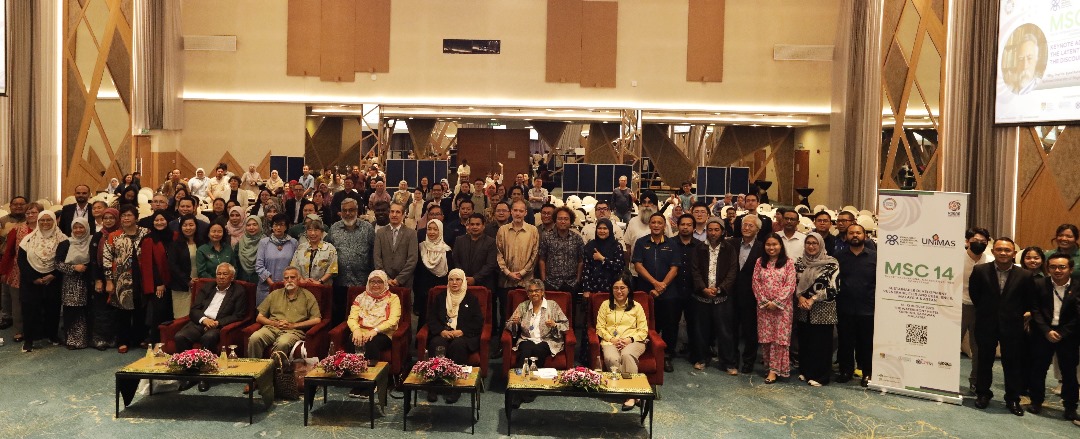
KUCHING: Higher education institutions are not only centres of knowledge but also drivers of change.
UNIMAS Deputy Vice Chancellor (Research & Innovation) Professor Dr Siti Noor Linda Taib said this role is particularly important in advancing the Sustainable Development Goals (SDGs).

“We are proud to support the SDG agenda and to contribute through research, teaching, community engagement and institutional policies that align with these global goals.”
She said this when officiating at the 14th International Malaysian Studies Conference (MSC14) here Tuesday (Aug 12).
“Our researchers and students are actively engaged in projects that address SDG-related challenges such as poverty reduction, rural development, public health, indigenous rights, education equity, clean energy, and climate resilience,” she said.
“And yet, we also recognise that sustainable development must not be reduced to numbers and indicators alone as it must be grounded in human stories, social realities, and lived experiences which is precisely where the social sciences are most essential.”
Earlier, she said that MSC14 provides a timely space to evaluate the current state of Malaysian studies to examine where the field stands today and how it can evolve in response to new realities.
“MSC14 aims to bring together scholars for meaningful intellectual exchange, allowing researchers from diverse disciplines and backgrounds to present their findings, share their reflections,and engage in critical discussions surrounding Malaysia’s social, political, economic and environmental transformations.
“At the same time, this conference is an opportunity to analyse the opportunities, issues,and challenges associated with sustainable development in our region.
“In doing so, we hope to chart new directions for Malaysian studies that are globally connected, interdisciplinary in nature, and responsive to regional dynamics, especially within the context of ASEAN’s shared aspirations and shared vulnerabilities,” she said.
The two-day conference has gathered approximately 300 participants from Indonesia, Japan, China, Azerbaijan, Nigeria, Singapore, and the United States.