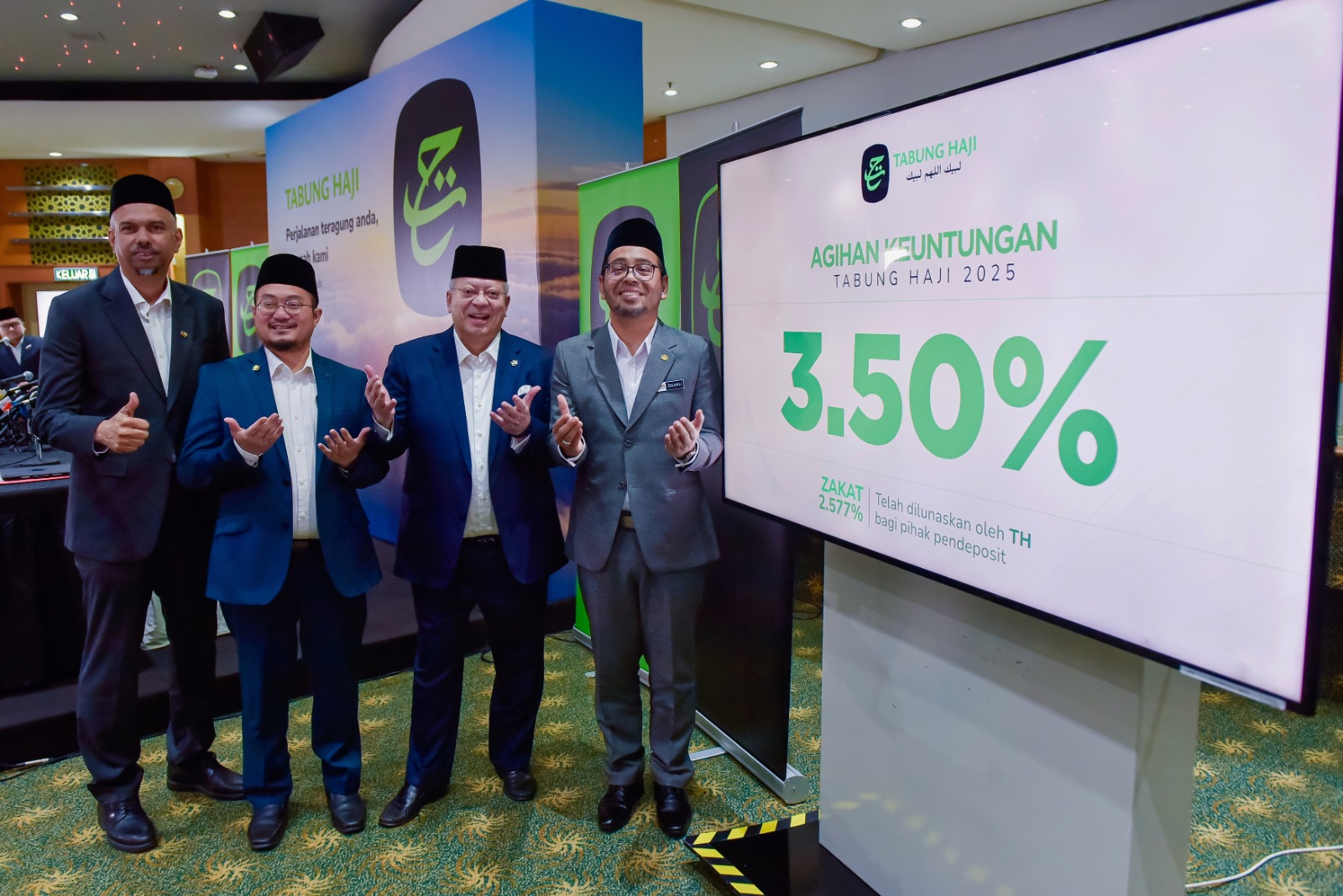
KUCHING: Lembaga Tabung Haji’s (TH) announcement of a 3.50 per cent profit distribution for 2025 – its highest in eight years – has been met with a mix of optimism and cautious assessment among depositors.
The payout, which marks a notable recovery from the 1.25 per cent low recorded in 2018 and gradual increases in recent years, is widely seen as a sign of improving stability and governance within the haj fund.

For Syarifah Norfatimah Wan Sekeran, 28, a junior plant breeder at Sarawak Plantation Bhd, the improved rate signals clear progress.
“Honestly, I feel really happy and quite proud. If we compare this to the past few years, Tabung Haji’s returns were only around 3.10 to 3.25 per cent.
“Seeing it reach 3.50 per cent now is clearly an improvement and shows that things are getting better again,” she told Sarawak Tribune.
She attributed the performance to gradual but consistent improvements in management.
“It is not a sudden jump, but rather consistent progress. To me, that is a positive sign that they are managing our funds more properly now,” she added.
Beyond financial returns, Syarifah highlighted the fund’s religious role as a key factor in maintaining her confidence.
“As a Muslim, this makes me feel more confident and comfortable saving there. Tabung Haji is not just about saving money; it is for the haj and is syariah-compliant.
“They even pay the zakat for us, which offers peace of mind,” she said, noting that the low-risk nature of TH makes the 3.50 per cent return “very reasonable”.

Similarly, admin executive Syah Safiee described the distribution as a “commendable outcome” that reflects sustained performance rather than a one-off spike.
“It’s the result of long-term discipline. As a depositor, I’ve seen steady, worthwhile returns, so I truly appreciate the long-term value,” she said.
Syah added that consistent dividend growth is a hallmark of prudent fund management.
“This trend signals a strategic, disciplined approach to fund stewardship,” she said, adding that the announcement reinforces her confidence in TH as a stable savings institution.
“It doesn’t just boost my confidence; it confirms it. Even if the growth isn’t explosive like some high-risk assets, your money will steadily grow, and that’s invaluable,” she said, encouraging younger savers to consider TH as a starting point for financial planning.
However, not all depositors view the rate as particularly strong from a purely investment perspective.

Linguist Farhana Syazwani described the 3.50 per cent return as “stable rather than impressive”, noting that alternative instruments such as Amanah Saham Bumiputera (ASB) have historically delivered higher returns within a similar perceived risk bracket.
“The 3.50 per cent return suggests stability and a more cautious investment approach, especially post-restructuring. However, it may also indicate limited return optimisation,” she said.
Farhana added that in an increasingly competitive financial environment, TH must do more to remain relevant, particularly among younger and digitally savvy users.
“With the rise of digital investment platforms offering seamless access and syariah-compliant options with competitive returns, the question is not only whether 3.50 per cent reflects good management, but also what more can be done,” she said.
While she would continue using TH, Farhana emphasised that it would serve primarily as a purpose-driven savings vehicle for the haj rather than a main investment platform.
“For wealth accumulation, I would allocate a larger portion to other instruments that offer better long-term growth,” she said, adding that improvements in digital user experience could further strengthen TH’s appeal.