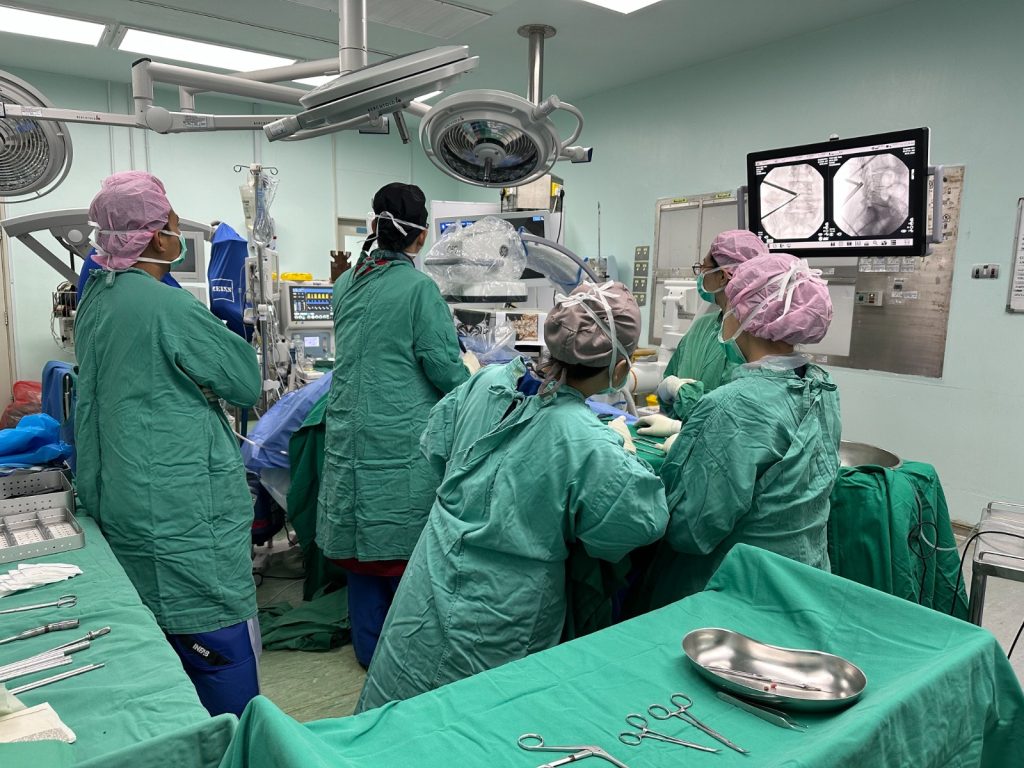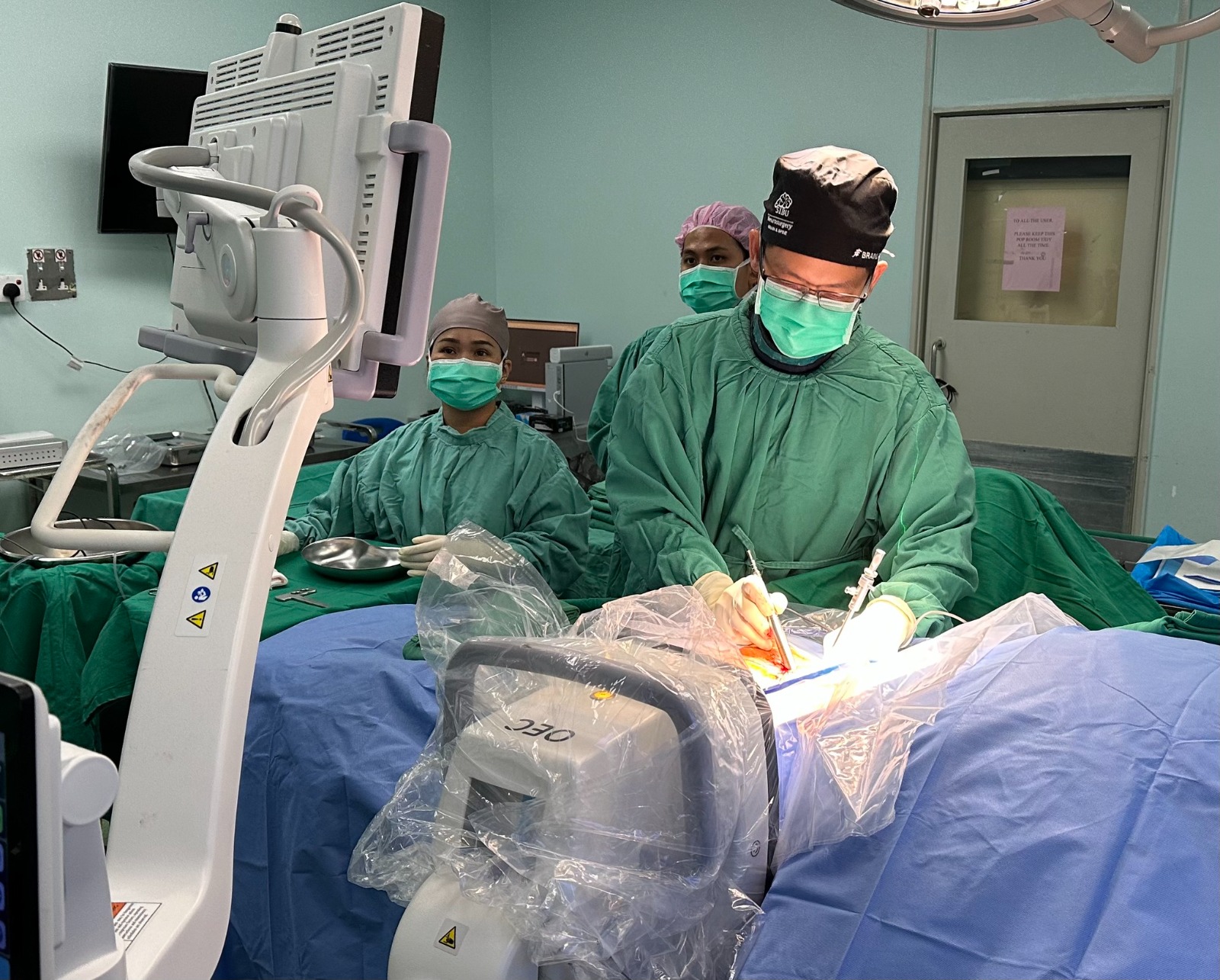
SIBU: Sarawak has recorded a major milestone in neurosurgical care with the successful performance of its first Unilateral Biportal Endoscopic (UBE) spine surgery at Sibu Hospital here on Jan 13.
The procedure, carried out by neurosurgeon Dr Nelson Yap and his team, was the first UBE spine surgery performed in Sarawak and the first conducted by a Ministry of Health (MOH) neurosurgical team in the state.
Dr Yap said it is also believed to be the first UBE spine procedure carried out in a district hospital in Malaysia.
Unlike similar procedures performed in selected tertiary hospitals in Peninsular, which often involve additional charges, the inaugural UBE surgery in Sibu was completed without imposing any extra cost on the patient.
“This was not just a new procedure. It was a statement that geography, status and limited resources should never determine who deserves modern, minimally invasive care.
“While a small number of UBE procedures have been performed in tertiary MOH hospitals in Peninsular, they often involve additional charges.
“In contrast, this inaugural UBE surgery in Sibu was carried out without imposing any extra cost on the patient,” he said in a Facebook post.
Dr Yap said cost had long been the main barrier to introducing endoscopic spine surgery in central Sarawak, noting that uniportal endoscopic procedures alone could incur rental fees of between RM20,000 and RM30,000 per case, making them unsustainable in a non-tertiary setting.
Following his spine fellowship training at Wooridul Spine Hospital in South Korea, he said nearly two years were spent assembling the necessary equipment for biportal endoscopic spine surgery through official MOH channels.
“Acquiring assets through official MOH channels, particularly via the Crisis Preparedness and Response Centre (CPRC) system, proved extremely challenging, even for basic equipment such as an electrocardiogram (ECG) machine.
“Nevertheless, persistence prevailed. The sacrifices, frustration and long wait were ultimately worthwhile, as we were able to perform the procedure free of charge for the patient,” he said.
The landmark procedure involved a 70-year-old woman who had experienced severe lower back pain for more than six months.
Dr Yap said Magnetic Resonance Imaging (MRI) findings confirmed spinal canal stenosis at the L4/L5 level, and she consented to surgery after counselling and standard preoperative assessment.
The surgery was completed smoothly and earlier than anticipated, without major complications or conversion to open surgery — an outcome Dr Yap attributed to preparation and teamwork.
“This achievement did not belong to one surgeon alone,” he said.
“It belonged to a band of brothers and sisters, the anaesthetic team and operating theatre nurses who worked with commitment, resilience, and heart.”
He also acknowledged the support of industry partners, including Medtronic and Karl Storz, which provided essential equipment for the procedure.
With UBE spine services now available in Sibu, Dr Yap said patients in central Sarawak would have access to minimally invasive spine surgery that reduced surgical trauma and improved recovery outcomes.
““Should there be donors willing to contribute uniportal endoscopic spine equipment, we are ready to introduce uniportal endoscopic spine surgery in Sibu for the benefit of Sarawakians,” he said.