Every year, the seventh month of the lunar calendar is marked by the Hungry Ghost Festival, a time often associated with fear, caution and superstition. But beyond the incense smoke, paper offerings and sombre rituals lies a tradition deeply rooted in values of virtue, filial piety and remembrance.
Honouring Ancestors, Remembering Value
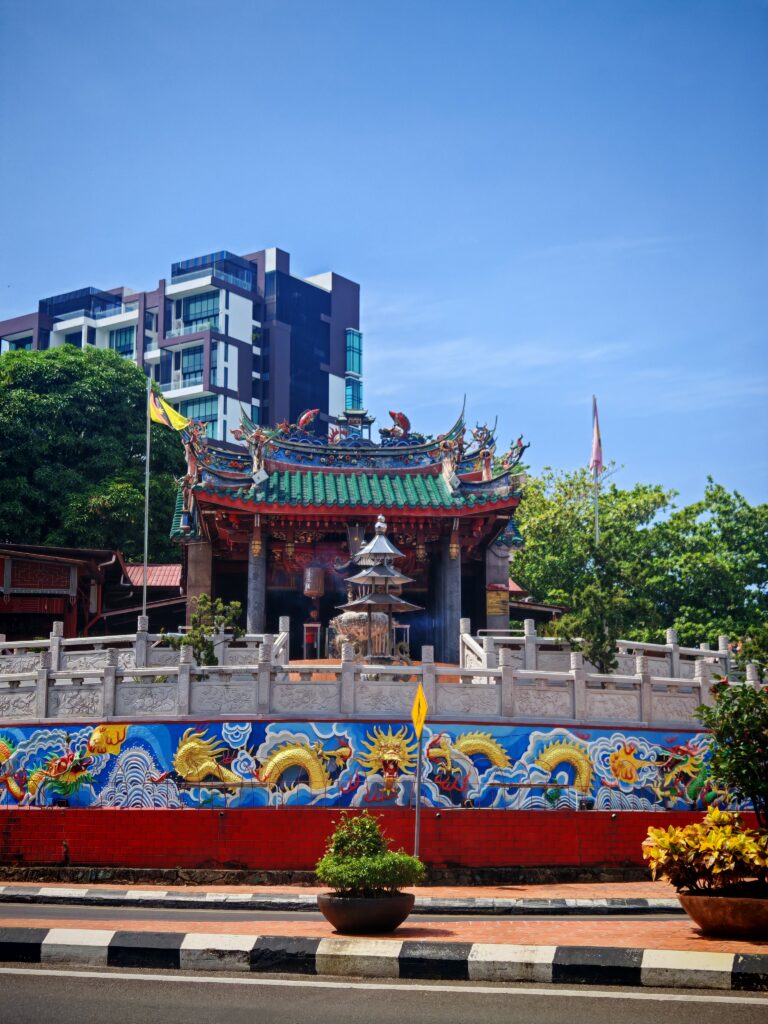
As Asians, we grow up fearing the Hungry Ghost Month. This is no surprise, as the Chinese believe that during this period (the seventh month of the lunar calendar), accidents are more likely to happen and can even lead to death. But as I learned more about the festival, I discovered that these hungry ghosts have sad stories behind them — whether or not they deserve such fates is another matter. When I spoke to Chin Sey Moi, caretaker of the Tua Pek Kong temple, I realised there was more to this ‘scary’ month.
The Hungry Ghost Festival, also known as Zhong Yuan Jie, is said to be a dark month for the Chinese. This is because they believe the gates of hell are opened, allowing hungry ghosts — often wandering and lonely — to roam the realm of the living. This happens only once a year, and for these spirits, it is a time of exploration and adventure.
“During this month, it is believed that more accidents are bound to happen as these ghosts are also looking for a replacement in order to be reincarnated. So whatever we do, we must act with vigilance — whether driving carefully or avoid going out at late nights,” Chin advised.
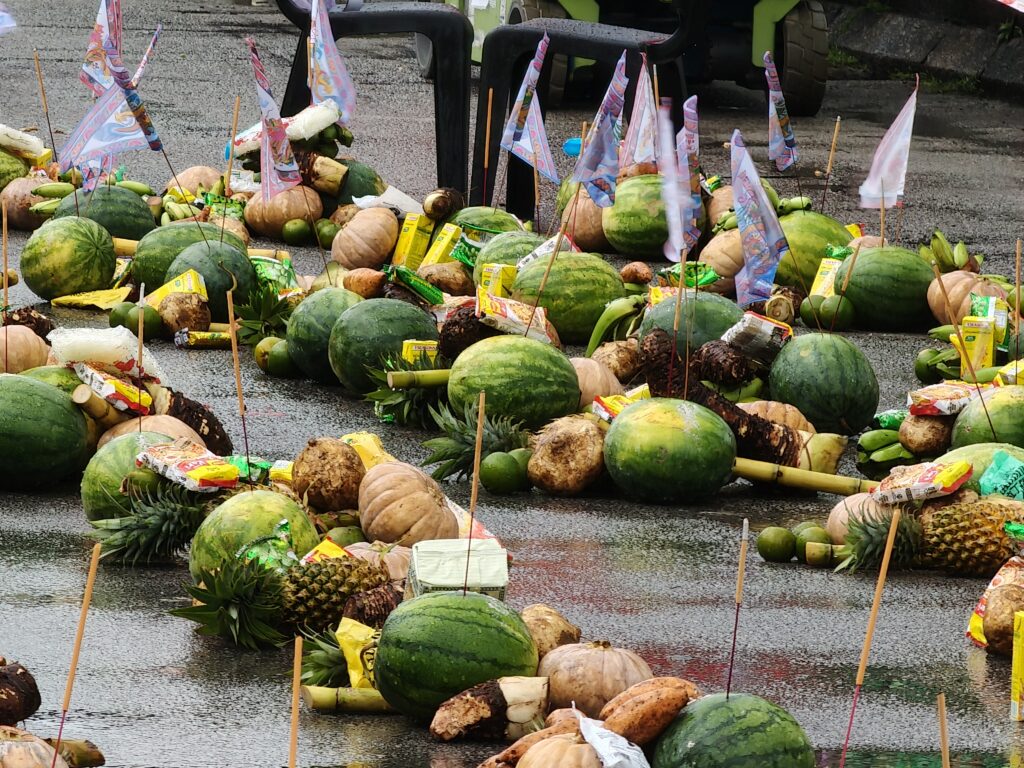
This is why we often see offerings placed by the roadside: pleas from the living not to be disturbed or tricked by the hungry ghosts. Chin explained that the spirits consume whatever is offered to them through these prayers and rituals. In return, they are content for another year in hell once the gates close.
The lonely ghosts
The sad thing about these ghosts is that they are wandering and lonely. After death, their souls are unable to reincarnate as they are sentenced to punishment in hell.
“You have to be kind and virtuous to enter heaven. But if you have not, and have done evil, then you will be sent to hell. During their time there, they must continue to be virtuous; only then can they enter heaven,” said Chin.
The problem, she added, is that these souls are often sorrowful, and may cause harm. To them, it stems from the feeling that they did not live a good life.
To make matters worse, these hungry souls often have no families or relatives on earth to pray for or remember them. Those with descendants who perform ancestral prayers may be given the chance to leave hell temporarily, visiting their graves to await offerings. Such spirits, Chin said, do not usually bother the living.
“Those without anyone are called the lonely ghosts. They often do not have a good life, so offerings are placed on earth to give them something to eat. In return, they are asked not to trouble the living — and are sometimes even asked to bless them instead.”
Lessons from the festival
Although modernity has strongly influenced today’s youth, Chin, who oversees the Tua Pek Kong temple in Kuching, still sees young visitors coming to pray. This has led her to conclude that, despite the advancements of technology and modern lifestyles, there is still faith within the young believers.
“The younger Chinese generations still follow their parents to the temple. Whatever the occasion, the culture and traditions continue. It’s the same with this festival — I still see it being well preserved and honoured by the young,” she said.
Chinese traditions are steeped in values and virtues, passed down from elders to the young. With proverbs and lessons woven into daily life, these remain the guiding principles that the community honours to this day.
For the Hungry Ghost Festival, though it centres on souls from hell, it serves as a reminder and a lesson for the living. For the Chinese, it is not only about being virtuous, but also about honouring filial piety and ancestor veneration. They believe that by practising these values, future generations will be blessed with a comfortable life.
The ritual of offering
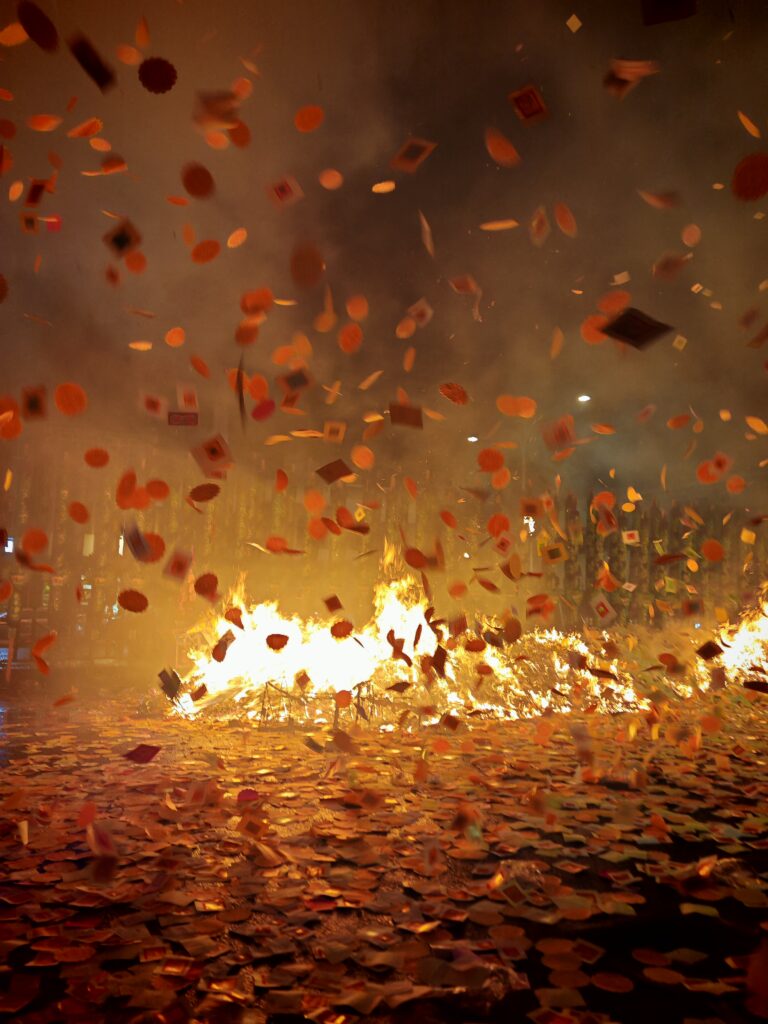
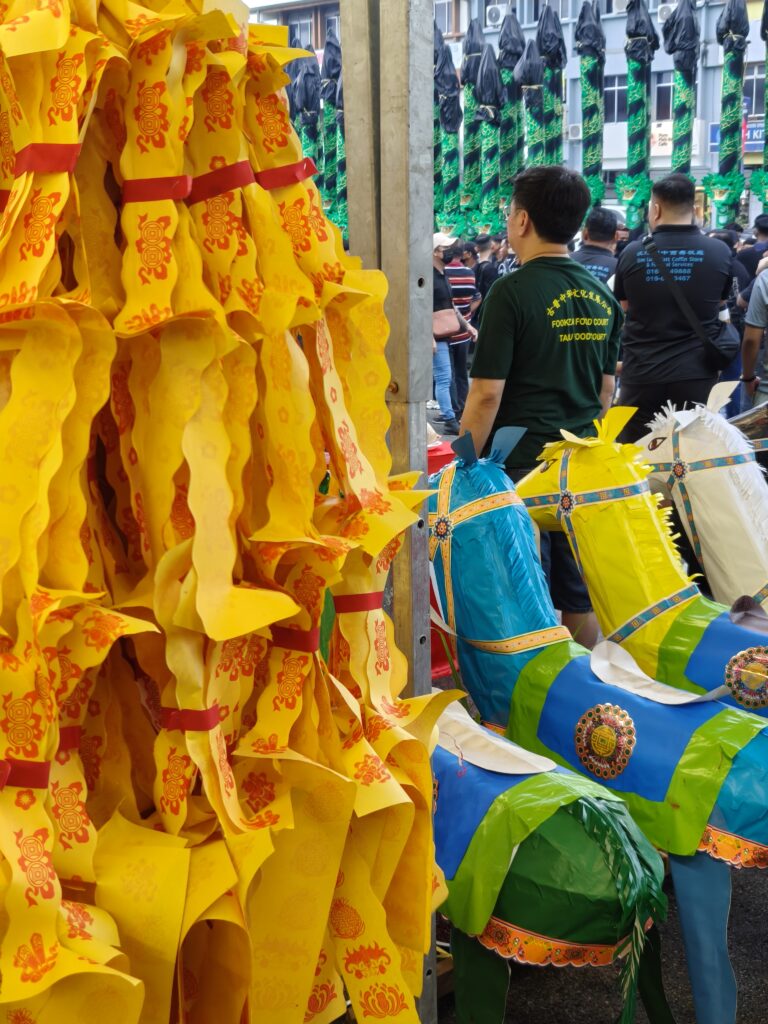
At the Tua Pek Kong temple in Kuching, a ritual will be held on September 21 to commemorate and bless these hungry ghosts. The day will feature chanting rituals, followed by the evening burning of paper paraphernalia such as gold and silver paper money, along with joss sticks.
After the burning, attendees take part in a little game of ‘grabbing’ offerings, which often include food, alcoholic drinks, cigarettes and others.
According to Chin, this game between the dead and the living symbolises blessings for the year ahead. “While we grab the items, we must also offer kind words — such as ‘thank you for the blessings’, ‘may you be reincarnated’, ‘please do not disturb others’, and ‘grant us good health always’.”
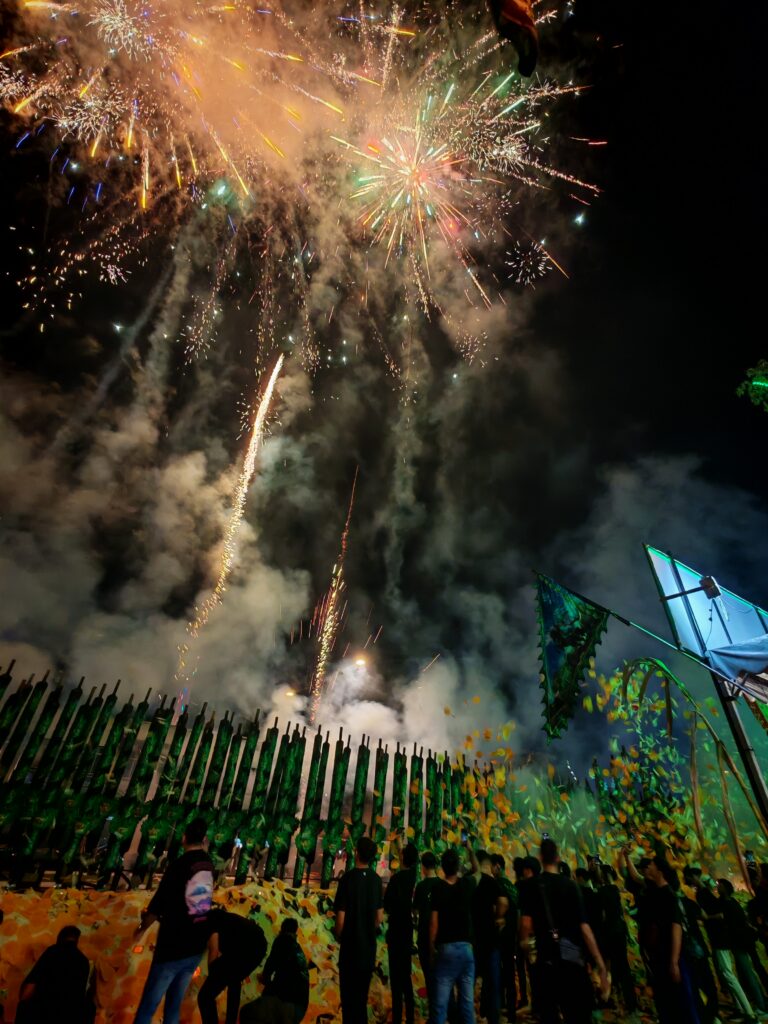
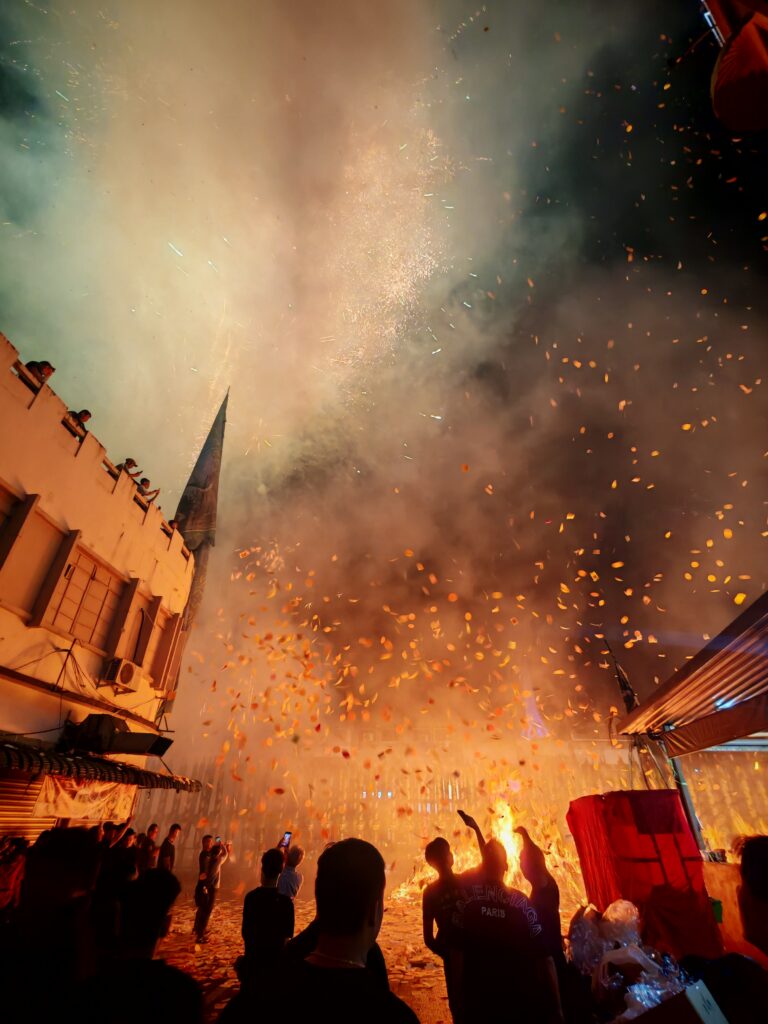
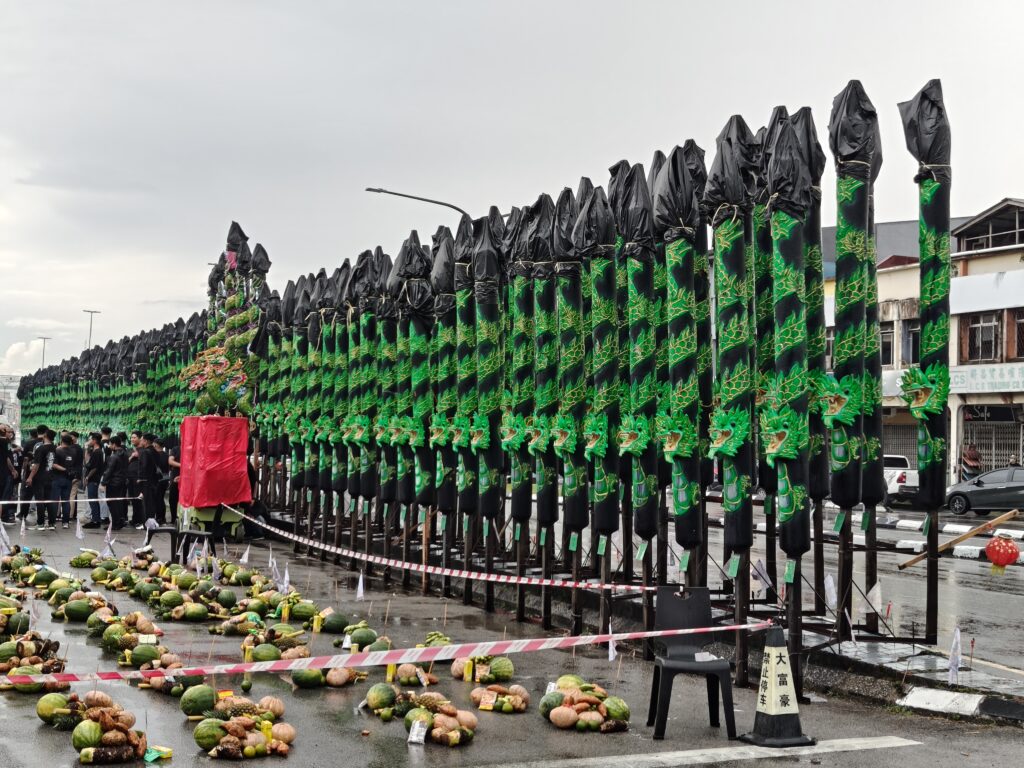
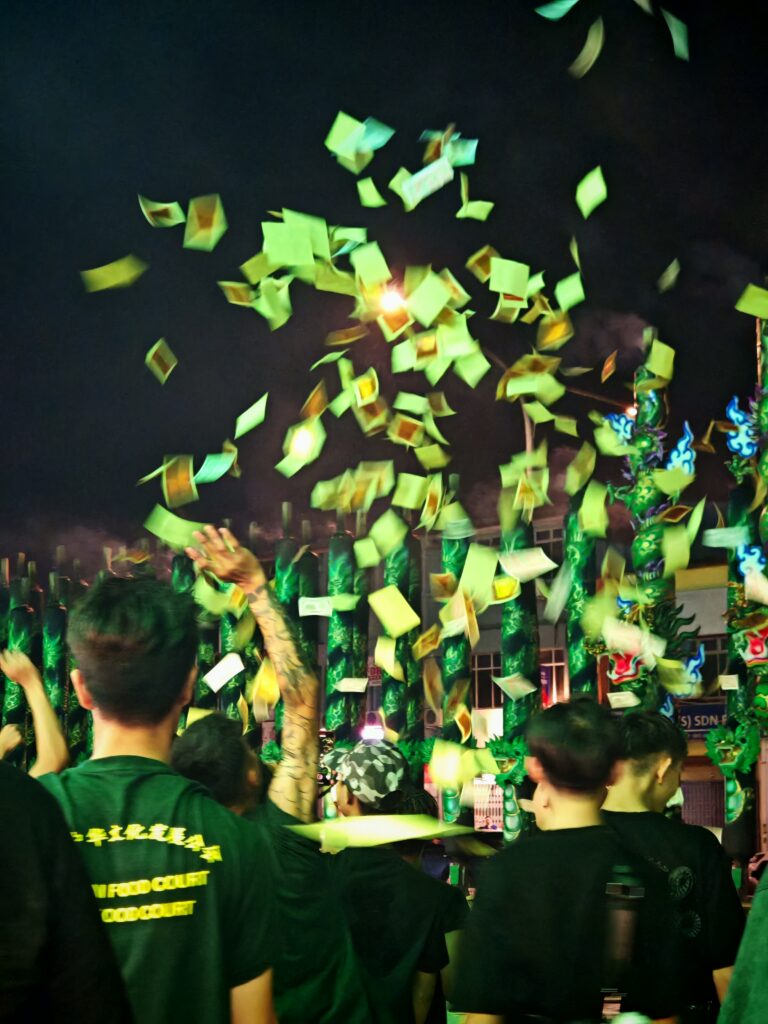
Meanwhile, at the Fook Zai Food Court in Sekama, Kuching, their annual ritual was held on September 6. The scene was filled with floating paper money, 239 giant prayer joss sticks standing tall in the background, and a finale of fireworks as paper paraphernalia burned in tribute to the souls, affectionately called ‘Siong Ti’ (brothers) in Hokkien.
Behind the incense smoke and paper offerings lies a reminder of the values carried for generations. What may seem like a month of dread is, in fact, a month of reflection — a time to remember that life is fleeting, that goodness carries weight beyond the grave, and that traditions, no matter how “old-fashioned”, continue to bind the living to the past. In honouring the hungry and lonely ghosts, the Chinese also honour their own humanity.