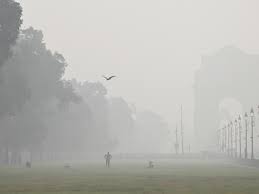
NEW DELHI: India’s efforts to combat air pollution by using cloud seeding in its sprawling capital, New Delhi, appear to have fallen flat, with scientists and activists questioning the effectiveness of the move.
Cloud seeding involves spraying particles such as silver iodide and salt into clouds from aircraft to trigger rain that can wash pollutants from the air.
Delhi authorities, working with the Indian Institute of Technology (IIT) Kanpur, began trials last week using a Cessna aircraft over parts of the city.
But officials said the first trials produced very little rainfall because of thin cloud cover.
“This will never ever do the job; it’s an illusion,” said Bhavreen Kandhari, an environmental campaigner in Delhi.
“Only when we clean up sources of air pollution can we control it.”
The government has spent around $364,000 on the trials, according to local media reports.
Each winter, thick smog chokes Delhi and its 30 million residents.
Cold air traps emissions from farm fires, factories, and vehicles.
Despite various interventions — such as vehicle restrictions, smog-sucking towers, and mistspraying trucks — the air quality ranks among the worst for a capital in the world.
A day after the latest trial, levels of cancer-causing PM2.5 particles hit 323, more than 20 times the daily limits set by the World Health Organization.
They will likely worsen further through the season.
A study published in The Lancet Planetary Health last year estimated that 3.8 million deaths in India between 2009 and 2019 were linked to air pollution.
There are also questions about the long-term impact of the chemicals sprayed themselves.
While the US Environmental Protection Agency notes “limited” studies suggest silver iodide does not pose an environmental or health risk, it acknowledges that the impact of more widespread use is “not known”. – AFP