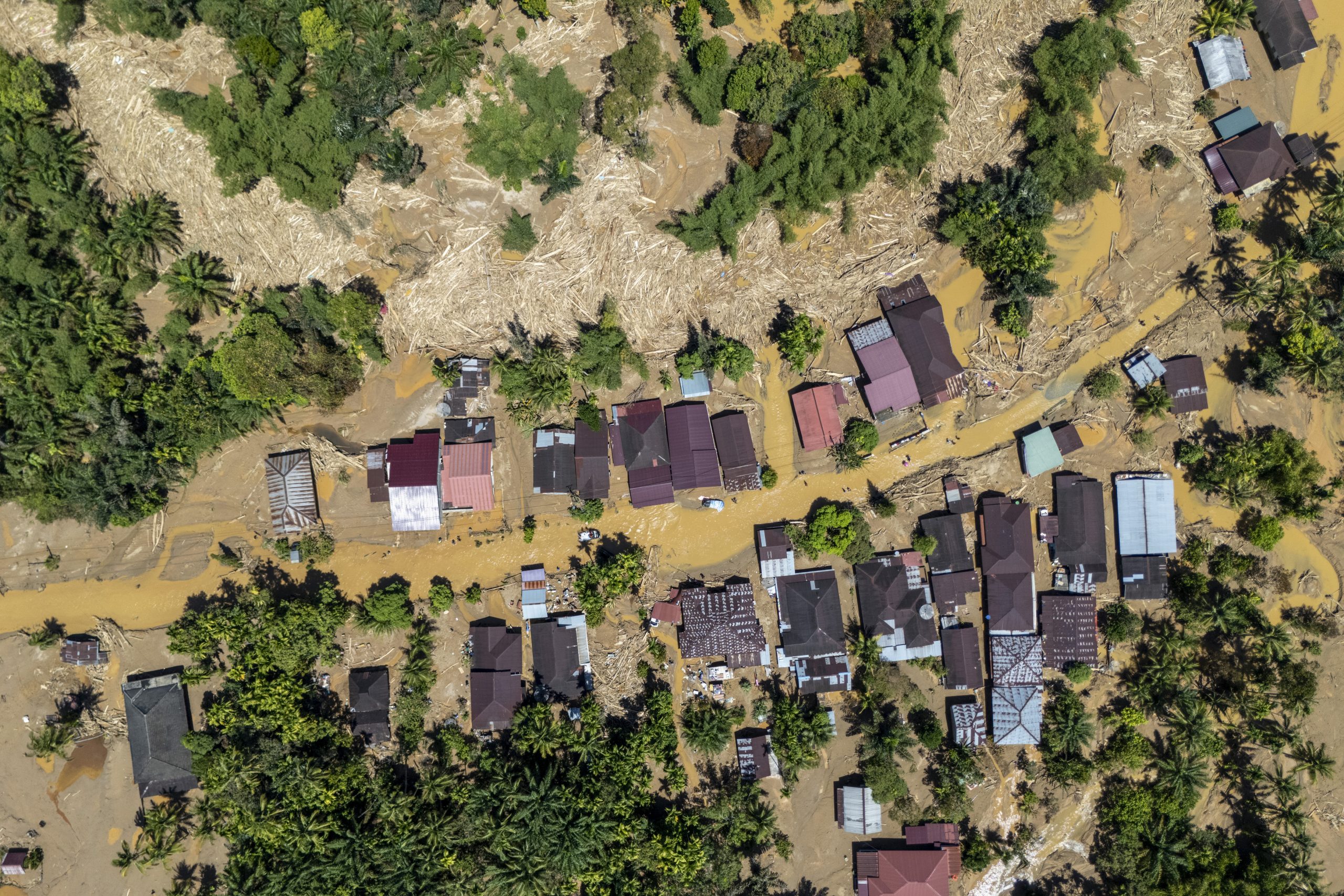
BANGKOK, Thailand: Indonesia’s deadly flooding was an “extinction-level disturbance” for the world’s rarest great ape, the tapanuli orangutan, causing catastrophic damage to its habitat and survival prospects, scientists warned on Friday.
Only scientifically classified as a species in 2017, tapanulis are incredibly rare, with fewer than 800 left in the wild, confined to a small range in part of Indonesia’s Sumatra.
One dead suspected tapanuli orangutan has already been found in the region, conservationists told AFP.
“The loss of even a single orangutan is a devastating blow to the survival of the species,” said Panut Hadisiswoyo, founder and chairman of the Orangutan Information Centre in Indonesia.
Analysis of satellite imagery combined with knowledge of the tapanuli’s range suggests that the flooding which killed nearly 1,000 people last month may also have devastated wildlife in the Batang Toru region.
The scientists focused on the so-called West Block, the most densely populated of three known tapanuli habitats, and home to an estimated 581 tapanulis before the disaster.
There, “we think that between six and 11 per cent of orangutans were likely killed”, said Erik Meijaard, a longtime orangutan conservationist.
“Any kind of adult mortality that exceeds one per cent, you’re driving the species to extinction, irrespective of how big the population is at the start,” he told AFP.
But tapanulis have such a small population and range to begin with that they are especially vulnerable, he added.
Satellite imagery shows massive gashes in the mountainous landscape, some of which extend for more than a kilometre and are nearly 100 metres wide, Meijaard said.
The tide of mud, trees and water toppling down hillsides would have carried away everything in its path, including other wildlife like elephants.
David Gaveau, a remote sensing expert and founder of conservation start-up, The Tree Map, said he was flabbergasted by the before-and-after comparison of the region.
The devastation means remaining tapanulis will be even more vulnerable, with sources of food and shelter now washed away.
Over nine per cent of the West Block habitat may have been destroyed, the group of scientists estimated. – AFP