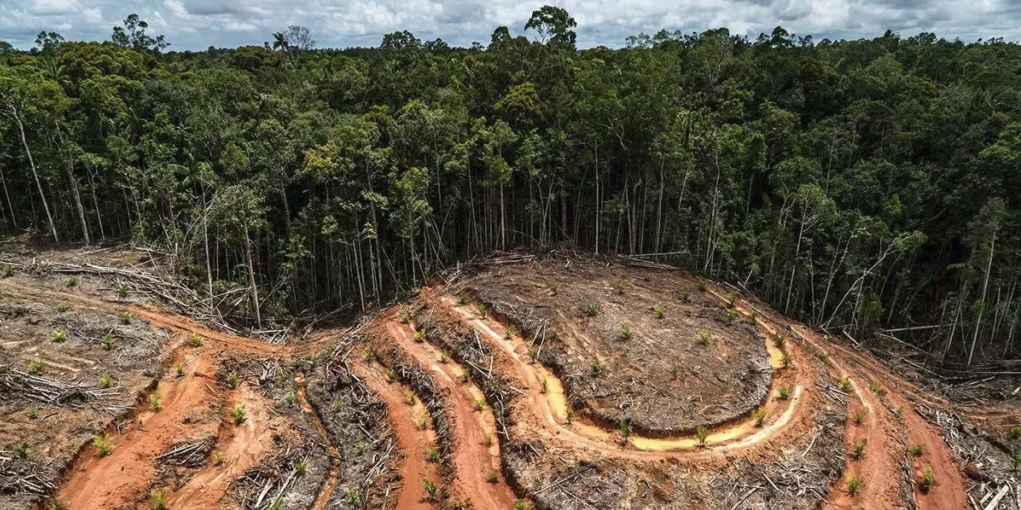
KUCHING: Indonesia is promoting the integration of the forestry sector into the country’s carbon trading scheme as part of the efforts to rehabilitate degraded land and reduce deforestation.
The country has some 6.5 million hectares of degraded land in need of rehabilitation, according to Indonesian Forestry Minister Raja Juli Antoni.
He said there was an urgency of revising Indonesian Presidential Regulation No 98 of 2021 to facilitate the opening of a voluntary carbon market, thus enabling private sector investment.
“By opening this voluntary carbon market, we hope that there will be investment to plant in these barren areas and the consequences, of course, the private sector will get incentives from their businesses. But I think this will also be good for state revenue through taxes and so on, a mechanism that we will talk about together,” he said after the initial meeting for REDD — GCF Phase II RBP in Jarkata recently
Indonesia has recorded a funding approval of US$103.8 million from the Green Climate Fund (GCF) for the proposed REDD (Reducing Emissions from Deforestation and Forest Degradation) RBP (Results-Based Payment) project.
Saying that Indonesia is open to international collaboration and funding for forest conservation and rehabilitation, Raja Juli said by revising the Presidential Decree 98 on the implementation of “carbon economic value for the achievement of nationally determined contribution targets and green house emission control in national development”, it is hoped that this would support efforts to restore forest and land areas as well as the prevention of forest fires and land degradation.
He believes that allowing private participation in carbon trading will not only support environmental goals but also generate state revenue through taxes and related mechanism, reported International Tropical Timber Organisation (ITTO) Tropical Timber Market Report (August 16-31, 2025) which quoted Antara News.
Previously, Raja Juli had targeted carbon trading in the forestry sector to start in July this year. However, there was a delay because the Presidential Regulation 98 has not been revised.
The initial stage of carbon trading will include forest management schemes by private Forest Utilisation Business License Holders (PBBP) and social forestry, with different carbon sequestration potentials.
PBPH has a potential to absorb 20-58 tons of carbon dioxide (CO2) per hectare at a price of US$5-US$10 per ton of CO2 while social forestry can absorb up to 100 tons of CO2 per hectare at a price of up to 30 Euros per hectare of CO2.
In a related development, the Forestry Ministry organised a forest and land rehabilitation market (RHL) to promote non-timber forest products from across Indonesia. This market aimed to help communities sell forest products that they have planted to restore critical land
According to Dyah Murtiniungsih, director-general of Watershed Control and Forest Rehabilitation (Ditjen Pdasrh), which is leading the initiative, the RHL market is a practical example of how forest and land rehabilitation can support food security in Indonesia.
The Ditjen Pdasrh also plans to develop a comprehensive programme for natural resource management with a focus on empowering communities.
Meanwhile, the ministry has designated 400,000 hectares of land Indonesia as customary forests to recognise and protect the rights of indigenous communities.
Raja Juli said the move is intended to provide legal certainty and protection for indigenous communities over their ancestral land which have been managed sustainably for generations.
This achievement, he added, is the result of strong synergy between national policy, various stakeholders and indigenous communities.
On another development, the Indonesian Furniture and Handicraft Industry Association has raised concerns about the declining share of the manufacturing sector in the country’s gross domestic product (GDP) as it had fallen to below 19 per cent from 28 per cent in 2010.
The furniture and handicraft sectors, despite their importance to the creative economy, are particularly affected by this downturn. The sectors faces many challenges, including high production and logistics costs, dependence on imported raw materials, hurdles to access financing and stiff international competition.
Association’s chairman said a fundamental “mental transformation” is necessary on the part of entrepreneurs. He pointed out that the industry’s habit of copying designs from buyers or other producers create an image of “low cost factory” rather than a hub of creativity leading to businesses competing mainly on price.
Additionally, a focus on quantity over quality and a lack of collaboration among businesses weaken the industry’s international position.
Separately, Indonesia Furniture & Craft Promotion Forum general chairman Erie Sasmito had urged enterprises to adopt modern technology to expand business and improve global competitiveness. According to him, utilising latest technology can make the industry more efficient and better equipped to handle the tough global competition.
New machinery technology and technology is reported could help reduce raw material costs which made up between 40 per cent and 60 per cent of total production costs while at the same time boosting productivity and product quality.