By Nik Nurfaqih Nik Wil
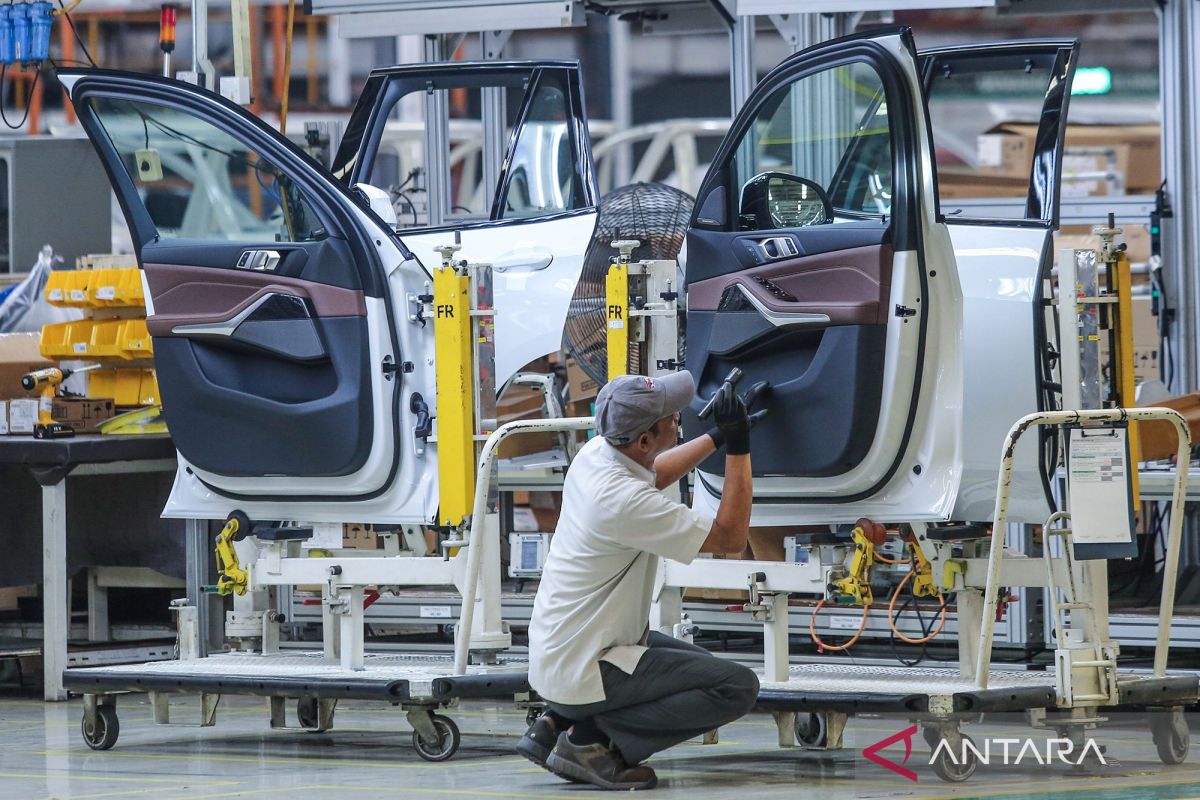
JAKARTA, Indonesia: Indonesia’s manufacturing sector remained the main driver of the country’s export performance in the first quarter of 2026 (1Q 2026), supported by stronger global demand and favourable commodity price trends.
Trade Minister, Budi Santoso, said manufacturing exports rose 3.96 per cent year-on-year (y-o-y) to USD54.98 billion (USD1=RM3.95) in January-March 2026, compared with USD52.89 billion in the same period last year.
“The sector accounted for 82.25 per cent of Indonesia’s total exports during the period, underscoring the growing role of downstream industries and processed products in the country’s trade performance,” he said in a statement today.
Budi noted that among the strongest-performing export products were nickel and related products, which surged 60.60 per cent y-o-y, followed by tin products (49.09 per cent), aluminium products (40.97 per cent), organic chemicals (21.44 per cent), and inorganic chemicals (14.46 per cent).
He said Indonesia’s total exports in 1Q 2026 reached USD66.85 billion, slightly up 0.34 per cent from the same period last year, with non-oil and gas exports continuing to support overall trade performance.
He said the stronger export performance was influenced by global price trends and increased demand from Indonesia’s major trading partners, adding that the government would continue expanding export markets while maintaining the stability of domestic industries amid ongoing global uncertainties.
In terms of export destinations, he said Indonesia’s non-oil and gas exports in the same period showed strong growth in several markets, with the highest increase recorded in exports to Spain at 38.86 per cent, followed by Egypt (25.43 per cent), China (17.49 per cent), Thailand (13.58 per cent) and the Netherlands (11.37 per cent).
“Exports to non-traditional regions such as other Central Asian countries, North Africa, East Asia, other South American countries and West Africa also posted positive growth,” he said.
Cumulatively, Budi said Indonesia recorded a trade surplus of USD5.55 billion in 1Q 2026, comprising a non-oil and gas surplus of USD10.63 billion and an oil and gas deficit of USD5.08 billion.
During the same period, he said Indonesia’s imports rose 10.05 per cent y-o-y to USD61.30 billion, driven mainly by a 12.16 per cent increase in non-oil and gas imports, while oil and gas imports contracted 1.72 per cent.
He said that based on the broad economic categories (BEC), all import components recorded growth, led by capital goods at 24.02 per cent, followed by raw and auxiliary materials (6.89 per cent) and consumer goods (6.12 per cent).
“The increase in capital goods imports was driven, among others, by demand for strategic commodities such as smartphones, computers and aircraft,” he added. – BERNAMA