BY RASHEEQA BAHIDA & NATASHA JEE
COMMITTED to ensuring the successful implementation of the 13th Malaysia Plan (13MP) for the benefit of the people, the International Institute of Public Policy and Management (INPUMA) at the University of Malaya is presently conducting a nationwide public discourse to gather feedback for the national development plan.
Presented by the Prime Minister Datuk Seri Anwar Ibrahim on July 31 this year, the 13MP aims to outline the country’s next phase of development by addressing the concerns and challenges of the people while ensuring that upcoming public policies are inclusive and comprehensive.
Aligned with this objective, INPUMA has been tasked by the Ministry of Economy to spearhead this initiative, which complements the government’s existing efforts to ensure that the voices of the people are heard and duly considered.
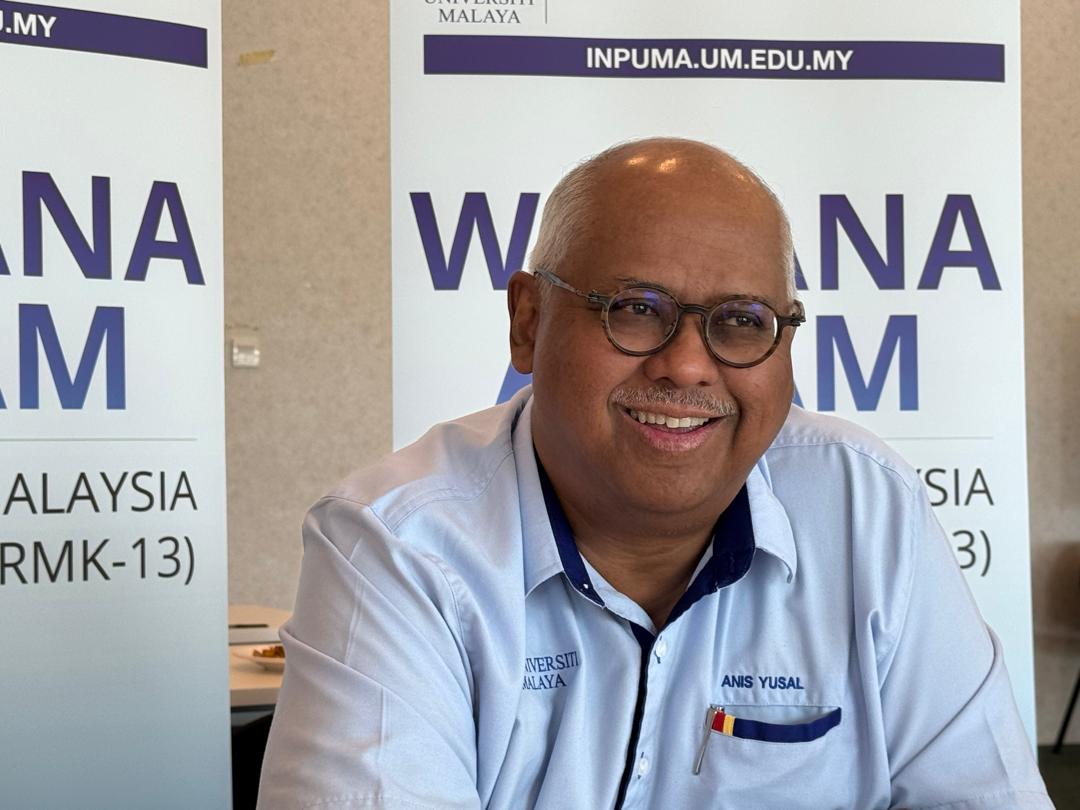
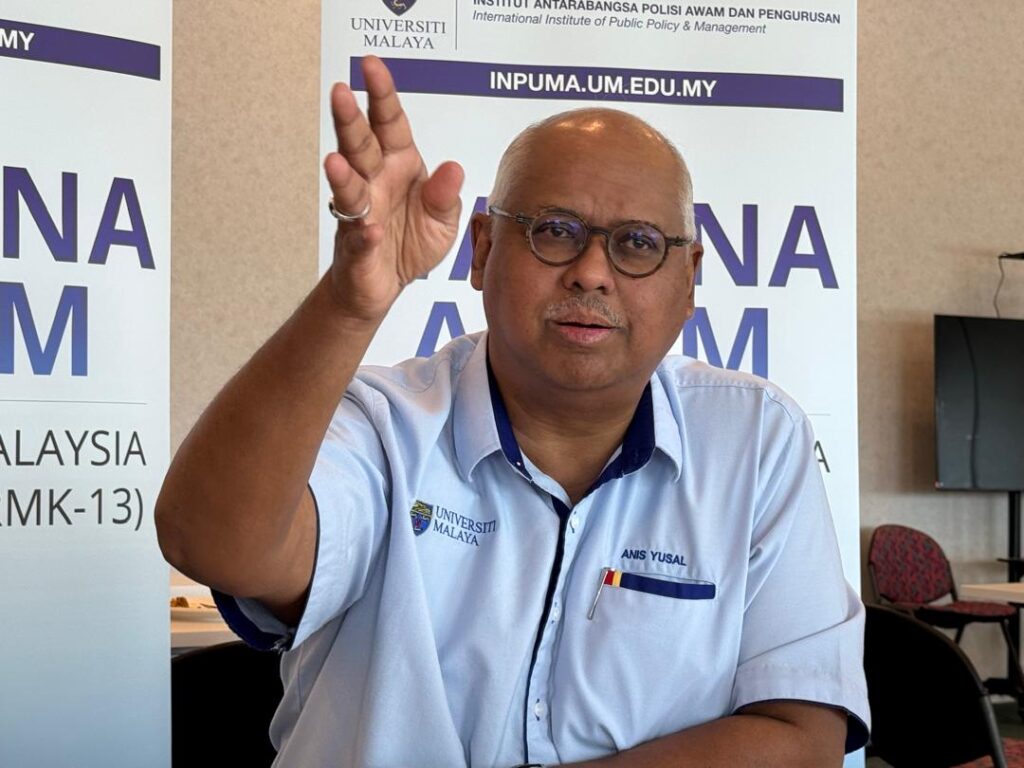
In an exclusive interview with the Sarawak Tribune, Datuk Dr Anis Yusal Yusoff, the Executive Director of INPUMA, underscored that the public discourse serves as a constructive platform to gather views, suggestions, and ideas from various segments of society, all of which are instrumental in shaping effective and pragmatic policies.
He also emphasised the issues raised by experts and locals in Sarawak during the public discourse and stressed the significance of adopting a bottom-up approach to policy-making, where the voices and grievances of the people are accorded due attention.
Sarawak Tribune: Could you elaborate on INPUMA’s collaboration with the Ministry of Economy to collect public input for the 13MP?
Anis: The Ministry of Economy aims to facilitate extensive public discourse. Historically, the five-year Malaysia Plans were typically announced and perhaps only discussed in Parliament, with limited public engagement.
Therefore, the government has engaged academic institutions like us at INPUMA to directly solicit input from the public, which will subsequently inform the formulation of more effective policies.
From the feedback gathered, we establish platforms for public discourse. The information we gather is utilised for articles in newspapers and columns to stimulate public reading and interest.
We also engage in televised dialogues, such as the one I participated in on TVS, where we can address issues raised by the public on a national platform.
Likewise, we also partake in radio segments, and we are planning a national conference in October to sustain the dialogue on the 13MP.
When did INPUMA commence the public discourse activities?
Anis: We actually commenced just before the Prime Minister unveiled the 13MP. Our initial sessions were conducted in Sandakan in the first or second week of July, enabling us to start collecting data prior to the tabling of the 13MP.
Subsequently, we have continued to gather feedback post the tabling of the plan.
While the government had conducted its own engagement sessions earlier, a challenge was the participation of primarily government officials.
Hence, the Ministry of Economy engaged INPUMA, as a neutral entity, to directly engage with the public.
When we interact with grassroots communities, individuals feel empowered to express their opinions freely. This approach provides us with data that complements and augments what the government has previously gathered.
Thus far, the issues being raised are consistent and not entirely novel – enduring concerns such as infrastructure, internet accessibility, and electricity provision in Sarawak, challenges that communities have grappled with for numerous years.
Where have these public discourse activities been conducted, and what methodologies are being employed to gather input?
Anis: We have conducted sessions in Sandakan and Kota Kinabalu in Sabah, Kuala Lumpur, Alor Setar and Penang. Recently, we visited Miri and Kuching.
Next, we are scheduled to visit Melaka, Johor, and the East Coast states before concluding in Selangor, where we will convene a national conference to present our findings.
In addition to the public discourse sessions, we will conduct a rapid survey across 22 districts nationwide, spanning from Perlis to Sabah and Sarawak. Our fieldworkers will visit these areas to meet and interview individuals, gaining insights into public sentiment.
Following each session, we conduct focus group discussions with selected community leaders to validate the data we have collected. The data from these sessions, surveys, and focus groups will undergo sentiment analysis to identify critical issues and potential solutions.
We believe that solutions often lie within the community itself, not solely within the realm of policymakers.
Therefore, creating opportunities for individuals to express their grievances is pivotal. Otherwise, frustrations may manifest on social media in unproductive ways.
As researchers, our responsibility is to systematically collect this feedback and channel it into meaningful public discourse. Thus far, the received feedback underscores the significance of this endeavour.
In Sarawak, what are the primary issues raised by the public?
Anis: The issues raised are not novel. Individuals continue to highlight challenges related to infrastructure, water supply, internet connectivity, and electricity, particularly in rural regions of Sarawak.
Malaysia operates under a tripartite governance system — federal, state, and local. Many of the issues raised, such as infrastructure and services, fall within local jurisdiction. Therefore, local councils must be more responsive in addressing the concerns of the populace.
This is not about assigning blame but rather acknowledging that implementation capacity poses a challenge. If projects cannot be executed effectively, the intended benefits will not materialise.
Another recurring issue is coordination. Frequently, government agencies fail to coordinate effectively, leading to implementation delays.
Based on my observations, I am also concerned about the prevailing sentiment, wherein some members of the younger generation still perceive federal initiatives as separate from Sarawak and the rest of Malaysia.
It is imperative to transcend this mindset. Malaysia has functioned as a unified nation since September 16, 1963. Matters such as border security between Sarawak and Kalimantan are not just confined to Sarawak; they constitute national security concerns for Malaysia as a whole.
What local issues have been raised?
Anis: Usual concerns such as water supply, drainage, and flash floods persist. These are recurrent issues lacking comprehensive solutions.
During our visit to Sandakan, Sabah, residents expressed their frustration, remarking, “This is already the 13MP Plan, yet the issues persist.”
In urban areas like Kuching, internet access is adequate, but the scenario changes in rural localities.
Why are these problems persisting? The two primary hurdles are implementation capacity and inter-agency coordination.
Allocating substantial funds to a project is futile if there is a lack of capacity or expertise to execute it effectively, resulting in wasted resources and unrealised benefits for the populace.
Why is a five-year plan like the 13MP crucial when there is an annual Budget?
Anis: These serve distinct purposes. The annual Budget, formulated by the Ministry of Finance, caters to operational expenses like salaries and recurring outlays.
Conversely, the five-year plan, under the purview of the Ministry of Economy, focuses on long-term development. It serves as a strategic framework ensuring continuous and sustainable progress.
For instance, a five-year plan can project the requisite number of new schools and teachers based on population growth.
The annual Budget provides the financial resources to execute specific components of the long-term plan. A prolonged strategy guarantees the smooth progression of the country’s development, even amidst changes in governance.
You highlighted the need for the 13MP to be human-centric. Based on your observations, does it genuinely embody this focus?
Anis: The framework, as unveiled, aims to be human-centric. However, at this juncture, it remains primarily aspirational. The crux lies in the execution — the content. This will ultimately determine whether the plan genuinely centres on the people.
As articulated in my column, even with artificial intelligence (AI), an overreliance on AI can render processes artificial.
AI operates on algorithms that may appear sound theoretically, but lack ethical considerations and empathy.
Any integration of AI must be underpinned by authentic integrity and leadership to truly serve humanity meaningfully.
What are your aspirations for the future?
Anis: I aspire for the public to enhance their political literacy. This entails comprehending their rights and the distinct roles of elected officials.
A state assemblyman enacts state laws, while a Member of Parliament formulates laws at the national level.
Therefore, if an individual elects an MP, they should not anticipate them to resolve local issues like clogged drains. Their primary duty is to represent constituents in Parliament and safeguard their interests within the national policy framework.
When individuals grasp the responsibilities of their representatives, they can make informed decisions and hold the appropriate individuals accountable.
In Sarawak, certain constituencies are vast, necessitating boat travel for accessibility. Envisage the challenge of expecting an MP to return weekly during parliamentary sessions – it is arduous for them as well.
Conversely, leaders should not underestimate the intellectual capacity of ordinary citizens, including those residing in rural areas.
During a public discourse session in Kuching, I encountered an individual armed with typed economic data on Sarawak, while another, a former driver from Sabah, presented meticulously collected data.
Hence, it is imperative to respect grassroots perspectives and integrate them into policy formulation.