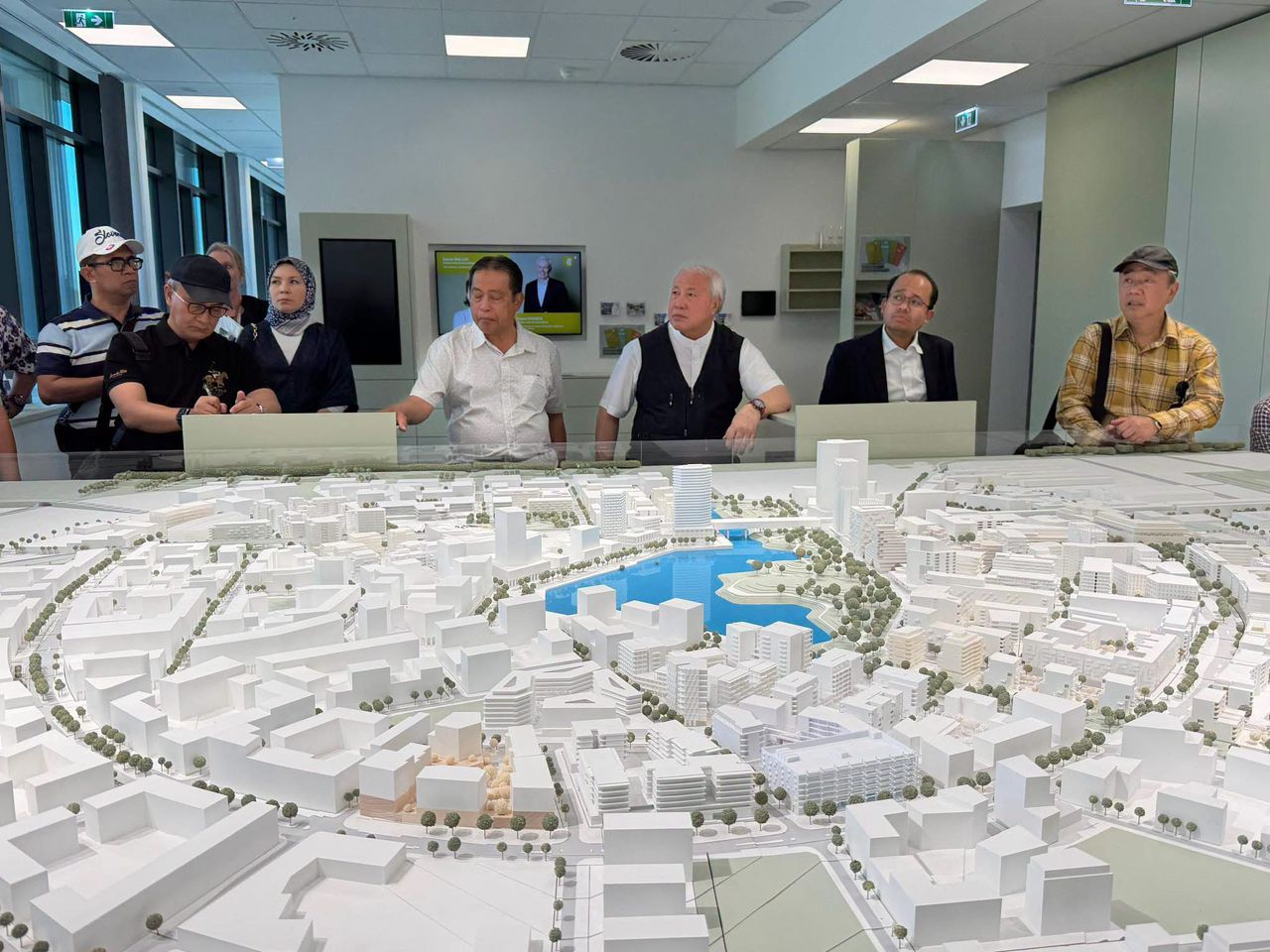
VIENNA, Austria: Sarawak is drawing insights from two landmark projects in Vienna, Austria, namely Aspern Seestadt and the Freudenau Hydropower Plant, to strengthen its long-term planning for smart cities, renewable energy, and resilient infrastructure.
Deputy Premier Datuk Amar Awang Tengah Ali Hasan said the official visit aligns with the state’s efforts to pursue balanced and sustainable growth through the Limbang-Lawas Local Plan 2035 and the Post COVID-19 Development Strategy 2030 (PCDS 2030).
“Sarawak is pursuing a development model that balances economic prosperity, social inclusivity, and environmental sustainability.
“The experience and knowledge gained from Vienna will help us strengthen our approach to urban planning, energy development, and infrastructure management in a more comprehensive manner,” he said in a statement following his official visit to Aspern Seestadt and the Freudenau Hydropower Plant.
Awang Tengah said that Sarawak’s recognition by the World Bank as a high-income economy marks a significant milestone, but emphasised that future growth must be supported by quality infrastructure, clean energy, and development that benefits all segments of society.
He described Aspern Seestadt as a model of modern urban development that successfully integrates housing, employment, education, recreation, public transport, green spaces, and economic activities within a well-planned and interconnected ecosystem.
Awang Tengah said the concept is highly relevant to the preparation of the Limbang-Lawas Local Plan 2035, which extends beyond land use planning to include integrated development of housing, commercial areas, tourism, logistics, public amenities, infrastructure investment, and environmental conservation.
On energy development, Awang Tengah said the Freudenau Hydropower Plant demonstrates how hydroelectric infrastructure can support clean energy generation while being seamlessly integrated with river management, urban development, and environmental protection.
He added that the experience gained from the project would help Sarawak further enhance its approach to renewable energy planning, low-carbon development, climate resilience, and sustainable natural resource management.
“The elements incorporated in both projects are in line with Sarawak’s aspirations to develop resilient smart cities, expand the use of green energy, and establish a more investment-friendly development framework that is responsive to climate change challenges,” he said.
He said that such approaches could strengthen cross-border trade, logistics, tourism, services and agro-based industries in northern Sarawak, while supporting the state’s ambition to become a regional clean energy hub and realise its role as the ‘ASEAN Green Battery’.