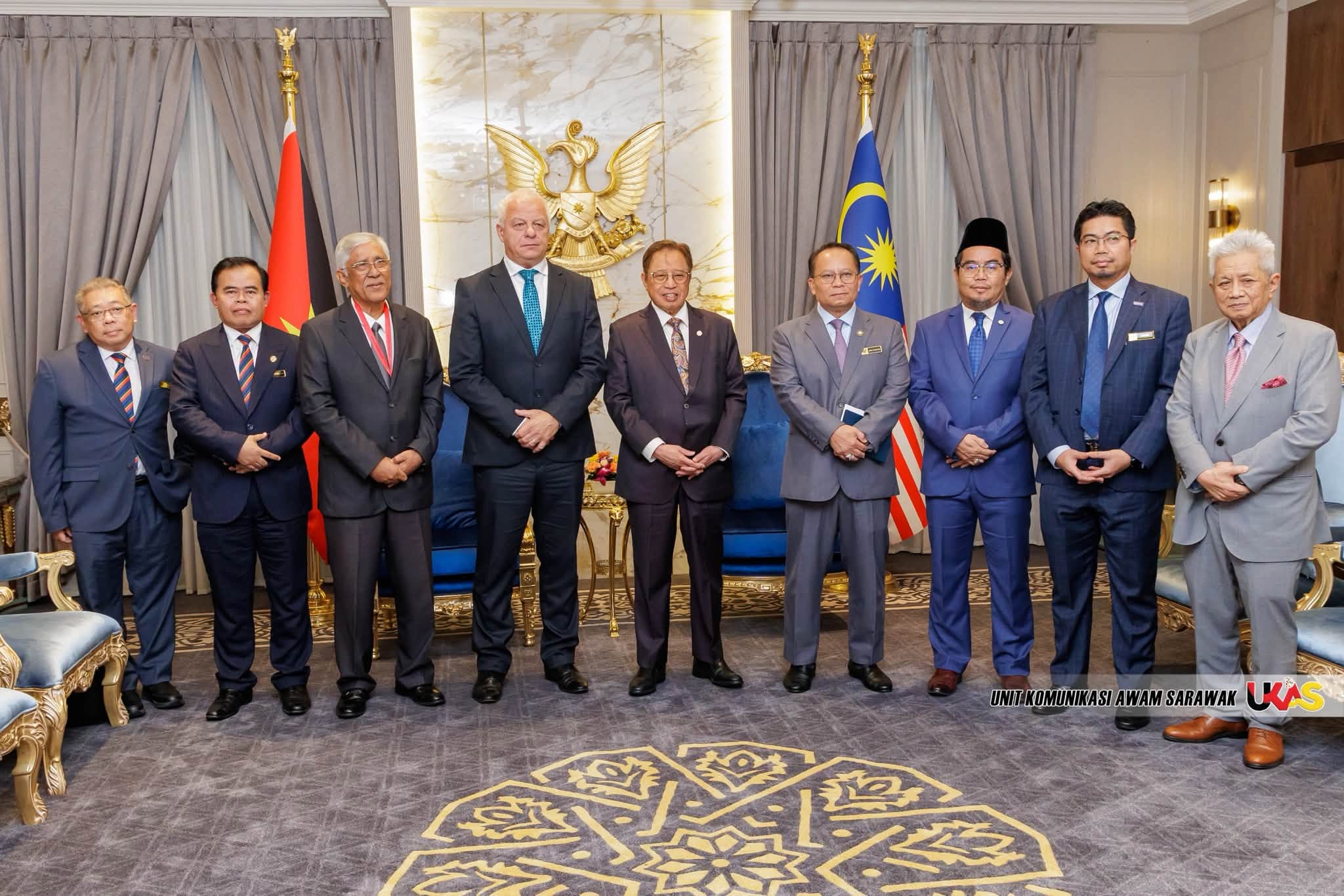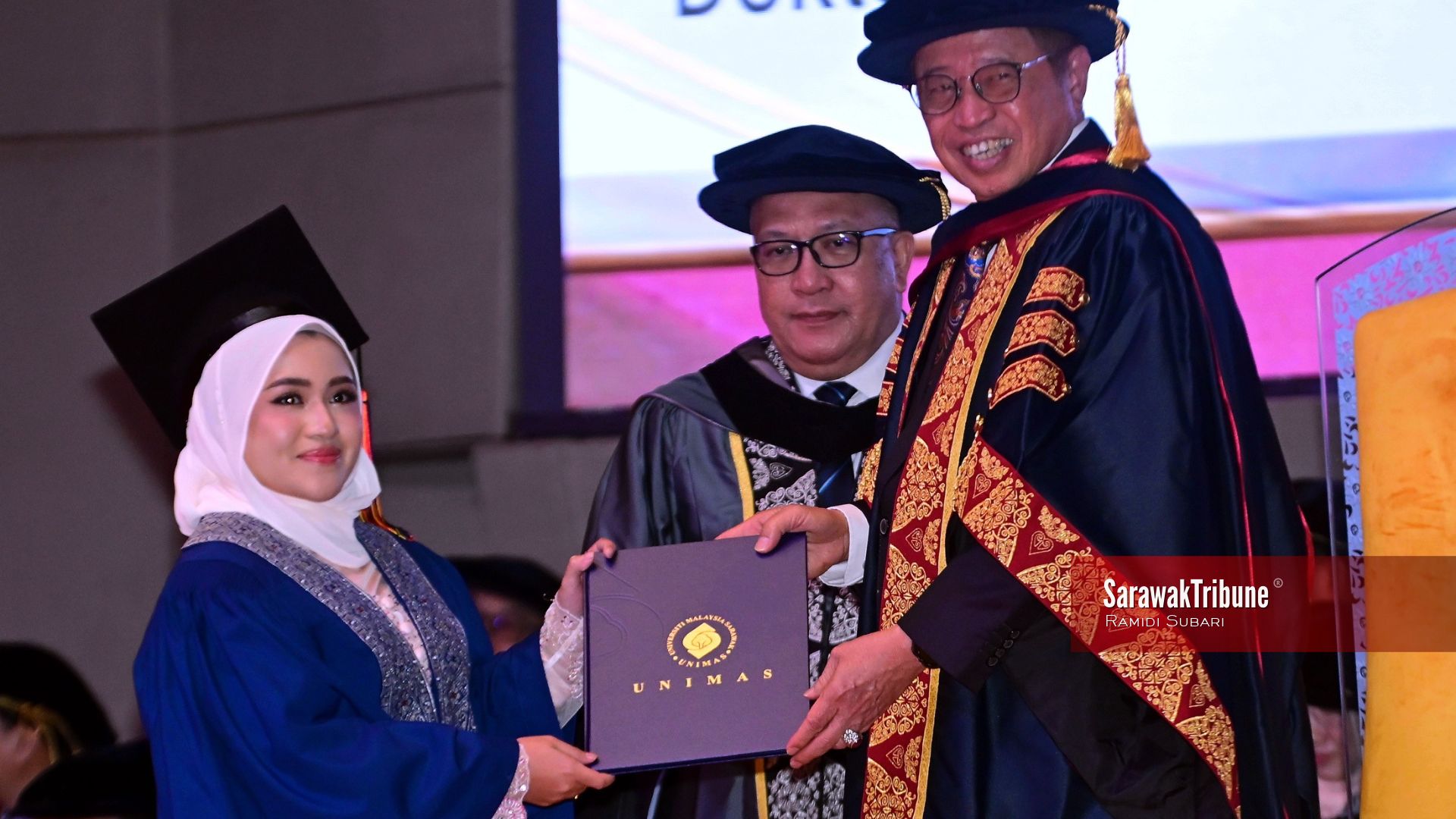
KOTA SAMARAHAN: Premier Datuk Patinggi Tan Sri Abang Johari Tun Openg has proposed a full scholarship for a PhD student to research the potential integration of Eastern and Western medicine, drawing on Sarawak’s rich biodiversity for healthcare applications.

He said the proposed research would also involve collaboration with overseas higher learning institutions to explore the potential of developing new healthcare solutions.
Abang Johari, who is also UNIMAS Pro Chancellor said the research would explore how both medical approaches could complement each other, particularly in botanical medicine, regional medicine and biomedical innovation.
“Yesterday (on Monday), I had the honour of officiating an international integrative medicine conference. This is a relatively new area in healthcare, where researchers are looking at connecting Western medicine with Eastern medicine,” he said.
He was speaking at the third session of the UNIMAS 30th Convocation Ceremony here Tuesday.
Abang Johari said Sarawak’s extensive biodiversity offered valuable natural resources that could be studied for their potential properties and applications in personalised medicine.
He said the research could also explore areas such as genomics and personalised medicine, with the aim of identifying ways to use the state’s natural resources to improve public health.
“I have proposed to UNIMAS that Yayasan Sarawak will provide a full scholarship for a PhD student to study the potential of converging Eastern and Western medicine, in collaboration with overseas institutions,” he said.
He said the initiative is part of the state’s broader efforts to strengthen medical research and healthcare capabilities, alongside the development of local medical professionals and specialised facilities.
Among the initiatives are the establishment of the Sarawak Infectious Disease Centre (SIDC) to enhance research, disease detection and monitoring, as well as the development of the Sarawak Cancer Centre to strengthen specialised treatment services.
He hoped that the UNIMAS Faculty of Medicine and Health Sciences would continue contributing to clinical research, public health and the development of local medical expertise.
He also called for stronger collaboration among universities, research institutions and health agencies to ensure scientific discoveries could be translated into practical benefits for the community.
Meanwhile, Abang Johari said Sarawak’s rich biodiversity, tropical forests, water resources and other natural assets held significant scientific and economic value and should be managed sustainably.
He said graduates in resource science and technology could contribute to the development of knowledge-based industries through expertise in biodiversity research, biotechnology, environmental science and sustainable resource management.
He also highlighted Sarawak Delta Geopark’s recognition as a UNESCO Global Geopark in April 2026, making it the first in the state.
The recognition, he said, created greater opportunities for scientific research, environmental education and sustainable tourism, while underscoring the importance of preserving Sarawak’s geological heritage and biodiversity for future generations.
He said UNIMAS’ Biodiversity Nexus Blueprint is aligned with this direction by connecting biodiversity research, local knowledge and innovation to generate economic and social benefits for communities.
Abang Johari added that scientific expertise developed at UNIMAS should also support research and innovation in strategic sectors such as the green economy, hydrogen technology, clean energy, sustainable aviation fuel and carbon capture, utilisation and storage (CCUS).
He said the state’s efforts to strengthen food security through modern agriculture, technology and higher productivity would likewise require expertise in biotechnology, plant science, microbiology and resource management to improve agricultural yields and benefit farmers and rural communities.