BY SITI NURAIN RATANI
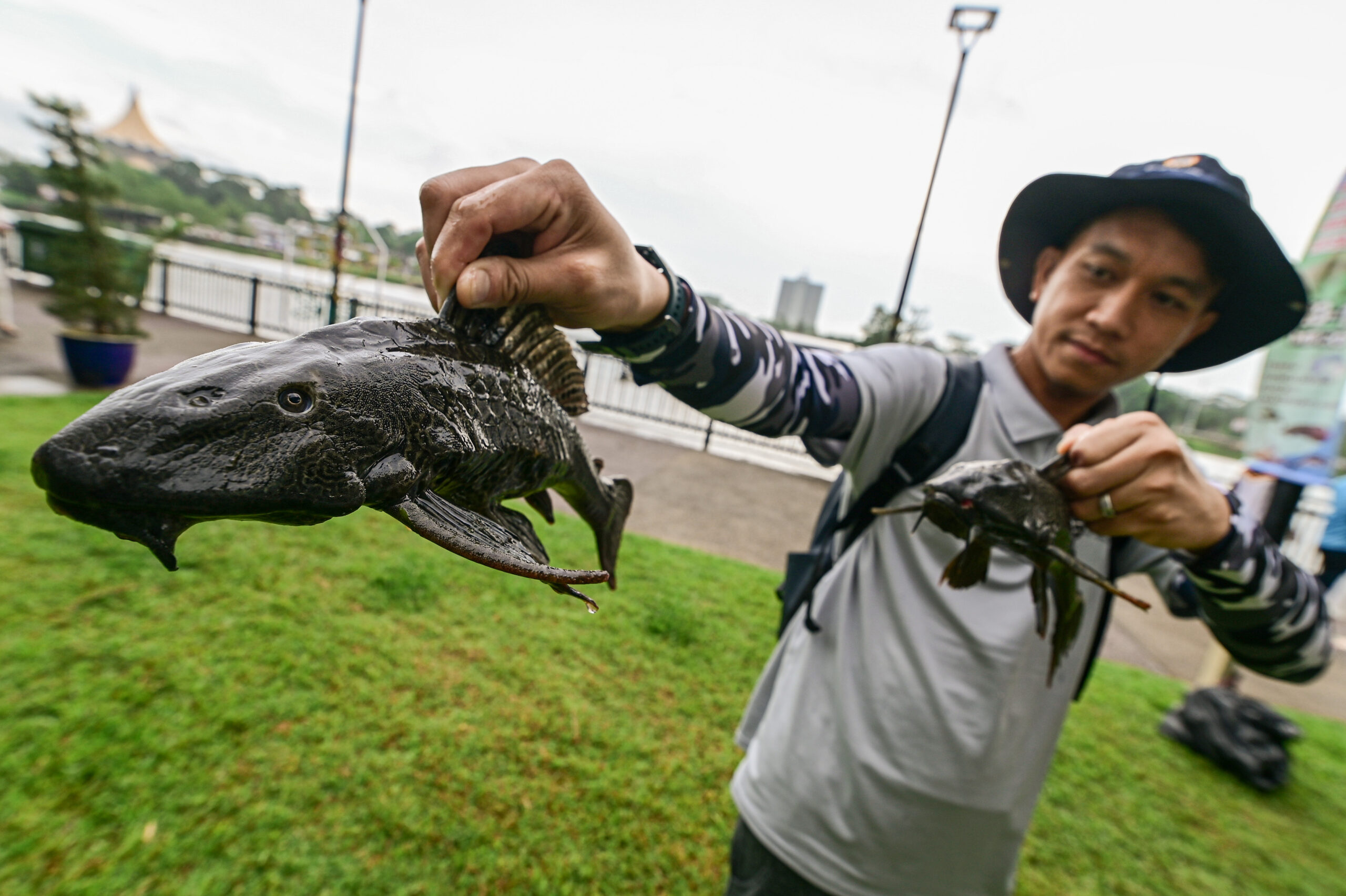
KUCHING: The presence of invasive alien fish species in Sarawak’s waters is becoming increasingly alarming, posing a serious threat to the sustainability of local ecosystems and negatively impacting the population of native fish species.
Minister for Food Industry, Commodity and Regional Development, Datuk Seri Dr Stephen Rundi Utom, said these foreign species can dominate the environment due to their high reproduction rate, resilience, and ability to adapt to various habitats.
“These species not only compete with native fish for food and space but also degrade water quality, erode riverbanks, and disrupt the balance of the food chain,” he said.
He made these remarks through a speech delivered by his Deputy Minister, Datuk Martin Ben, during the Opening Ceremony of the Invasive Alien Fish Hunting Programme in Sarawak 2025, held at the Kuching Waterfront yesterday.
Dr Rundi noted that the spread of invasive fish species in Sarawak’s inland waters poses a threat to native species such as Empurau, Semah, Tapah, Tengadak, Labang, and Sayan, which have existed for generations.
According to him, invasive alien fish refer to species not native to this country but introduced—either intentionally or unintentionally—into local public waters.
“In 2024, a total of 40 species were identified as invasive by the Department of Fisheries Malaysia (DOF), including Tilapia, African Catfish, Red-Tailed Catfish, Flower Horn, Alligator Fish, and Arapaima. These species are listed under the Fisheries (Prohibition of Import, etc. for Fish) Regulations 1990 (Amendment) 2011.

“For Sarawak, these species have been included in the proposed amendments to the State Fisheries Ordinance 2003, which is currently being reviewed for comprehensive enforcement and control,” he said.
Dr Rundi added that the spread of these species is primarily due to their ability to breed rapidly, survive in low-quality water, and consume a wide range of food sources—making them difficult to control once released into the wild.
Therefore, he fully supports the Sarawak Department of Agriculture’s ongoing efforts to strengthen public awareness and education on the issue.
“Congratulations also to agencies such as the Sarawak Security and Enforcement Unit (UKPS), Sarawak Rivers Board (LSS), Natural Resources and Environment Board (NREB), Sarawak Forestry Corporation (SFC), Kuching North City Hall (DBKU), Sarawak Marine Fisheries Department (JPLS), and Sarawak Fisheries Development Authority (LKIM),” he said.
He also recommended several preventive measures including avoiding the use of these species as bait, not releasing them into local waters, educating others about their dangers, and destroying any invasive species that are caught.
“The role of the community is very important. We need everyone’s cooperation as the eyes and ears of the government, particularly in reporting sightings of these species or preventing others from releasing them into public waters.
“This is crucial to ensure that Sarawak’s native species are preserved and that aquatic ecosystem balance is maintained,” he said.