TOKYO: Japan’s parliament approved on Friday a revised Imperial House Law to address the issue of the shrinking royal family, while retaining the long-standing male-only succession system, despite public support for female emperors, Kyodo News reported.
The first substantive revision to the 1947 law introduced two changes — permitting the adoption of males aged 15 and over from former branch families descended from emperors through the male line and allowing female members to retain their imperial status even after marrying commoners.
Despite the historic changes to the world’s oldest hereditary monarchy, the conservative ruling coalition led by Prime Minister Sanae Takaichi has faced criticism from opposition lawmakers for insufficient parliamentary deliberations.
They also have criticised the Liberal Democratic Party and its junior coalition partner, the Japan Innovation Party, for their apparent push to preserve the tradition of male and paternal-line imperial succession. Under the revised law, male descendants of those adopted into the imperial family could ascend the Chrysanthemum Throne.
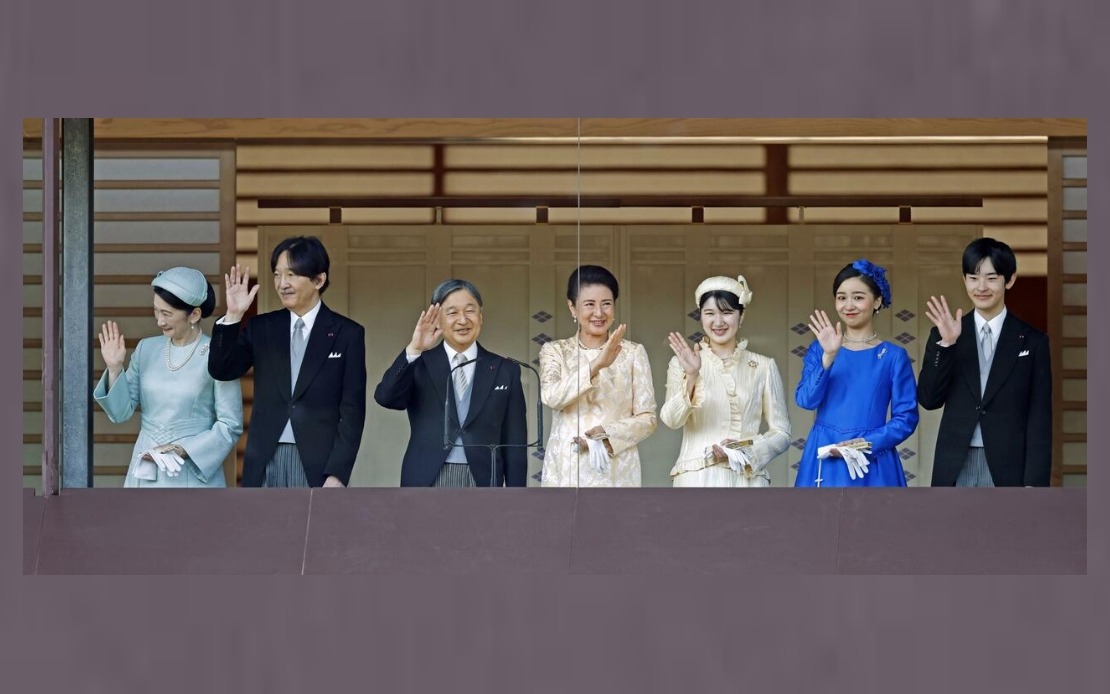
Such adoptions were once considered unfeasible. But the legal change approved by the House of Councillors paved the way for unmarried male descendants of the 11 former branch families that lost their royal status decades ago to join the current 16-member imperial family.
Imperial succession has been a pressing but divisive issue at a time when Japan has only three male heirs to Emperor Naruhito.
Months-long cross-party talks and the resulting “consensus” of the legislature, based on the views of 13 parliamentary parties and groups, did not address the succession issue. However, Takaichi’s government has maintained that male descendants can ascend the throne under the law.
The 1947 Imperial House Law took effect while Japan was under U.S. occupation following World War II.
Back then, a total of 51 members of the 11 former branches were removed from the imperial family.
That law stated that the throne “shall be succeeded to by a male offspring in the male line belonging to the Imperial Lineage,” a stance that remains intact to this day.
The latest legal revision, a priority for Takaichi — the first woman to lead Japan as premier — makes no mention of female or maternal-line emperors.
Despite this legal consistency, the public appears to be more accepting of change. In May, a Kyodo News poll showed that 83.0 per cent of respondents supported allowing female emperors, while 13.1 per cent opposed the idea.
— BERNAMA-KYODO