MIRI: Traditional tombstone carvings of the Jatti Miriek community, which reflect its cultural identity, history and local Islamic development, were highlighted at a knowledge transfer seminar held at Pustaka Negeri Sarawak, Miri.
The Seminar ‘Pemindahan Ilmu: Meneroka Identiti – Seni Ukiran Nisan Jatti Miriek’, held under the Ceramah Sarawakiana series, attracted more than 60 participants from government agencies, higher education institutions and schools around Miri.
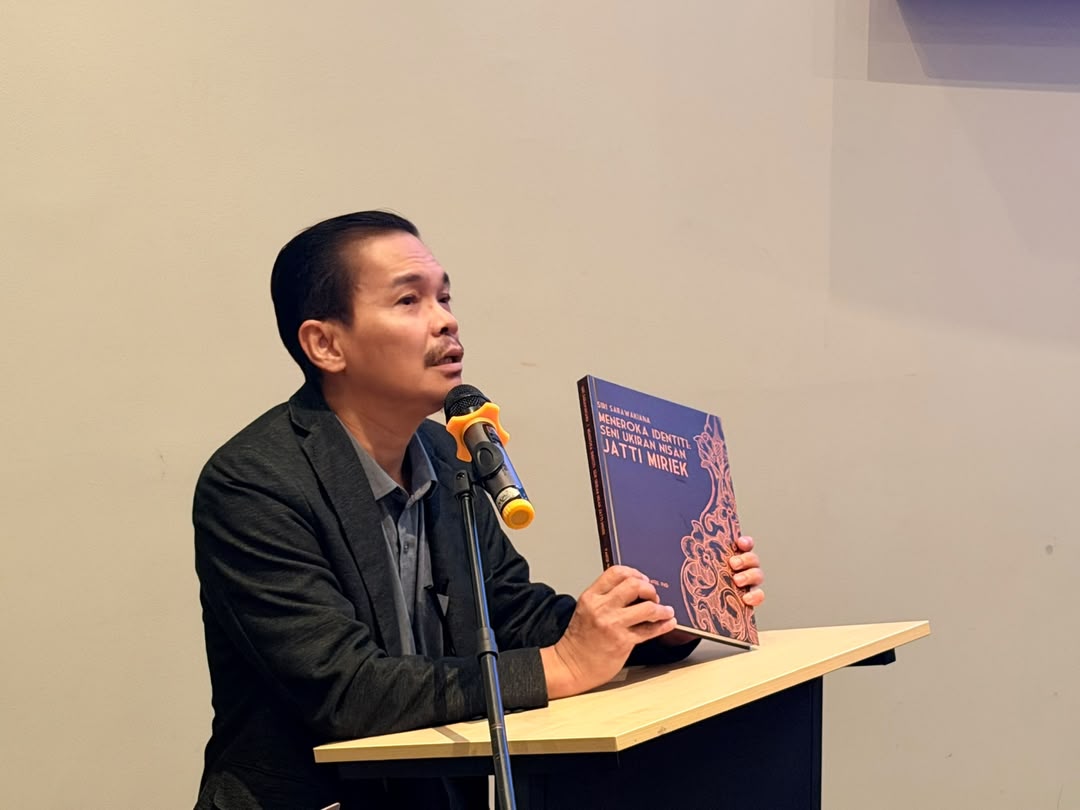
The seminar featured research by Associate Professor, Dr Yakup Mohd Rafee, from Universiti Pendidikan Sultan Idris (UPSI), based on his book ‘Meneroka Identiti: Seni Ukiran Nisan Jatti Miriek’, published by Pustaka Negeri Sarawak.
The book documents the history, designs, typology and carving motifs found on traditional wooden tombstones in old cemeteries around Miri.
During his presentation, Yakup highlighted floral and geometric motifs, differences between tombstone designs for men and women, as well as comparisons with Batu Aceh and the Bajau community’s sunduk.
“The carvings reflect the uniqueness of local artistic heritage and its connection to the history and development of the Jatti Miriek community’s identity,” it said.
Representatives of Persatuan Jatti Miriek Miri also shared the community’s history, heritage knowledge and the importance of preserving its cultural remains.
Participants also viewed an exhibition at the library’s Level 1 foyer, featuring visual documentation and information on the tombstones’ history, designs and carving motifs.
The seminar was supported by the UPSI Knowledge Transfer Grant, while its content was enriched by research findings under the Islamic Tourism Research Grant (ITRG), funded by the Islamic Tourism Centre (ITC), Ministry of Tourism, Arts and Culture Malaysia.
“The research focuses on documenting Jatti Miriek tombstone carvings as local Islamic heritage and exploring their potential for community-based Islamic heritage tourism,” it said.
The programme aimed to encourage community involvement, particularly among younger generations, in recognising, appreciating and preserving the carvings as part of Miri’s history and cultural identity.