By Muhammad Faiz Baharin
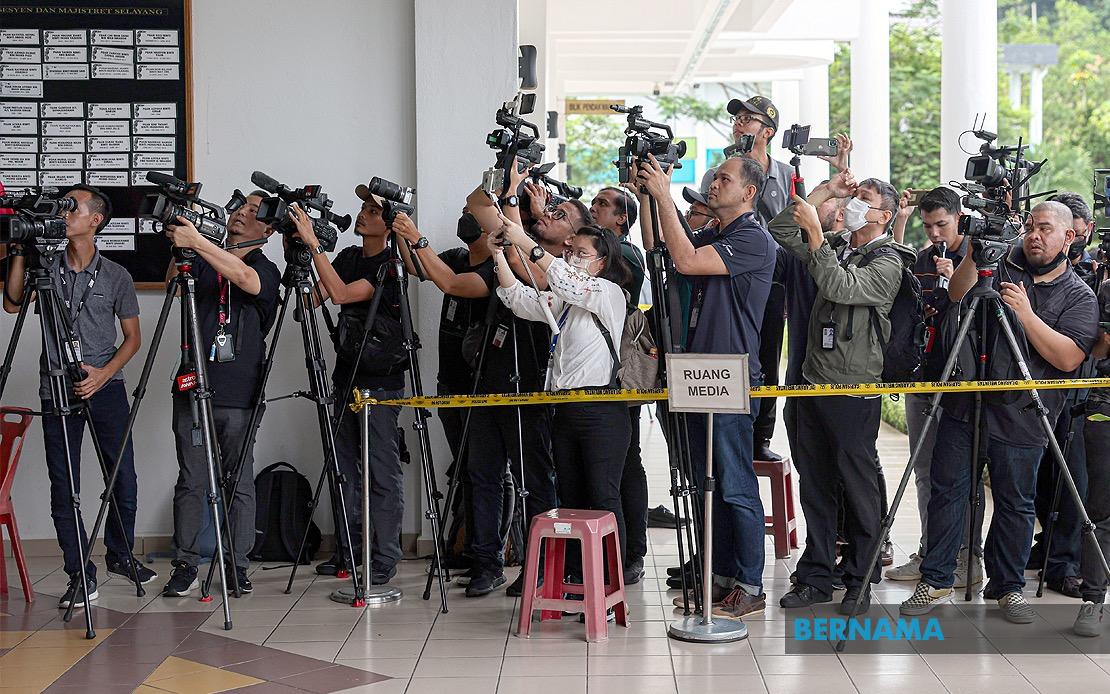
KUALA LUMPUR: Amid rapid advances in artificial intelligence (AI) and the unchecked flow of online content, journalists and mainstream media are increasingly seen as the final line of defence against fake news that could threaten national security and social harmony.
Communication experts believe the spread of unverified information on social media has reached an alarming level, particularly content involving provocation, hatred and emotional manipulation that could trigger public panic, racial tension and a crisis of confidence in national institutions.
Universiti Malaysia Sabah, Communication Programme head at the Faculty of Social Sciences and Humanities, Dr Aisah Meri said mainstream media now plays a crucial role as a balancing force and gatekeeper in filtering information circulating in the digital space.
She said the role of journalists today extends beyond simply reporting news, as media practitioners are also responsible for verifying the authenticity of information before it reaches the public.
“In the past, journalists were mainly responsible for reporting news, but today that role has evolved. Besides reporting, mainstream media now bears the major responsibility of verifying information.
“So the role of mainstream media, which upholds strict journalistic ethics, is extremely important in acting as a balancing force and gatekeeper to information circulating in the digital sphere,” she told Bernama.
Aisah said fake news should no longer be regarded as merely a communication issue because its impact could erode social, political and national security stability.
On AI-related challenges, including deepfake manipulation and AI-generated text, she said media organisations must keep pace with technological developments and can no longer afford to remain conservative.
She said media practitioners should equip themselves with digital forensic skills and content verification technology, while media organisations need to establish clear ethical guidelines on the use of AI.
“Digital platform algorithms today prioritise interaction over the authenticity of information, which is why the media must be better prepared to face these new challenges,” she said.
Meanwhile, Universiti Malaya senior lecturer at the Faculty of Arts and Social Sciences, Dr Muhammad Zaiamri Zainal Abidin said mainstream media must continue efforts to regain public confidence, as some segments of society still perceive media institutions as being controlled by certain parties.
The strategic communication expert said the public must understand that information filtering by professional media is not intended to suppress narratives, but to ensure only verified information is delivered to the public.
“Media institutions play a major role as professional filters in distinguishing between facts, speculation, propaganda and manipulated information.
“We therefore need to improve media literacy so that the public understands the verification process that differentiates professional media institutions from citizen journalism,” he said.
He also suggested expanding data journalism within media organisations to strengthen the accuracy and quality of reporting in the digital era.
“The use of technology, including digital data analytics, is critical in strengthening the quality and accuracy of analytical reporting. Journalists and editors must also continuously enhance their understanding of technology through ongoing training and strong editorial policies,” he said.
In a related development, Universiti Pendidikan Sultan Idris lecturer at the Department of Communication and Media, Dr Ahmad Sauffiyan Abu Hasan said mainstream media must be more aggressive in producing micro-content on social media to compete with the rapid spread of fake news on the same platforms.
He said media institutions must also master algorithm strategies and the use of keywords to ensure authentic content reaches a wider audience.
“Mainstream media remains a key source for fact-checking and reliable references, but in the era of the attention economy, it is no longer the only source competing for public attention,” he said.
Ahmad Sauffiyan also cited a study by the Massachusetts Institute of Technology (MIT), which found that fake news containing emotional elements spreads six times faster than verified news.
“The study proves that the speed of information on social media depends on how strongly the content triggers emotions,” he said.
As such, he suggested media practitioners apply affective or emotional leads in news writing to attract readers’ attention without compromising ethical journalism principles.
— BERNAMA