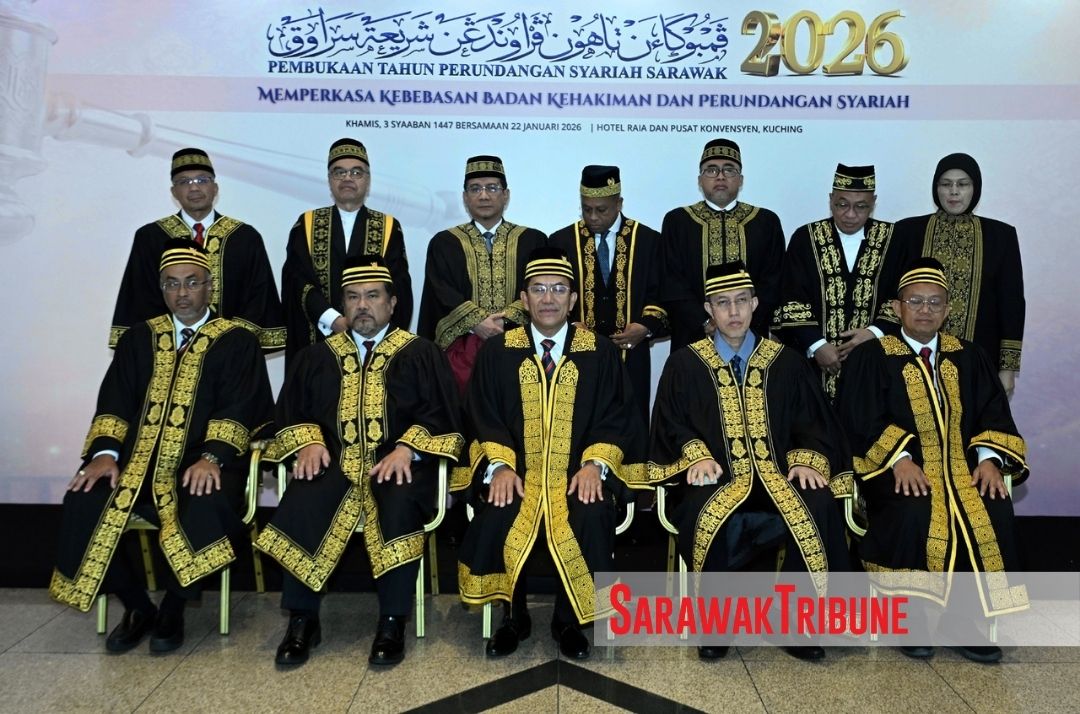
KUCHING: Integrity must remain the foundation of the syariah judicial system in Sarawak, as judicial independence would be rendered meaningless without it, said Sarawak Chief Syarie Judge Datuk Awang Suhaili Ledi.
He said integrity was not confined to the quality of judicial decisions alone, but extended to the entire syariah legal ecosystem, including prosecution, enforcement, case management and institutional governance.
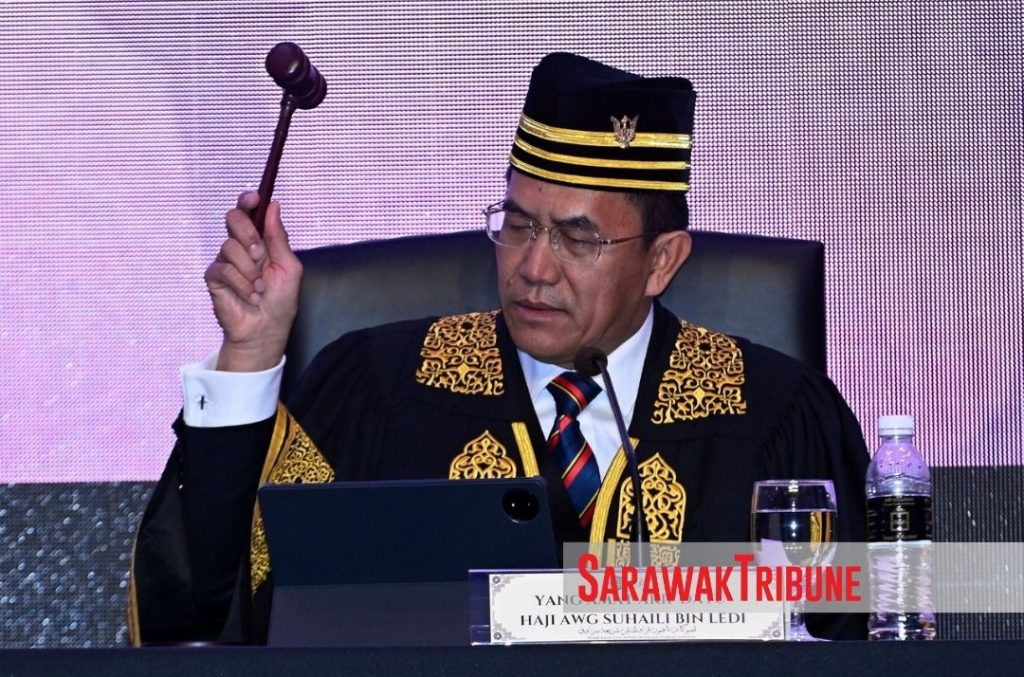
“Integrity underpins the credibility of the syariah judiciary. Without it, judicial independence is rendered meaningless and justice cannot be genuinely upheld,” he said in his speech during the Syariah Court sitting held in conjunction with the opening of the Sarawak Syariah Legal Year 2026 at Raia Hotel & Convention Centre here, today.
Awang Suhaili stressed that efforts to strengthen integrity must be carried out continuously and comprehensively.
“Such efforts must be implemented consistently and across all components of the syariah legal system to ensure sustained public confidence in the institution,” he said.
Touching on judicial independence, he said it remained a fundamental pillar of the justice system but, within the syariah framework, it must be exercised responsibly and in accordance with Islamic law and judicial ethics.
“Judicial independence within the syariah system is not absolute; rather, it is a responsible form of independence that is bound by Islamic law and judicial ethics,” he said.
He added that syarie judges carried a profound responsibility beyond institutional and public accountability.
“Syarie judges shoulder a profound responsibility, not only to the state and society, but ultimately to Allah SWT,” he said, adding that, every judgment constitutes a serious trust and must be delivered fairly, free from any form of pressure or external influence.
Addressing the challenges posed by social media, Awang Suhaili cautioned against allowing public opinion or viral narratives to influence judicial decisions.
“The determination of any case must be grounded in the facts and arguments presented before the court, not shaped by public pressure or narratives circulating on social media,” he said.
However, he noted that digital platforms could play a constructive role if used ethically.
“When used ethically and responsibly, social media can serve as a strategic platform to enhance public understanding of the role of the Syariah Courts and to strengthen public confidence,” he said.
On legal reform and institutional development, Awang Suhaili said syariah laws must continue to evolve to remain relevant amid societal and technological changes.
“The syariah legal framework must be continuously reviewed and updated to ensure it remains relevant to contemporary realities,” he said.
He also emphasised the importance of developing competent and ethical human capital within the syariah judiciary.
“Syarie judges and all members of the Syariah Courts must be equipped with sound knowledge, professional competence, technological proficiency, as well as strong values of integrity and trustworthiness,” he said.
Awang Suhaili further highlighted the importance of inter-state cooperation, noting that structured sharing of best practices would help strengthen the syariah judicial system nationwide.
“The sharing of best practices among states can contribute to the development of a syariah judicial ecosystem that is more progressive, consistent and worthy of public trust,” he said.