KUCHING: Sarawak business groups want suppliers to justify construction material price hikes and a cost adjustment mechanism for fixed-price government projects.
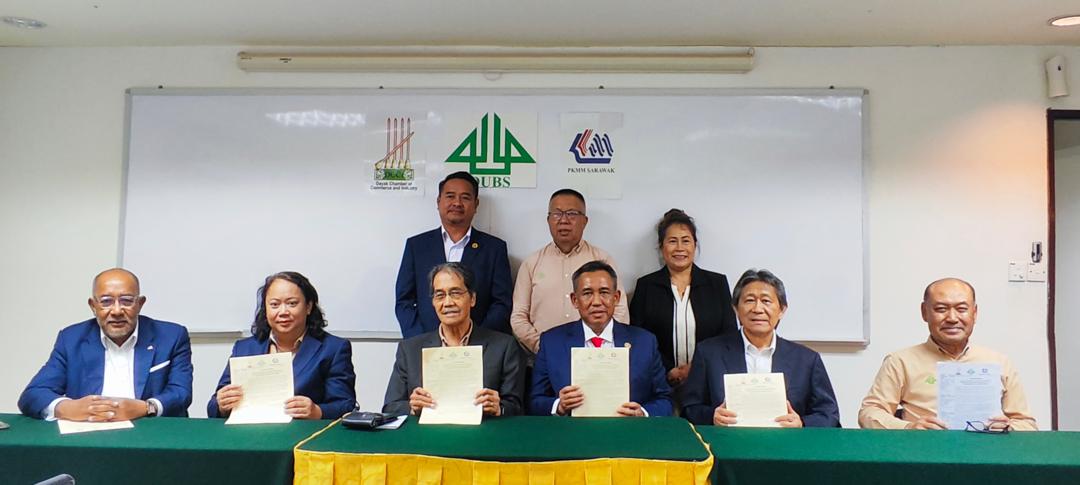
The Sarawak Bumiputera Entrepreneurs Chamber (DUBS), Dayak Chamber of Commerce and Industry (DCCI) and Malay Contractors Association of Malaysia (PKMM) Sarawak made the call after several suppliers issued notices announcing price adjustments, particularly for ready-mixed concrete.
The suppliers had cited the removal of diesel subsidies as the primary reason for the increases.
They acknowledged that businesses were operating in an increasingly challenging economic environment and respected suppliers’ right to review their prices in response to genuine increases in operating costs.
However, they said any adjustment should be supported by transparent, accurate and justifiable explanations to preserve confidence throughout the construction supply chain.
They noted that diesel subsidy rationalisation had affected businesses differently depending on their industries, operating models and eligibility under the Subsidised Diesel Control System (SKDS).
“Ready-mixed concrete mixer trucks are generally built on rigid truck chassis, a vehicle category understood to be eligible for the SKDS Fleet Card Scheme, subject to approval by the Ministry of Domestic Trade and Cost of Living (KPDN).
“If the vehicles continue to receive subsidised diesel, contractors, developers and other industry stakeholders have reasonable grounds to seek clarification on the extent to which higher fuel costs have contributed to the announced price adjustments.
“If the increases are driven by other legitimate factors, including labour, maintenance, spare parts, insurance, financing, logistics, compliance costs or broader inflationary pressures, these should be communicated transparently rather than attributed solely to the removal of diesel subsidies,” they said.
They said this during the DUBS, DCCI, AND PKMM Joint Press Statement on Diesel Issues programme at DUBS office here today.
Apart from the construction material suppliers, they said the reforms had also placed significant pressure on small and medium-sized enterprises, transport operators, machinery operators, rural businesses and contractors undertaking infrastructure projects throughout Sarawak.
“The impact is particularly severe for contractors implementing Rural Transformation Programme (RTP) projects and other government-funded works awarded under fixed-price contracts before the current diesel subsidy mechanism was introduced.
“Many contractors are now facing higher costs to transport materials, operate heavy machinery and service remote project sites without corresponding adjustments to their contract values.”
The three groups said the challenge was even more pronounced in Sarawak, where projects frequently involved long travelling distances, difficult terrain and remote rural locations requiring significantly higher diesel consumption than urban areas.
“These realities should be recognised when evaluating subsidy policies and the cost structure of construction activities in the state,” they added.
In response, DUBS, DCCI and PKMM called for greater transparency from suppliers in explaining the basis and cost components of any construction material price adjustments.
They also sought clarification from KPDN on the implementation of the SKDS Fleet Card Scheme, including the eligibility of concrete mixer trucks and the actual impact of diesel subsidy rationalisation on operating costs in the construction sector.
The groups called for constructive engagement among KPDN, relevant government agencies, suppliers, contractors, developers and industry associations to ensure pricing remained fair, reasonable and reflective of actual operating costs.
They also urged the authorities to review the adequacy of SKDS diesel quotas, particularly for businesses and contractors operating in Sarawak’s rural and interior areas, where diesel consumption was naturally higher because of geographical and logistical conditions.
For ongoing government projects, the groups called for an appropriate cost adjustment mechanism, particularly for RTP works and other fixed-price contracts materially affected by policy-driven increases in operating costs.
They further urged suppliers to adopt responsible pricing practices that would safeguard the competitiveness, sustainability and resilience of Sarawak’s construction industry while protecting contractors, SMEs and consumers from unnecessary cost escalation.
“We remain committed to promoting transparency, accountability and fair business practices.
“We believe that sustainable economic growth can only be achieved when government policies are implemented fairly, businesses exercise responsible pricing and all stakeholders engage openly to address legitimate industry concerns.
“Our objective is not to oppose subsidy rationalisation or commercial pricing decisions, but to ensure policy implementation remains transparent, evidence-based and equitable for all participants in the construction sector.
“Transparency builds trust. Fairness strengthens the economy,” they stressed.