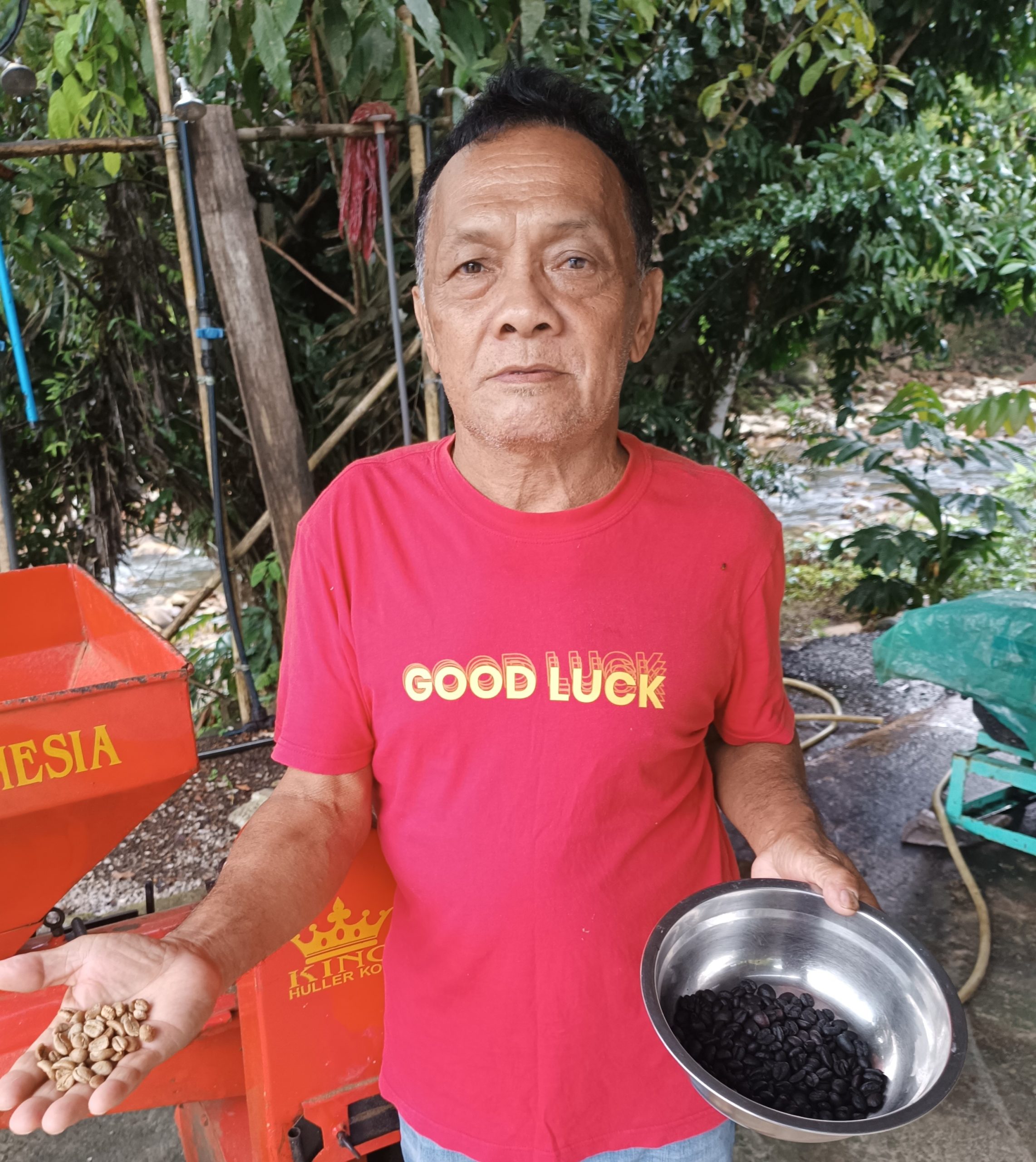
Harvest of hope
Part 1
AS dawn breaks over the limestone hills of Krokong, Bau, a veil of mist settles gently across Kampung Tringgus Bong.
Rows of Liberica coffee trees emerge from the morning haze, their ripening cherries glowing crimson beneath the first rays of sunlight.
The chorus of birds from the surrounding forest greets another day as a lone farmer walks quietly between the trees, pausing to inspect each branch with the care of someone tending more than a crop.
It is a scene of quiet abundance. Yet only five years ago, this same land stood neglected and overgrown, its future as uncertain as the villagers who depended on it.
Before Coffee
Five years ago, Kampung Tringgus Bong was a village suspended between tradition and uncertainty. Surrounded by rolling hills, the Bidayuh settlement still moved to the familiar rhythms of rural life but beneath its tranquillity lay a community struggling to secure its future.
Bidayuh traditions remained the heartbeat of the village. Elders gathered on verandas to share stories in their mother tongue while Gawai celebrations and long-held customs continued to unite families. Yet these traditions were increasingly upheld by an ageing generation as fewer young people remained to inherit them.
Most farmers were in their 50s, 60s and 70s, their weathered hands reflecting decades spent cultivating pepper, tapping rubber and tending hill paddy farms. Age had made the physically demanding work more difficult but many continued because farming was all they had ever known.
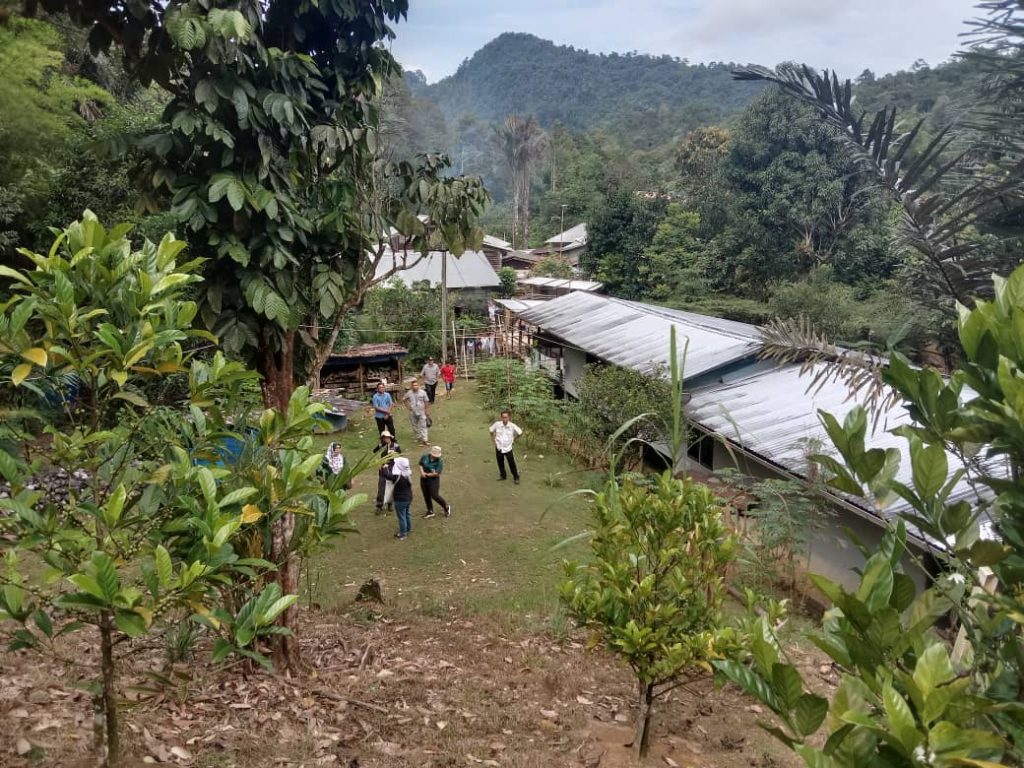
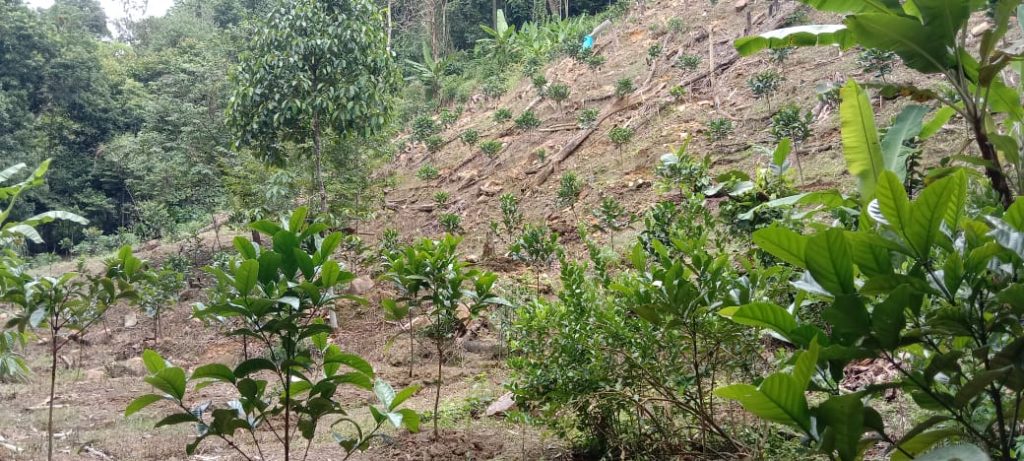
The younger generation had largely left for Kuching in search of education, jobs and a better future. They returned only during festive seasons, leaving behind quiet homes and elderly parents.
Across the village, once-productive farmland gradually disappeared beneath weeds. Pepper gardens were neglected, rubber trees stood untapped and fertile land lay idle, waiting for hands that never returned.
The decline in pepper and rubber prices deepened the hardship. Pepper, once regarded as Sarawak’s “black gold”, no longer generated reliable income while rubber tapping offered diminishing returns.
Families who had relied on these commodities for generations found themselves earning less despite working just as hard.
Economic uncertainty hung over Kampung Tringgus Bong. Villagers worried about rising costs, shrinking incomes and whether the next generation would ever come home. Rich in heritage and blessed with fertile land, the village nevertheless faced an uncertain future, where resilience endured even as opportunity seemed increasingly out of reach.
The Idea Nobody Expected
One afternoon, Serembu assemblyman Datuk Miro Simuh and agricultural officers gathered the village elders beneath the community hall to discuss an unfamiliar crop – Liberica coffee.
“This was my first coffee project in my area. After giving much thought to what I could do to help the villagers in Tringgus, I decided to introduce coffee planting. I then approached the agricultural officers in Bau and asked them to conduct a soil test. When they completed the soil test, they found that the soil was highly suitable for coffee cultivation.
“That’s why the coffee grown in Tringgus is of very high quality, particularly the Liberica variety. Liberica coffee is a very unique species. It is grown only in Malaysia, parts of Indonesia, and some areas of Africa, such as Liberia. In contrast, Liberica is not produced in Latin America.
Why not pepper or rubber? Why coffee?
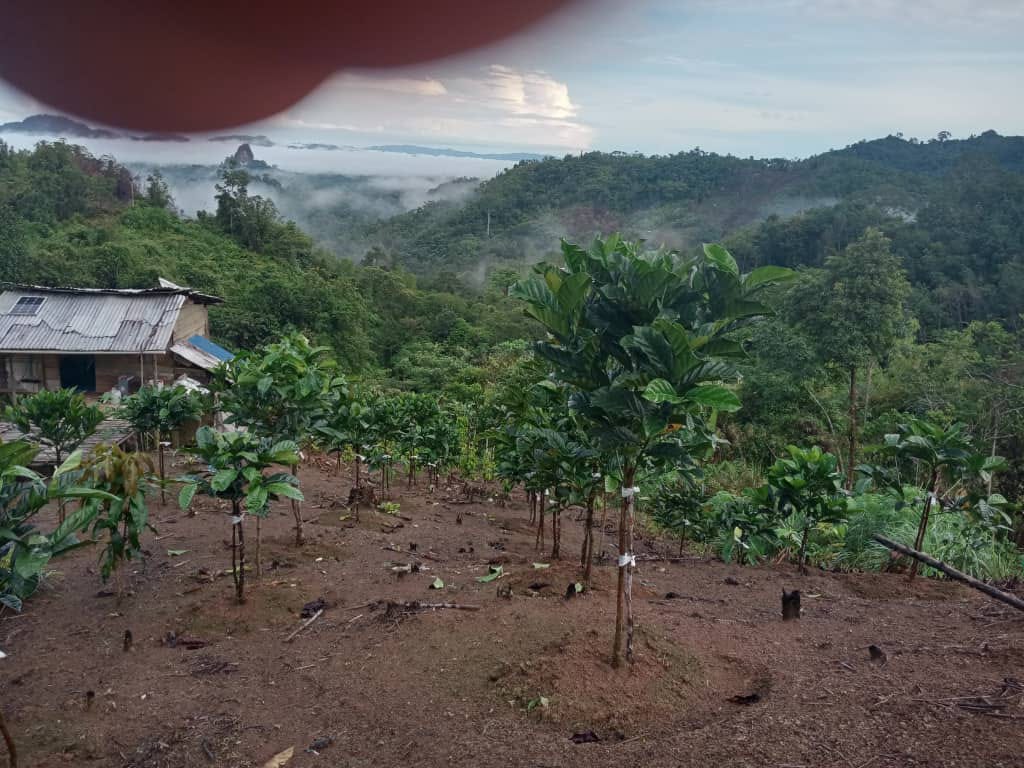
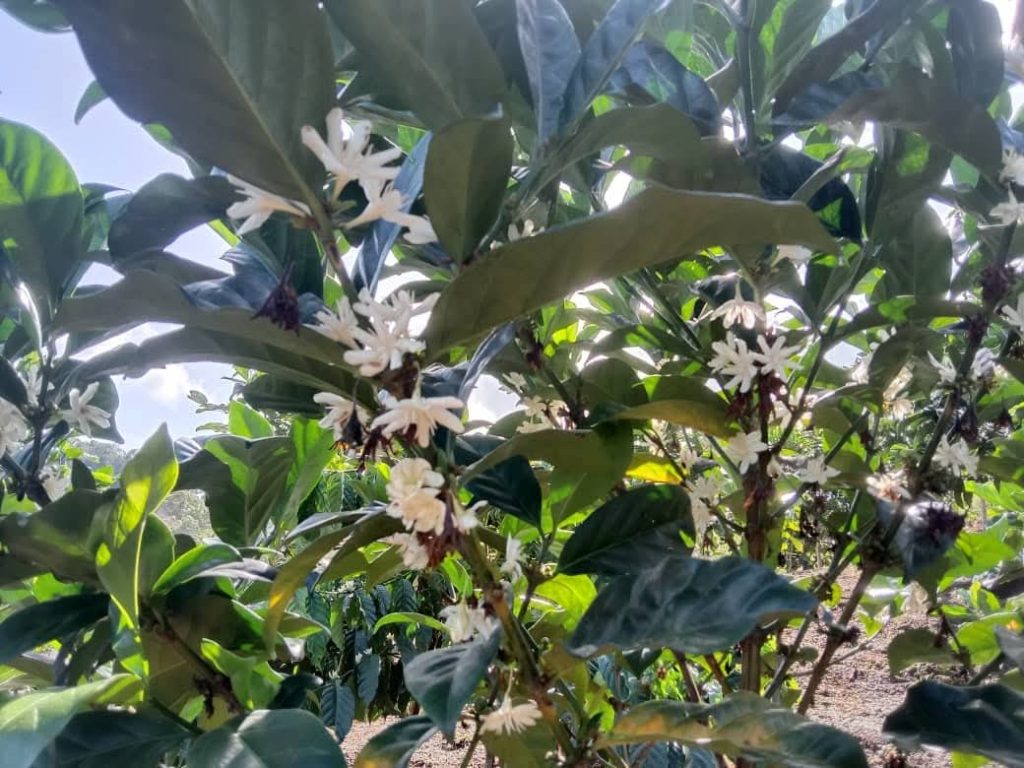
Miro said the villagers had tried growing pepper before but pepper was not an easy crop to cultivate.
Tringgus Bong village chief Midia Sitat concurred, saying that pepper cultivation requires intensive maintenance, a substantial budget and significant investment. As for rubber, market prices have remained too low to make it worthwhile.
“The younger generation don’t want to tap rubber. Coffee, on the other hand, is very easy to take care of. You only need to do the weeding and apply fertiliser three or four times a year. Then, almost every week, all you have to do is pick the ripe coffee berries.”
Midia noted that many people were initially sceptical. Coffee had never been a traditional crop in the area and some wondered whether the project would amount to anything.
“People thought we were wasting our time,” he recalled, adding that although 40 villagers initially registered for the project, only 22 remained after the others decided to withdraw.
“After the success of this project, almost everyone in my village is planting coffee now.”
Learning from Scratch
Five years ago, the hills around Kampung Tringgus Bong looked very different. There were no rows of healthy Liberica coffee trees, no talk of specialty coffee and no visitor eager to learn about the village’s transformation.
What existed instead was uncertainty, hard work and a small group of villagers willing to take a chance on an unfamiliar crop.
For most participants, coffee cultivation was completely new. Before the first seedlings were planted, they attended a series of practical training sessions conducted by agricultural officers from the Agriculture Department and coffee experts.
They learned how to prepare the soil, measure planting distances, prune young trees, apply fertiliser and identify diseases.
The training also changed their mindset. Farmers who had long relied on traditional crops realised that coffee required patience and long-term commitment rather than quick returns.
“We were like students again, learning something entirely new,” said Kampung Tringgus Bong coffee pilot project head Baon Apung, 62.
Armed with new knowledge, each participant began planting 304 of Liberica seedlings across their smallholdings. The work was physically demanding. Sloping terrain had to be cleared, planting holes dug and every seedling carefully watered.
Each tree represented hope rather than immediate income. Everyone understood they would have to wait several years before harvesting their first coffee cherries.
The first year was far from smooth.
The pilot project was implemented under the Sarawak government’s Agricultural Facilitation Fund (AFF) initiative. Under the programme, the state government provided support only for the initial planting by supplying free coffee seedlings and fertilisers.
Thereafter, the farmers were responsible for maintaining the coffee plants using their own resources. Fortunately, the seedlings adapted well, with almost all of them growing successfully.
However, the high cost of fertilisers soon became a major challenge. As production costs continued to rise, several farmers began to wonder whether they had made the right decision by venturing into coffee cultivation.
Some even questioned whether Liberica coffee could truly become a sustainable and viable source of livelihood for their families.
Instead of abandoning the project, the farmers adjusted their farming techniques based on advice from agricultural officers.
As the coffee trees matured, new challenges emerged.
Leaf-eating insects and other pests threatened young plants. Farmers had to inspect their fields regularly, remove infected branches and adopt integrated pest management practices instead of relying solely on chemical pesticides.
“We struggled to afford enough fertilisers, pesticides and fungicides as the prices of these agricultural inputs kept rising,” Midia and Baon admitted.
These experiences gradually improved their confidence and farming skills.
Nature was equally unforgiving. Extended dry spells slowed tree growth while prolonged heavy rain increased the risk of fungal diseases and damaged young roots. Unpredictable weather made fertiliser application and field maintenance more difficult.
The farmers learned to adapt by mulching around the trees to conserve moisture and carefully timing their field work according to weather conditions.
Perhaps the greatest reason the project survived was the strong spirit of every participant to keep learning under the continued support from an agronomist with the Sarawak Department of Agriculture (DOA), Bebrin Baem, who regularly provides key agronomic support, technical advice and assistance.
The participants regularly visited their plots. When they struggled with pests or poor plant growth, they shared their experiences and practical solutions with the agronomist.
Five years later, those difficult beginnings have become part of the participants’ identity. The training, setbacks, pest attacks, unpredictable weather and countless hours of labour are now remembered not as obstacles but as the foundation of a success story that has changed livelihoods and placed Kampung Tringgus Bong on Sarawak’s emerging specialty coffee map.
The Transformation
Five years after the first Liberica seedlings were planted, the most profound harvest in Kampung Tringgus Bong cannot be measured in kilogrammes of coffee cherries or ringgit earned. It is reflected in the quiet but unmistakable transformation of the people themselves.
Farmers who once questioned whether the project would succeed now walk through their plots with renewed confidence, discussing pruning techniques, flowering cycles and bean quality with the assurance of experienced growers.
Their once-neglected farms have been transformed into neat, well-maintained mini plantations where weeds are kept under control, shade trees are carefully managed and every coffee tree reflects disciplined care. The change extends beyond the fields.
Coffee has become a family endeavour, bringing together husbands, wives, children and even grandparents during planting, harvesting and processing seasons.
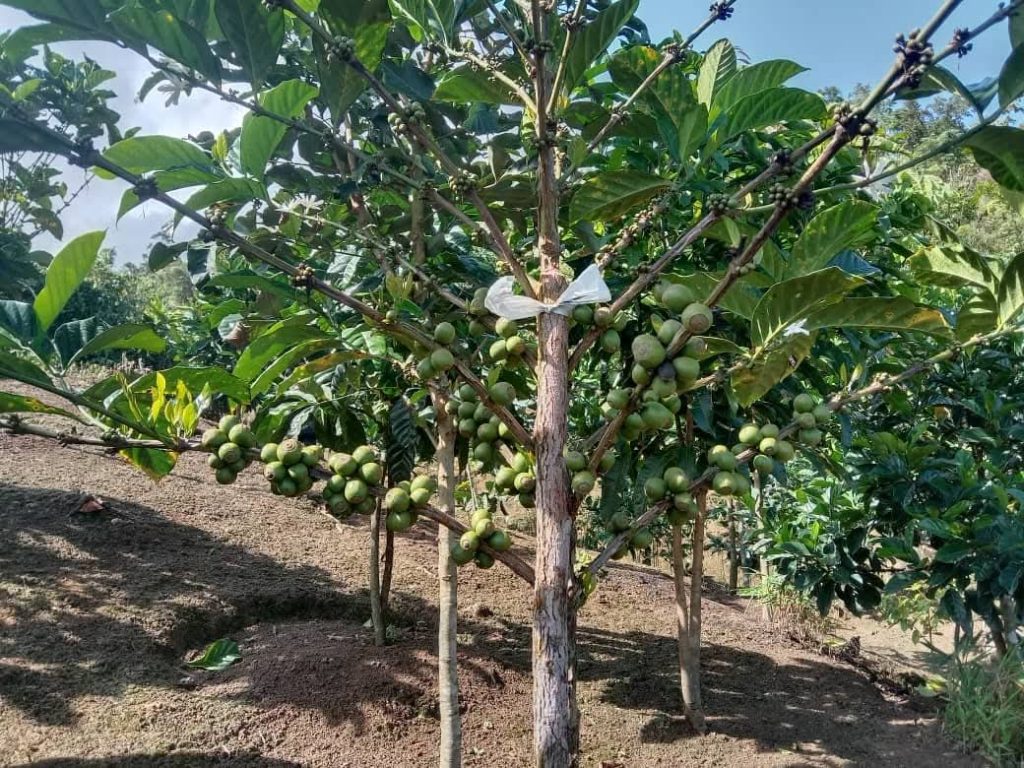
Weekends that were once spent apart are now devoted to picking ripe cherries, sorting beans and preparing them for processing, strengthening family bonds while passing agricultural knowledge to a younger generation. Equally striking is the pride that has emerged among the villagers.
Instead of merely cultivating another agricultural commodity, they speak enthusiastically about producing specialty Liberica coffee capable of meeting premium standards to the visitors.
They understand that quality begins in the field and continues through careful harvesting and processing, giving them a renewed sense of purpose and professionalism.
Perhaps the greatest transformation, however, has been within the community itself. The pilot project has nurtured a spirit of cooperation that reaches beyond individual farms.
Conversations that once centred on the uncertainty of rural livelihoods now revolve around improving quality, attracting visitors and building the village’s reputation as Sarawak’s emerging Liberica coffee destination.
In the process, coffee has done more than create a new source of income. It has restored confidence, strengthened families, fostered community unity and given Kampung Tringgus Bong a renewed identity rooted in shared purpose and pride.
More Than Coffee
As the sun dips behind the rolling hills of Tringgus, the farmer who once stood uncertain before a handful of fragile Liberica seedlings now walks confidently through rows of thriving coffee trees heavy with ripening cherries.

What began as an experiment has become a living testament to perseverance, faith and community.
In Tringgus, every harvest is no longer just measured in beans but in hope passed from one generation to the next.