KUCHING: The Land Custody and Development Authority (LCDA) has undertaken nine Social Impact Assessment (SIA) studies involving urban renewal projects across Sarawak.
LCDA general manager Datuk Zaidi Mahdi said the studies covered projects in Kuching, Sibu, Kapit and Miri, addressing various social considerations arising from urban renewal.
He said the projects included Darul Hana, Kampung Tabuan Melayu and Kampung Sejijak in Kuching; Kampung Datu and Bukit Assek in Sibu; Kampung Baru in Kapit; and Kampung Wireless in Miri.
“On top of that, LCDA has also provided technical support to the Bintulu Development Authority for the Tatau Kampung extension,” he said.
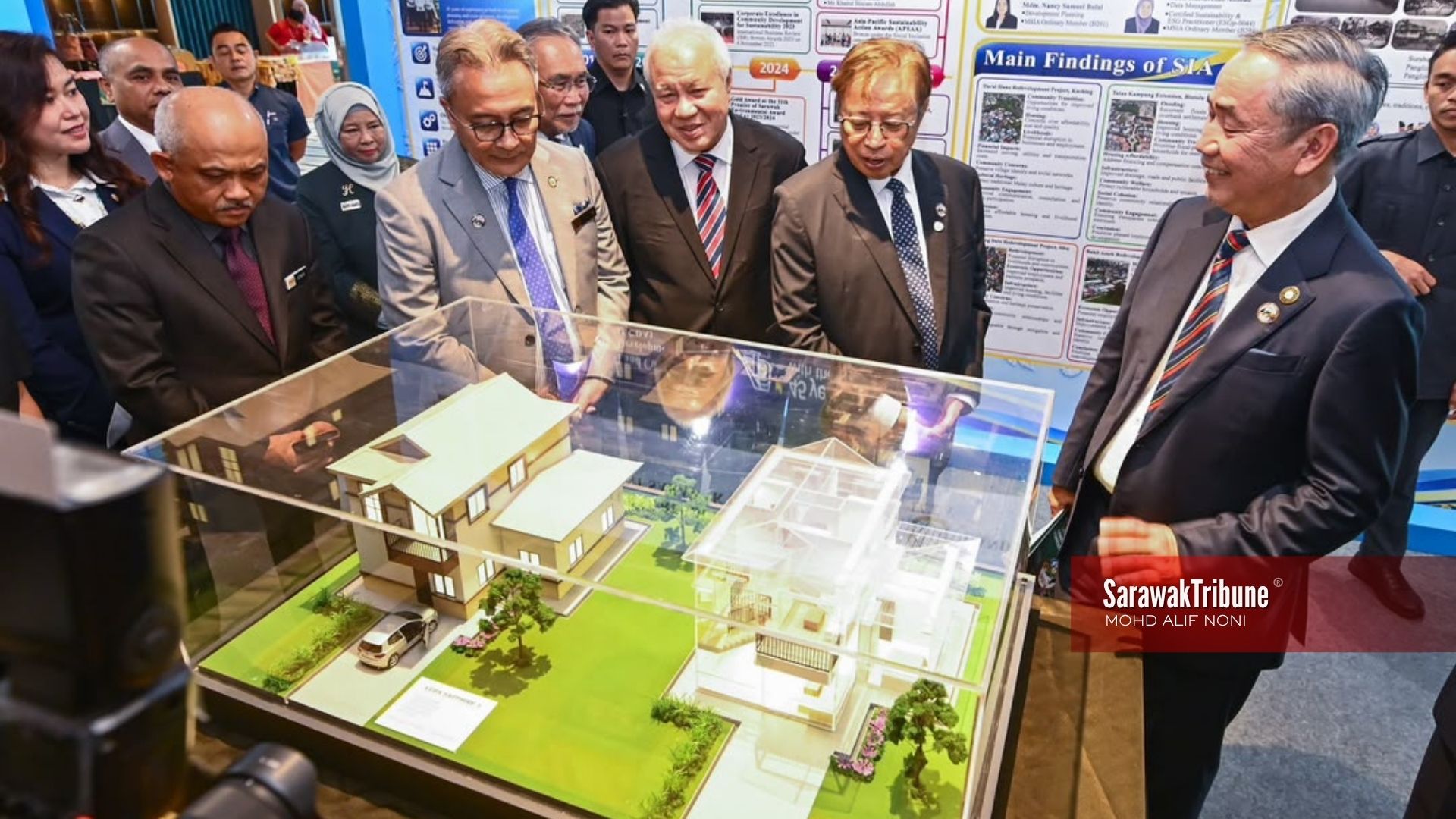
Zaidi said this in his welcoming remarks at the launching ceremony of the Social Impact Assessment in Emerging Economies Conference and Exhibition (SIAC 2026) here today (Nov 24).
He said the projects involved different social considerations, including housing relocation and eligibility, access to services, and the continuity of local livelihoods.
“These experiences have strengthened our understanding of the importance of engaging affected communities and guiding practical measures during implementation,” he said.
Zaidi said the conference, held in conjunction with LCDA’s 45th anniversary, reflected the authority’s continued commitment to sustainable and responsible development since its establishment in 1981.
He said LCDA has contributed to Sarawak’s development through sustainable land development, the property sector, agriculture and urban renewal initiatives.
He added that LCDA has five officers registered as members of the Malaysian Social Impact Assessment Association (MSIA), including one professional member, while the authority is also a corporate member of the International Association for Impact Assessment (IAIA).
Its subsidiary, LCDA Holdings Sdn Bhd, is also registered with the State Financial Secretary’s Office to undertake SIA studies in community and economic development.
Zaidi said LCDA’s priority is to strengthen the quality of social information, stakeholder engagement and monitoring of commitments made to communities.
He also highlighted opportunities for closer cooperation between implementing agencies, universities and professional institutions to develop practical SIA expertise.
Meanwhile, he said the inaugural SIAC 2026 had attracted 530 participants, exceeding its initial target of 500.
As the first comprehensive international SIA conference and exhibition of its kind in Malaysia and ASEAN, the event brings together international and local experts, practitioners, policymakers, academics, government agencies and industry representatives.
The two-day conference features two keynote addresses, four forums and eight parallel sessions, providing a platform to discuss policies, standards and practical applications of SIA in development projects.
Held under the theme “From Policy to Practice: Translating Inclusive Commitment into Action”, the conference aims to bridge technical knowledge and field experience in addressing challenges in assessment and implementation.
Zaidi said the programme also included pre-conference training on the fundamentals of SIA and its requirements under the Malaysian Sustainable Palm Oil (MSPO) Certification Scheme, which began on Nov 25.
More than 40 submissions were also received for the conference’s poster competition.