MANY still have no idea that they are leaders, or that they will ever be. Perhaps because leadership has been overestimated, portrayed as a concept or attribute of a select few: the charismatic, the confident, the successful, the loudest in the room, but that isn’t real. It isn’t true.
The truth is that leadership is as universal as life itself. It is not a club one must be invited into. It is a condition of being alive, of having a mind, of having the power to make decisions, to influence, and to create.
The reality is that living is leading. Leading is taking the reins of the life entrusted to us, rather than delegating that leadership to other people, other leaders, or worse yet, other circumstances.
Leadership, in its purest form, begins with self-leadership. It is the daily act of waking up and choosing how to think, how to act, and how to respond.
It’s not the absence of struggle but the ability to face it. It’s not reserved for CEOs, politicians, or those with titles; it belongs to all of us.
Yet, for many people, leadership feels foreign. It feels unreachable. That is not just because of cultural myths, but also because of a deeper, systemic error – the way we have historically understood intelligence.
For too long, formal education has boxed intelligence into narrow compartments, rewarding only a small portion of the human spectrum, namely, those who perform well in linguistic and logical-mathematical tasks.
Those who can write essays and solve equations are often labelled “smart”, while others with different strengths are undervalued, ignored or discouraged.
What makes this worse is that this limiting definition of intelligence is still deeply rooted in educational systems across the globe. Standardized tests, rigid curriculums, and performance metrics continue to define worth in dangerously narrow terms.
But something changed in 1983. Howard Gardner, a brilliant professor at Harvard University, challenged the traditional notion of intelligence and revolutionised our understanding of the human mind.
In his seminal book ‘Frames of Mind: The Theory of Multiple Intelligences’, Gardner introduced a groundbreaking idea: human intelligence is not singular; it is multiple.
Gardner demonstrated that assessing IQ by analysing only mathematical and linguistic intelligence was a serious error. These are important, of course, but they are not the only kinds of intelligence.
His research uncovered a wide and diverse range of intelligences that had been underestimated or ignored because they didn’t fit within conventional academic models.
He identified at least eight types of intelligence, each as valid, complex, and valuable as the others. These are:
Linguistic Intelligence: the ability to use oral and written language effectively. Writers, poets, orators, and speakers tend to thrive here.
Logical-Mathematical Intelligence: the capacity for logical reasoning, problem-solving, and abstract thinking, typical of scientists, engineers, and analysts.
Spatial Intelligence: the ability to think in three dimensions, to visualise and mentally manipulate objects. Architects, artists, and navigators use this intelligence intuitively.
Musical Intelligence: the sensitivity to rhythm, pitch, tone and musical patterns. Composers, musicians and even music lovers often score high here.
Bodily-Kinesthetic Intelligence: the skilful use of the body to express ideas or solve problems. Dancers, athletes, surgeons, and craftspeople excel in this domain.
Interpersonal Intelligence: the ability to understand and interact effectively with others. Leaders, teachers, counsellors, and diplomats are often strong in this area.
Intrapersonal Intelligence: the capacity for self-awareness and self-reflection. It allows a person to understand their emotions, motivations, and inner life.
Naturalistic Intelligence: the ability to recognise and classify plants, animals, and other aspects of nature.
Biologists, environmentalists, and farmers often embody this form of intelligence.
Such a discovery should have transformed not only how we teach and learn, but how we see ourselves and each other. Yet decades later, the theory has still not had the deep, widespread impact it deserves.
Curriculums remain heavily focused on traditional metrics, and too many people grow up believing they are “not smart”, when in fact, they haven’t been given the right mirror to see their brilliance.
To understand the magnitude of Gardner’s discovery is to understand the infinite potential of every human brain. Every person has a unique combination of these intelligences.
Some may be gifted in music but struggle with numbers. Others might not articulate themselves in words but express profound understanding through movement, visuals, or relationships.
And what’s even more powerful: these intelligences are not fixed. They can grow, evolve, and be nurtured throughout our lives.
In this light, every person is both a student and a teacher. Everyone has something to learn and something to give. Even those without formal education, those who society has written off, can be the teachers of those with degrees and accolades. And the reverse is also true.
To Gardner’s work, we must also add the more recent developments in understanding the human mind and behaviour, such as emotional intelligence (EQ) the ability to perceive, understand, and manage emotions, and spiritual intelligence, which deals with purpose, meaning, and values.
These are powerful dimensions that also contribute to what makes a person wise, resilient, and ultimately, a great leader (we will work on these concepts in future deliveries, dear reader).
If up until now you have underestimated your intelligence, if you’ve doubted your mind’s capacity to grow, lead, or succeed, it may be because no one ever helped you identify your strongest intelligence.
Maybe your genius lies not in solving equations but in feeling the emotions of a room. Maybe it’s in sensing patterns in nature. Maybe it’s in the way you comfort others, or in how you move your body with grace.
And perhaps, even more profound, is this: if there is someone in your life whom you have underestimated, someone you’ve dismissed as “not smart” or “not capable”, it may be because you haven’t had the chance to see their intelligence, the one that shines brightest in them.
A person’s greatness may not lie in their grades but in their empathy. Or their rhythm. Or their imagination.
Once you start seeing this, once you begin to appreciate the vast spectrum of human intelligence, you start to see leadership everywhere.
You start to realise that leadership is not a mountain climbed alone, but a collective path walked together.
You understand that recognizing your own intelligence leads you to recognize it in others. That your growth is tied to theirs.
Leadership, dear reader, begins when we choose to value ourselves and others as carriers of unique genius.
Developing your intelligence means seeing value in those around you. It means listening. It means learning. It means teaching. All are students; all are teachers.
That is the great premise for anyone who sees on their horizon the opportunity and the duty to lead, starting with their own lives.
In a world that desperately needs more inclusive, compassionate, and visionary leadership, this perspective is not just enlightening; it is urgent.
We must stop reserving leadership for the few and begin awakening it in the many.
Because the truth is, you are a leader. You always have been. Maybe no one told you. Maybe no one saw it. But it’s there, waiting for you to embrace it.
And the first step? Start by recognising the brilliance within you and then look for it in everyone else.
DISCLAIMER:
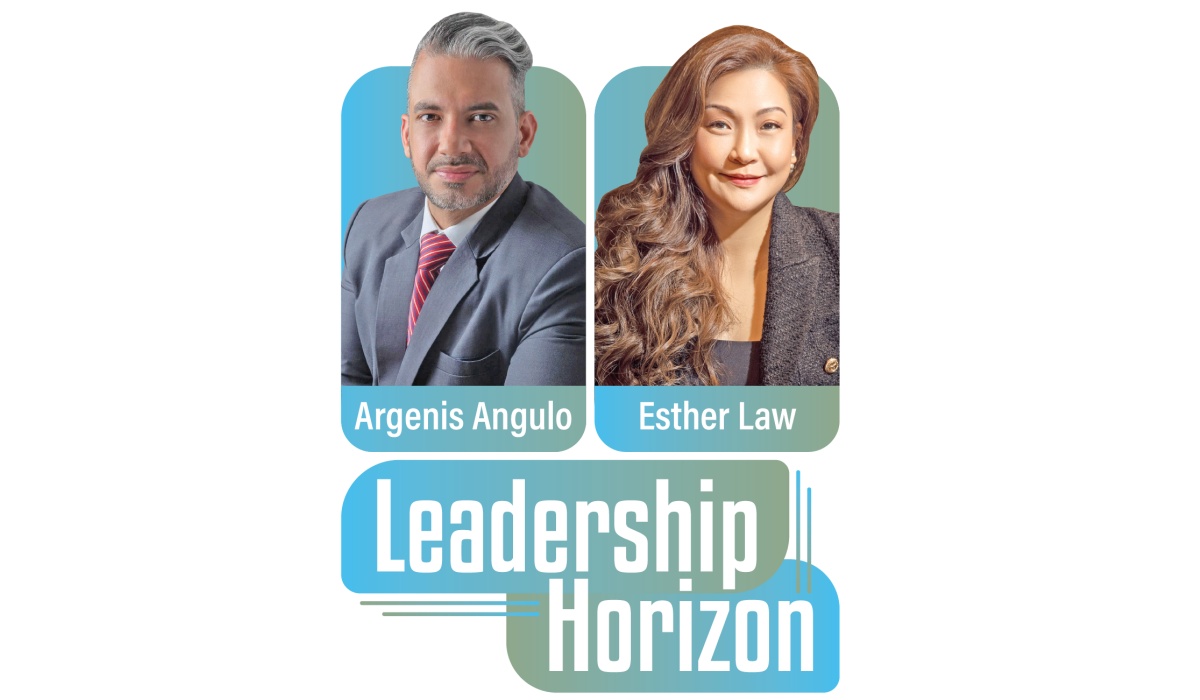
The views expressed here are those of the writers and do not necessarily represent the views of Sarawak Tribune. The writers can be reached at argenisangulo@gmail.com and lawleepoh@gmail.com.