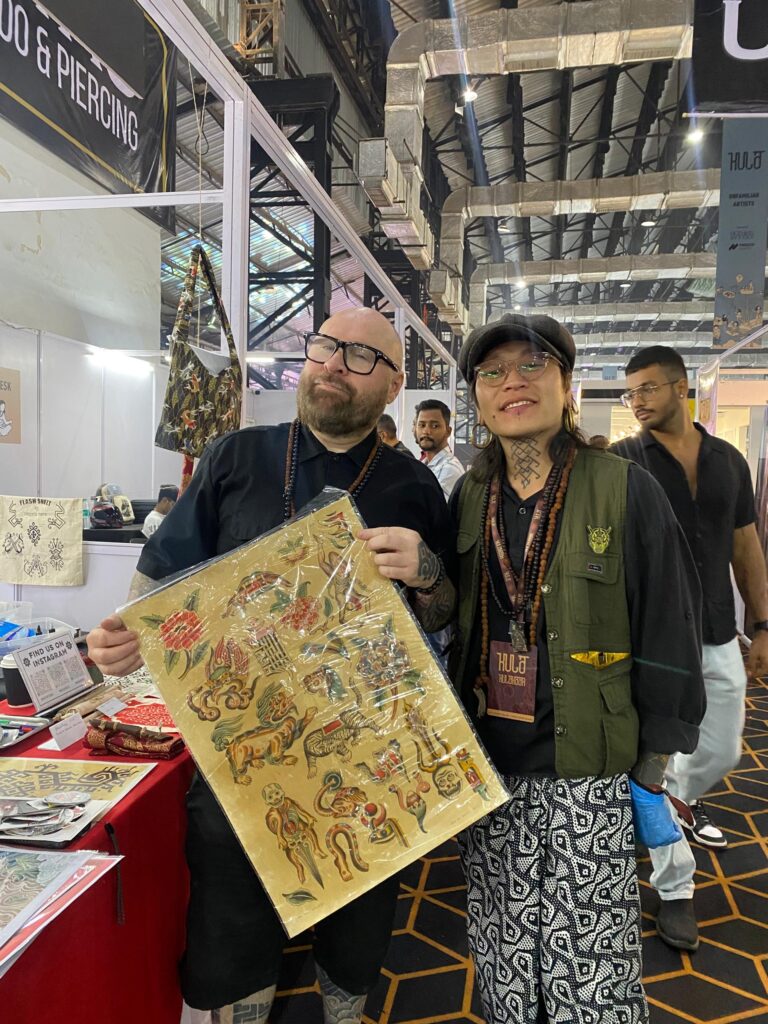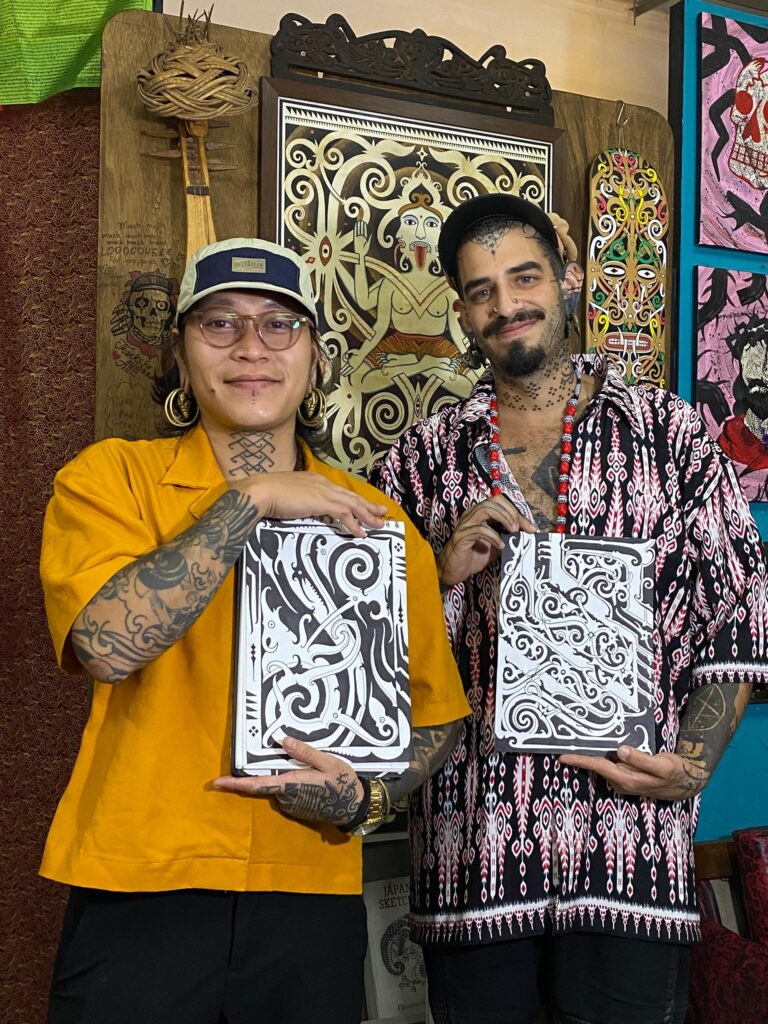
In the quiet rhythm of modern life, the voice of Indigenous identity remains strong. For tattoo artist Reja, preserving culture goes beyond remembering the past — it’s about redefining what it means to belong.
Living the Legacy
The Iban wars of the past are often remembered as tales soaked in blood amidst the rainforest, but today, the once loud commotion has turned into quiet chaos as modernisation takes over.
Survival of the fittest may seem easier now as the battleground has shifted — from rivers to streets — and the Iban tribe has come a long way.
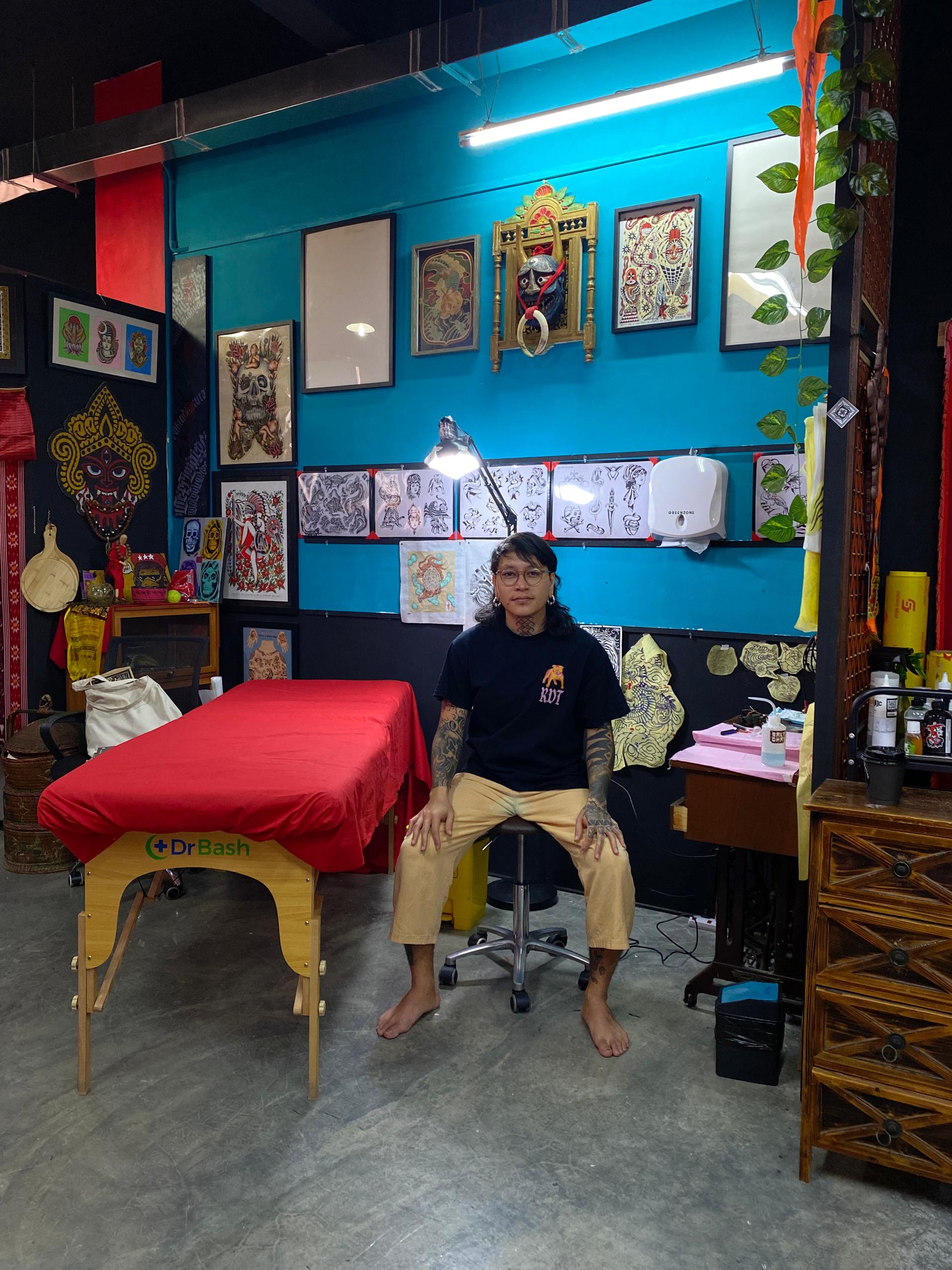
For tattoo artist Reja Eshraghian Tipik Ladi, the fight now lies in reclaiming his identity and building a stronghold for it.
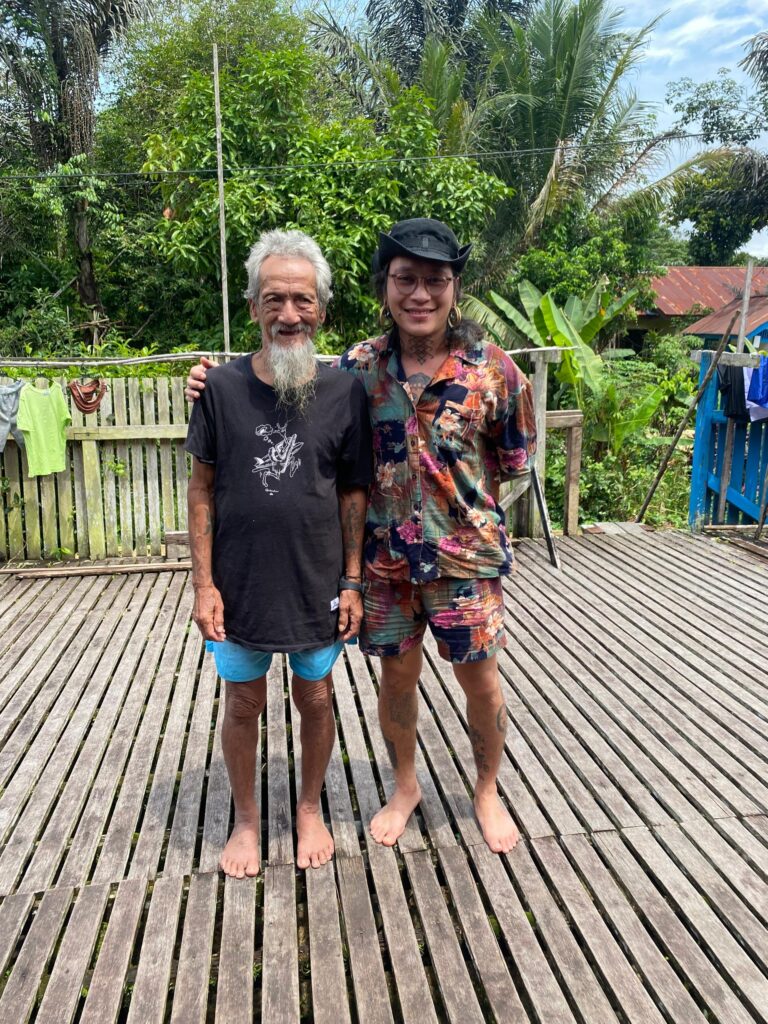
“I’m not like the old Iban. I am the new Iban from the modern world. We are both of the same tribe, but we are different. We share the same traditions, but for me, it may have been modernised. And that’s okay.”
Expanding further, Reja explained that in today’s world, people are kept entertained by Netflix and don’t need to hunt for food, since there are supermarkets now, and that, he said, is okay too.
“We are the modern tribe. We are the new Sarawakian tribe, the new Borneo tribe. We are no longer purely Iban, but an assimilation of what the modern world gives us,” he shared when met at his tattoo studio, Rakta Dhatu Tatu, at Milan Square, Kuching.
The loss of a real identity
Recalling the efforts of his ancestors in building a settlement, Reja reflected that today, all he could do was build a tattoo studio.
Nevertheless, he remains proud of his roots and has learned to rekindle the passion and growth inherited from his ancestors.
To him, creating a space that celebrates culture and identity is its own form of legacy.
“I learn to grow from my ancestors. Their spirit, their resilience — it still lives in me.”
Beyond visual markers of tradition, identity is often challenged by perception.
For Reja, being Iban also means pushing back against lazy stereotypes that have haunted his people for decades.
As an Iban, Reja despises the stereotype that every Iban must know how to drink alcohol or be an alcoholic.
To him, an Iban doesn’t need to be best friends with alcohol.
“It’s not always true that we love to drink. Many of us have families to feed, bills to pay; we live normal lives.”
He believes this narrative not only devalues Iban identity but also reinforces harmful behaviour within the community itself.
“Back then, our ancestors drank to cool down their bodies after a hot day at the farm. Some drank to relax and get a good night’s sleep.”
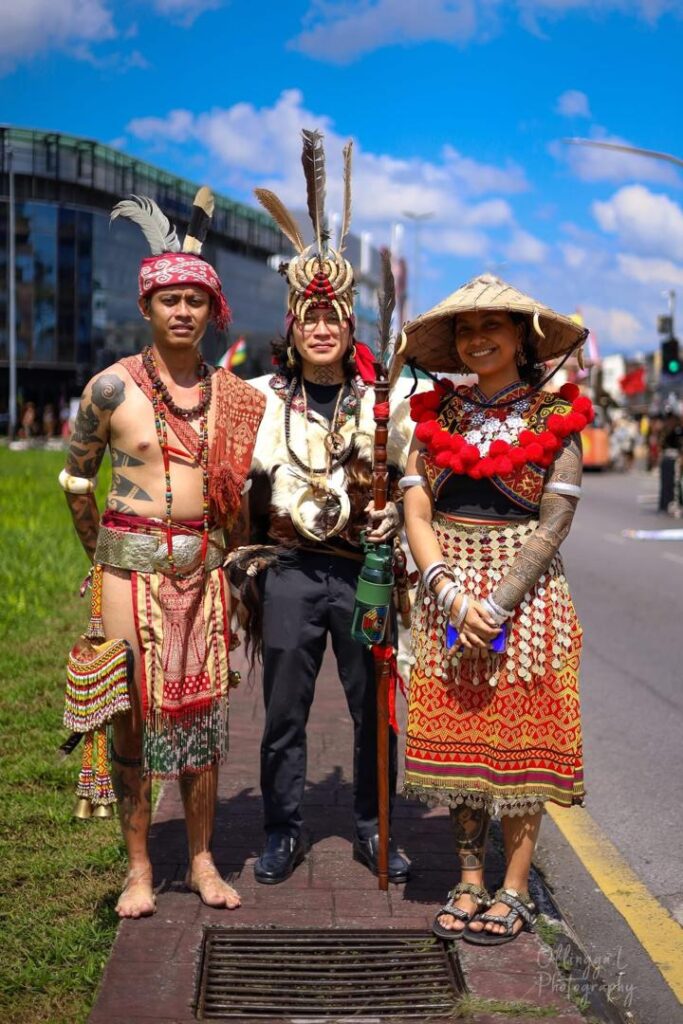
Old symbols, new skin
Sharing further on the history of the Iban tribes and tattoos, Reja revealed that they were once a form of identification and a symbol of honour — earned through bravery and warrior-like acts.
Getting a tattoo also marked a visit to another longhouse, gifted by the respective settlement.
The intricacy of the bunga terung (eggplant flower) back then varied depending on the village’s location.
The way it was drawn and the number of petals on the flower distinguished not just the individual, but the entire community.
Though tattoos carried deep meaning then, today, the bunga terung has become a modern symbol of cultural identity.
It’s no longer earned through ritual or recognition, and as Reja notes, it’s easier now to simply get one.
However, he opined, this shift may dilute the tattoo’s value.
Still, as a tattoo artist, he views the bunga terung as sacred — and prices it higher than his other designs.
“I want to continue keeping the value of this tattoo for the Iban. Back then, our ancestors fought to earn it. Today, we can do the same. We can fight to survive, save up to afford the tattoo. Though the fight is different now, by valuing the meaning of the bunga terung, we can preserve the tradition behind it,” said Reja.
It’s the same as it was back then.
“If you couldn’t get the bunga terung in this kampung, then you walked further. The same analogy applies today — we work harder to get what we want in life,” he added.
The modern tribe
“I am an Iban, but I do not think like the old Iban. I do not go to the next village to headhunt. I am part of the modern tribe,” — in saying this, Reja’s voice echoes powerfully as we celebrate the International Day of the World’s Indigenous Peoples.
The weight in his words is not to dismiss tradition or be confined by it, but to remind us that culture is not a relic of the past.
It lives, it adapts, and it grows with its people.
Wearing his roots with pride in a modern context, Reja’s growth is rooted in his ancestors, in how they helped their community, and how he now hopes to do the same.
“I will never forget who I am. My ancestors are strong people. They were strong in their community. With that strength I carry, I built what I have today. Whenever I am lost, I ask myself, ‘What would my great-grandfather do in this situation?’”
In that quiet question lies the spirit of the modern Iban.
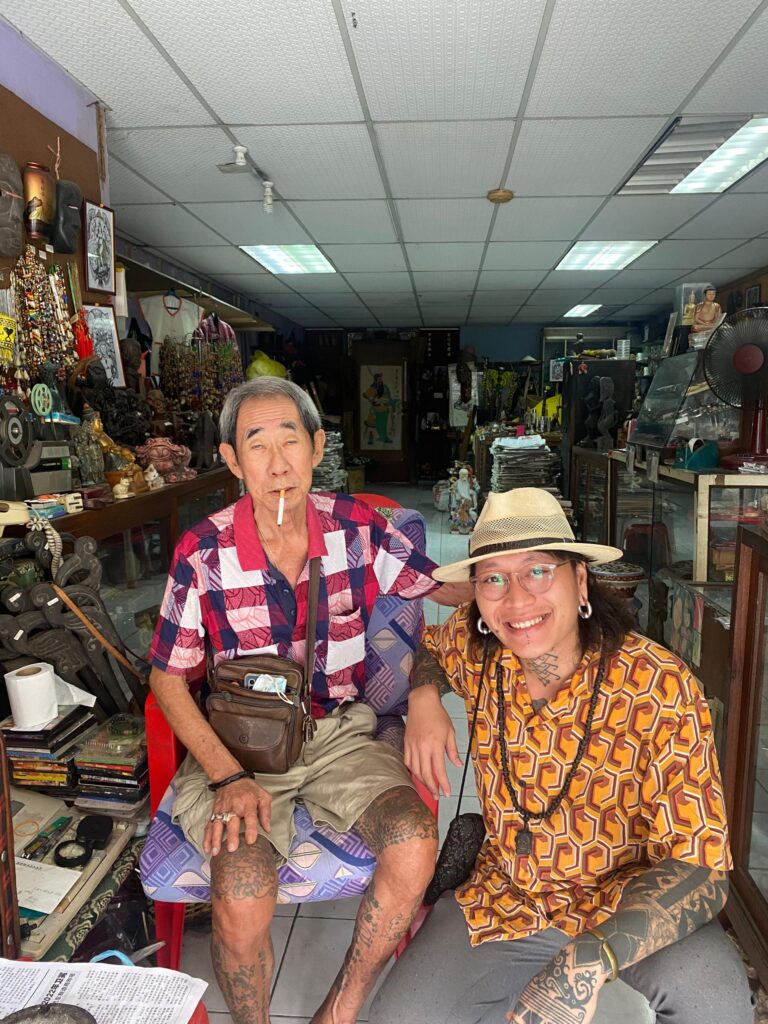
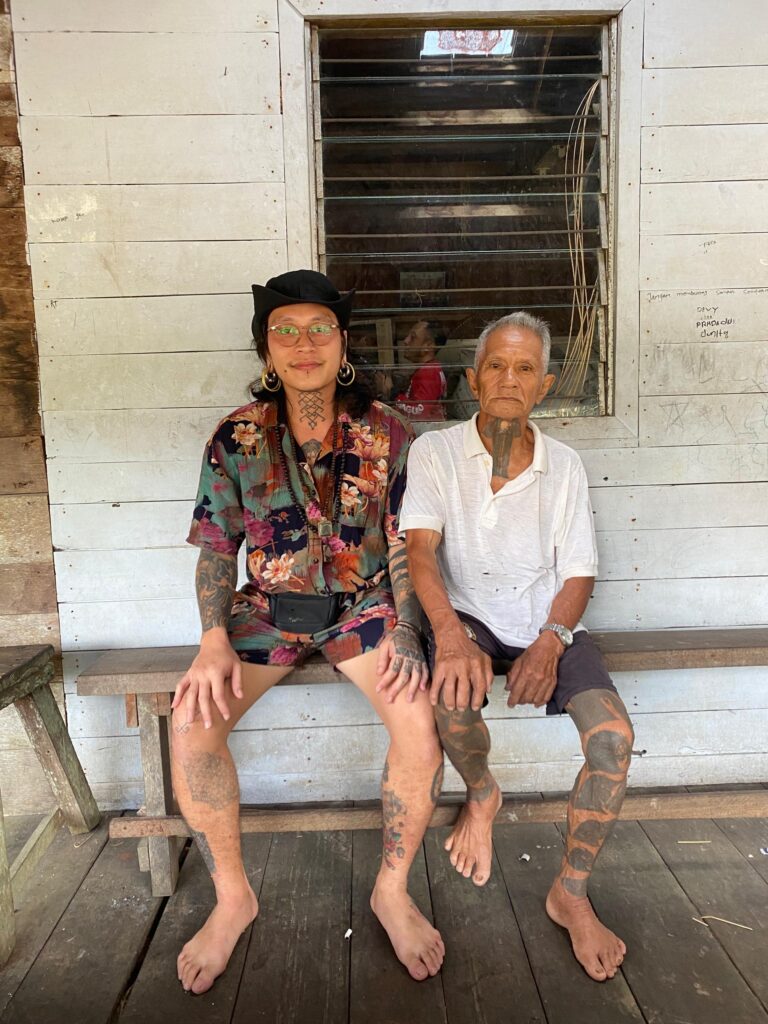
No longer warriors with blades — but artists, builders, and cultural guardians fighting a different kind of battle: to survive, to be seen, and to remain proud of who they are.
Under Reja’s tattoo studio, they have initiated a passion beyond tattooing — the Bunga Terong Project.
It is a fundraising initiative committed to supporting the Dayak community through food aid and by improving local living conditions.
At present, the initiative supports the villagers of Bulan Sebuyau Longhouse in completing their home for 22 families.
“Through this initiative, we aim to preserve traditional longhouse living for future generations. With young people moving to cities, these communities are at risk of disappearing. Thus, we want to create local opportunities, such as craft sales, farming, and homestay programmes, to attract visitors and strengthen the local communities.”
Passionate in his endeavour, Reja believes that the values of his ancestors should be preserved.