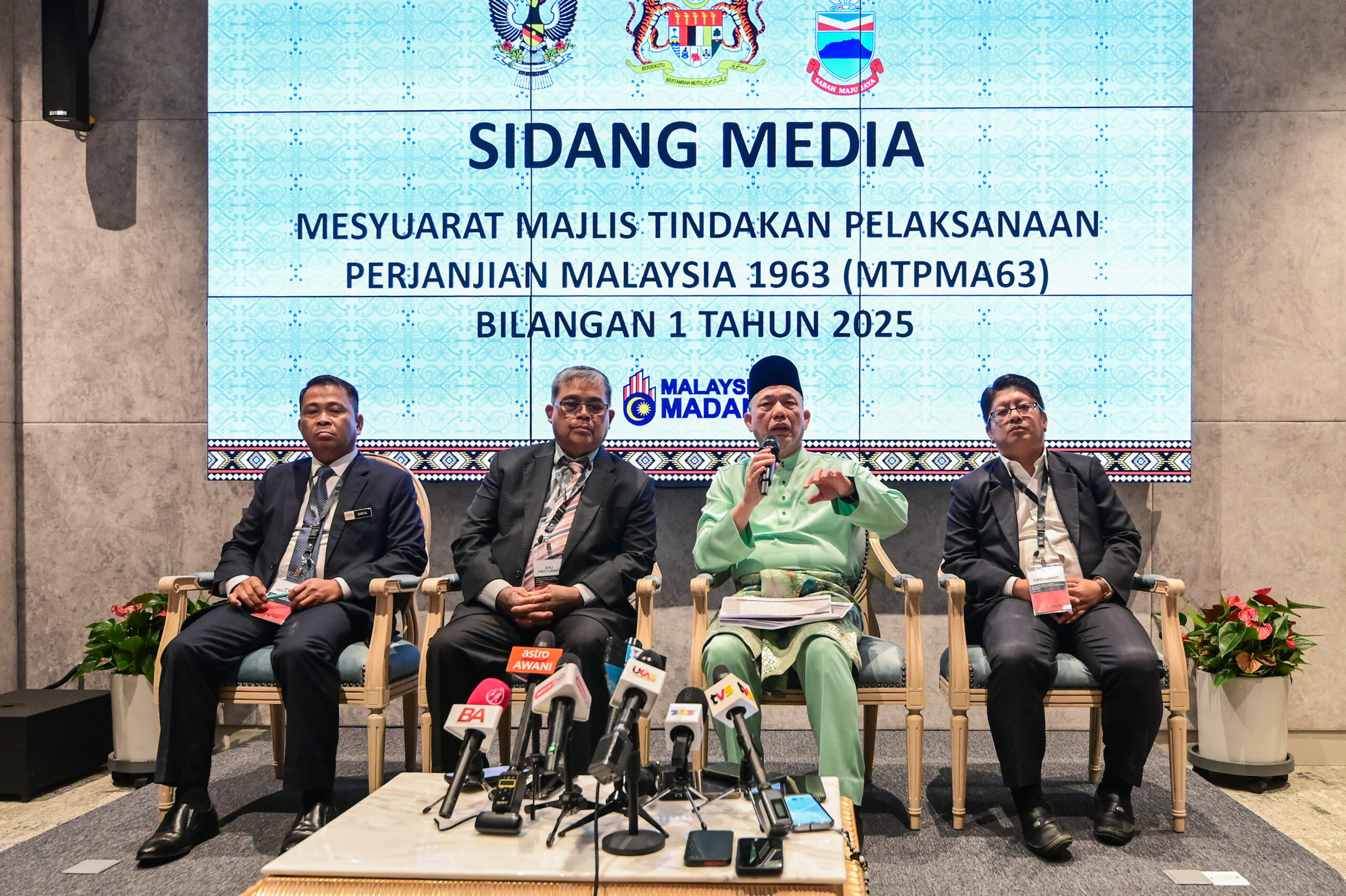
KUCHING: The Technical Committee under the Malaysia Agreement 1963 Implementation Action Council (MTPMA63) will refine the issue of tourism jurisdiction from a legal perspective, as it involves provisions in the Federal Constitution, said Deputy Prime Minister Datuk Seri Fadillah Yusof.
He said the matter will be further detailed following the proposal to amend Article 25A in List I of the Ninth Schedule of the Federal Constitution, which was agreed upon at the MTPMA63 meeting chaired by Prime Minister Datuk Seri Anwar Ibrahim yesterday.
“The proposals raised need to be refined to ensure that the administrative jurisdiction of tourism can be determined more clearly. At the same time, the Ministry of Tourism, Arts and Culture must engage with all states in Malaysia.
“There are matters that will be fine-tuned, including what can be handed over to the state governments administratively, what can fall under concurrent powers, and what remains under the jurisdiction of the Federation,” he said at a press conference after the meeting at Satria Pertiwi Complex here.
At the same time, he stressed that there is no problem in terms of tourism administration between the federal government and the states, but differences arise only from the legal standpoint.
“In terms of administrative implementation, there is no problem as all parties are working well together. The question arises because under the Constitution, powers are divided into three lists: Federal, State and Concurrent.
“Tourism did not exist in any of the lists when the Constitution was first drafted. However, in 1992, it was introduced but placed directly under the Federal List.
“Before that, there should have been consultations with the states concerned, because if a matter is not listed, it should fall under the residual list, which normally belongs to the states,” he explained.
However, he said, the matter requires closer study as tourism and the environment involve cross-border activities and matters of national interest.
“The proposal raised is to place this under the Concurrent List. That is the only difference in the legal interpretation currently being discussed,” he said.
In addition, he said the meeting also touched on other matters including education and health.
“Most of the issues have been agreed upon. A few more will continue to be refined, and once the whole set of issues is agreed upon, it will then be brought to the technical committee level for confirmation,” he added.