KUCHING: Low Earth Orbit (LEO) satellite technology has the potential to be a key enabler of Sarawak’s vision to transform into a digitally connected, resilient, and high-income state by 2030.
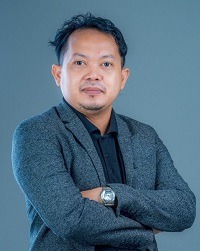
Deputy Dean of the Faculty of Aerospace Engineering at i-CATS University College Abdul Qaiyum Alidin said LEO satellite connectivity, if developed, does not replace terrestrial infrastructure; instead, it strategically complements Sarawak’s existing digital investments.
“It extends reliable access to underserved communities and strengthens the overall resilience of the state’s digital network, especially during emergencies such as floods or landslides, when ground-based networks may be disrupted,” he told Sarawak Tribune.
Abdul Qaiyum explained this approach aligns with the Sarawak Digital Economy Blueprint 2030, where connectivity is treated as essential infrastructure underpinning social inclusion and economic participation.
He said through LEO satellite technology, digital classrooms and remote learning can be delivered to students in rural communities, access to telemedicine and healthcare outreach can be expanded, and e-government services can be extended more effectively.
The technology, he said, also supports smart agriculture, environmental monitoring, and the growth of grassroots digital entrepreneurship, ensuring that digital progress reaches all segments of society.
“Satellite connectivity plays a vital role in disaster management by ensuring communication continuity for emergency response, coordination, and public safety when terrestrial systems are compromised,” he added.
Beyond connectivity, Abdul Qaiyum said Sarawak is taking a long-term and strategic approach by building aerospace and space technology capability as part of its economic transformation under the Post-Covid-19 Development Strategy 2030 (PCDS 2030).
He explained the establishment of the Faculty of Aerospace Engineering at i-CATS reflects Sarawak’s commitment to developing local talent and technical capability — not only using advanced technology, but understanding, building, and sustaining it.
The faculty’s programmes, including the Bachelor of Aerospace Engineering with Honours, are designed to prepare a future-ready workforce for high-technology industries.
As global demand for satellite services continues to grow, he noted that Sarawak is positioning itself to participate meaningfully in the NewSpace economy, particularly in applied and downstream activities that generate high-value jobs, technical expertise, and local industry capability.
Abdul Qaiyum said Sarawak’s strategy goes beyond consuming satellite services; instead, the state is adopting a realistic approach to move up the aerospace value chain.
This includes developing capability in satellite assembly, integration, and testing, alongside indigenous payload design, ground station operations, mission control, and satellite data analytics. Over time, these capabilities can support a broader space-enabled technology ecosystem.
He believes Sarawak’s strategic location near the equator, combined with strong state-level policy support and a growing aerospace ecosystem, places it in a favourable position to support regional applications such as Internet of Things (IoT) connectivity, Earth Observation (EO) for forestry and environmental monitoring, maritime surveillance, and disaster management.
“Satellite data is a strategic asset. When you have the capability to generate, manage, and analyse your own data, you move from being just a technology user to becoming a technology owner,” he said.
Quoting a principle highlighted by Premier Datuk Patinggi Tan Sri Abang Johari Tun Openg, he added, “Data is the new oil. Owning both the data and the technology behind it allows Sarawak to manage its natural resources, borders, infrastructure, and development priorities more intelligently, securely, and sustainably.”
Abdul Qaiyum explained that LEO satellites typically operate at altitudes of around 300 to 1,200 kilometres above Earth, significantly closer than traditional geostationary satellites (GEO), which orbit at nearly 36,000 kilometres.
This shorter distance reduces signal delay, improves communication performance, and lowers overall system costs. Combined with modern satellite design and mass-production techniques, LEO systems have become more affordable and accessible, making them well suited for expanding both urban and rural connectivity.
Abdul Qaiyum said LEO satellite technology serves as a critical building block for Sarawak’s digital economy, aerospace ambitions, and innovation-driven growth.
He believes that with consistent policy support, sustained talent development, and close collaboration between government, industry, and academia, this technology can help translate Sarawak’s long-term vision into practical and transformative outcomes.
“Regional platforms such as the upcoming Asia Pacific Aerospace Conference and Exhibition (APACE) offer important opportunities to align stakeholders, showcase capabilities, and convert strategic plans into real projects that benefit Sarawak, particularly within the Asia-Pacific region,” he added.