HIDDEN near the quiet township of Kota Padawan, near Kuching, lies a place where science, compassion, and nature come together in remarkable harmony — the Rajah Charles Brooke Memorial (RCBM) Leprosarium Chaulmoogra Park.
Once a secluded refuge for those battling leprosy, this historic site has been reborn as a heritage and healing park, preserving stories of endurance and hope that shaped Sarawak’s early medical history.
Established in 1925 during the Brooke administration, the RCBM Leprosarium was one of the earliest centres in Borneo dedicated to the treatment of Hansen’s disease, commonly known as leprosy.
It was a self-contained settlement — with its own hospital, chapel, school, farm, and cemetery — where patients once lived in isolation from society.
Despite the stigma, life within the leprosarium blossomed into a close-knit community.
Former patients at a settlement were given a piece of land to build a homestead and establish themselves as independent farmers and to reintegrate them into society.
Historical accounts from the 1960s and beyond show a move away from isolation toward allowing recovered patients to build homes and earn a living through farming and gardening, with the goal of supporting them financially and socially.
These initiatives have contributed to a sense of dignity and integration for former sufferers and have helped to transform the settlement into a successful horticultural hub.
Aside from that, former patients worked, studied, farmed, and raised families.
Over time, the site became not just a hospital, but a symbol of compassion and resilience — a reminder that humanity can thrive even in the face of rejection.
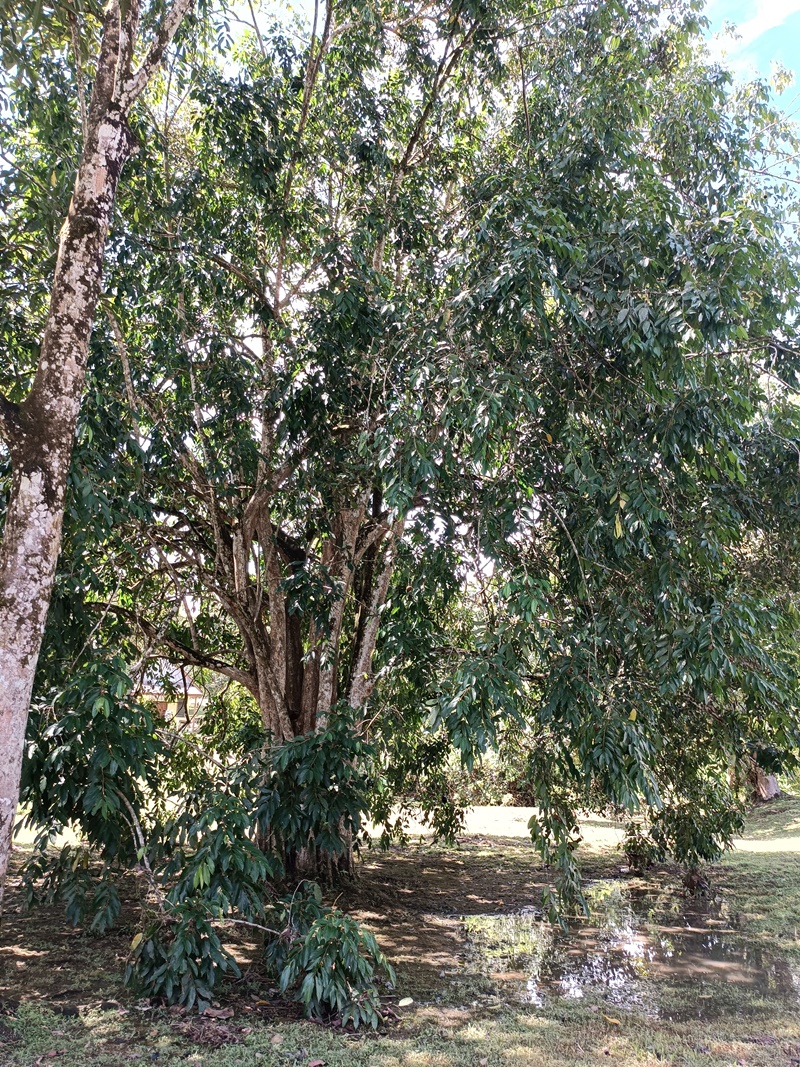
At the heart of the park stands a majestic Chaulmoogra tree (Hydnocarpus wightiana), believed to be the only one of its kind in Borneo.
Long before modern medicine discovered antibiotics, oil extracted from the seeds of this tree was one of the earliest known treatments for leprosy.
For centuries, it was a primary treatment for leprosy, and its use was known in both traditional and Western medicine.
The treatment, however, is said to have limitations, such as being painful, difficult to administer, and having variable long-term effectiveness.
Its use declined significantly in the mid-20th century with the discovery of more effective antibiotic treatments for leprosy.
Today, this “Mother Tree” at the the RCBM Leprosarium Park is lovingly preserved as a living monument to medical history.
Around it, the park’s trails, the unoccupied historic buildings and exhibits invite visitors to learn about the tree’s healing legacy — and the hope it once brought to countless lives.
RCBM Chaulmoogra Park is now being developed into a living museum of “forgotten stories”.
At the park, visitors can explore colonial-era buildings, patient dormitories, and places of worship that once served people of different faiths — from a Catholic chapel to a Chinese temple and Muslim surau.
Each structure whispers its own story of faith, endurance, and the universality of the human spirit.
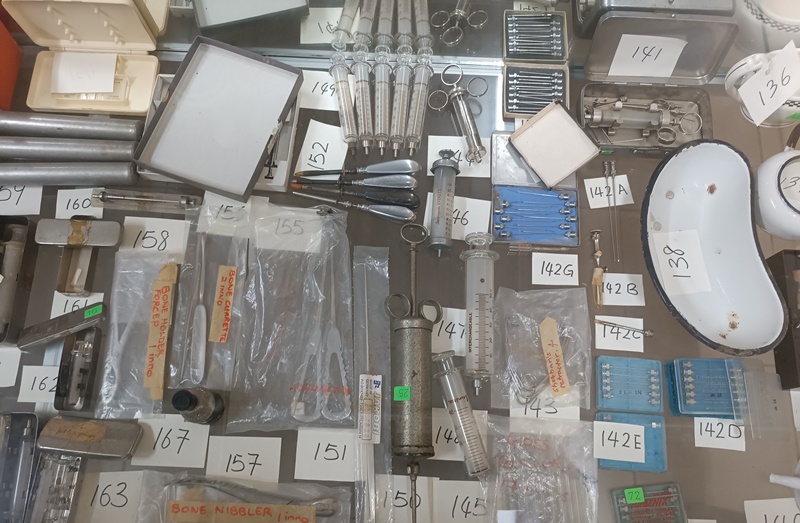
Artefacts recovered from the site — such as medical tools, photographs, and household items — bring to life the daily routines of former residents.
Trails through the old housing areas and burial grounds offer a solemn yet inspiring journey through time, blending nature with memory.
Beyond its historical significance, the park plays a vital role in education and awareness.
Through interpretive signage, guided tours, and community engagement, visitors can learn not only about the science of leprosy but also about the importance of empathy and inclusion.
The Sarawak Heritage Society RCBM Hospital (HSoRCMBH) and local community groups have worked tirelessly to ensure the site’s preservation under the Sarawak Cultural Heritage Ordinance.
Their main goals are to see the leprosarium officially gazetted and to ensure the welfare of the descendants of the leprosarium’s patients.
The society has worked with various agencies, including the State Drainage and Irrigation Department, the Tourism Ministry, and local representatives to achieve its goals for the site.
Supported by elected representatives and the state government, their efforts had transformed what was once a place of isolation into one of understanding and unity.
Today, the RCBM Leprosarium Chaulmoogra Park stands as a bridge between past and present — a place where visitors can reflect, learn, and reconnect with nature.
The park’s serene environment, shaded by ancient trees and surrounded by remnants of colonial architecture, carries a quiet power: a reminder that healing is not only physical, but deeply human.
In the gentle rustle of the Chaulmoogra leaves, one can still hear the whispers of those who lived, healed, and hoped here — turning what was once a leprosarium into a landscape of remembrance and renewal.
Although the place had been gazette in 2019, there is a specific constraint that prevents the park from expanding or growing to its maximum potential.
According to HSoRCMBH chairman Angie Jong, the limitation they have was that the land belongs to the state government but the buildings on it belong to the federal government under the Ministry of Health (MoH).
“For now, we cannot do much or do anything. The MoH also cannot support because it supports the medical side, not the tourism side. So it’s a bit difficult.
“We have been putting efforts to get ourselves delineated so that part of this area, which is not operational, to be divided as a heritage land that could fall under our state so that our funding can come in easier.
“I think we are kind of slow in that so we have to push and expedite the thing so that we can actually cut the land into two – the operation of RCBM hospital falling under the MoH and the Park under the state.
“If we can solve this limitation, it’s easier to manage it,” she said at the official launch of the park recently.
Jong said the initial plan they had for this place was a natural living museum, where they will get the people from Kpg Sinar Baru to live in some of the buildings so they can cook, do their beads works and weaving and sell them.
She said when people come as tourists, they can also taste their tuak, have their pansuh under the Chaulmoogra tree.
“These are all for the residents own socio-economic income. We are also looking into the community development for them, not only as a heritage but also as a community holistically,” she said.
Jong stressed that there is no plan to change the full landscape, but to conserve the building, the oral histories and the trees that tell the stories.
“We are not changing the landscape, but we may have to build a higher boardwalk for people to walk on because some of the areas are flood prone.
“The landscape will still be the same. It’s just your accessibility is a little bit different,” she said.