As humans, we often disregard kind words in times of need, taking for granted how rare genuine compassion actually is. It’s only when the noise dies down, when the world stops clapping, that we realise how much those small acts of humanity truly matter.
With today being Human Rights Day, we are reminded through the year’s theme — “Human Rights, Our Everyday Essentials”. This theme signifies that in periods of turbulence and unpredictability, when insecurity, disaffection, and alienation grow, the global observance reminds us of the values of human rights amidst humanity.
Sharing on the everyday essentials of human rights, the United Nations (UN) said that by bridging the gap between human rights principles and everyday experiences, we are able to spark awareness, inspire confidence, and encourage collective action.
Human Rights: Our Everyday Essentials
According to the UN, human rights are POSITIVE, in that they not only protect but also bring joy, happiness, and safety into daily life. Human rights are lived realities. They are present in the food we eat, the air we breathe, the words we speak, the opportunities we pursue, and the protections that keep us safe.
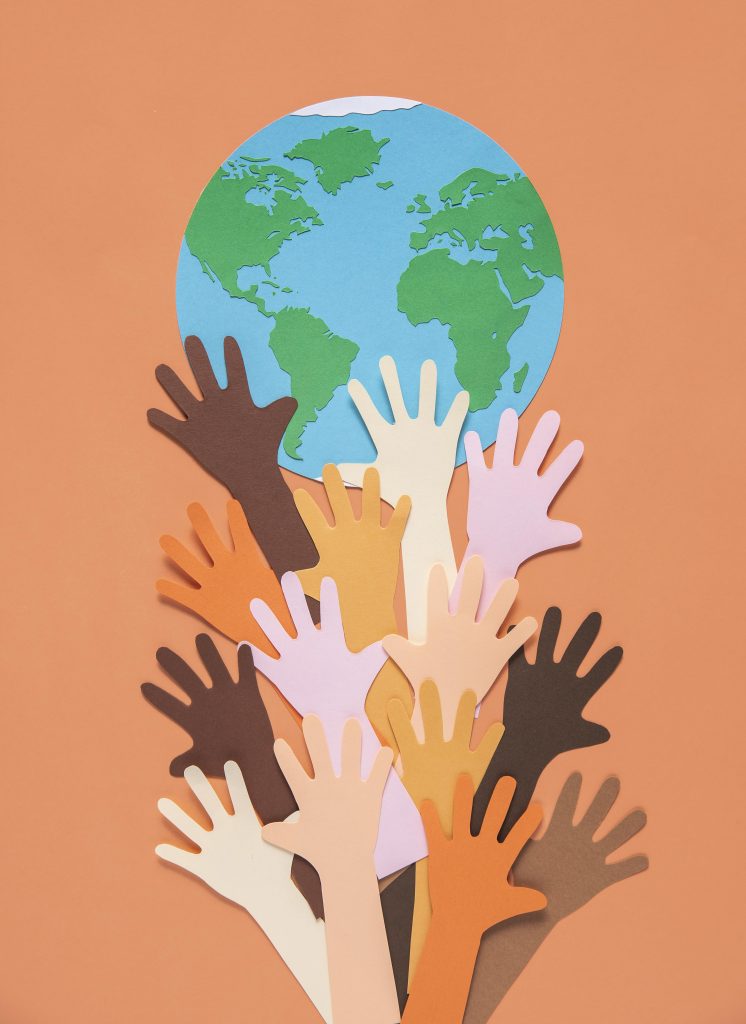
Human rights are ESSENTIAL because there is a common ground that unites us across differences of race, gender, belief, or background. In a world of uncertainty, human rights remain our everyday constants. When everything feels unstable, your right to safety, to speak freely, and to participate in decisions that affect you become the bedrock of life.
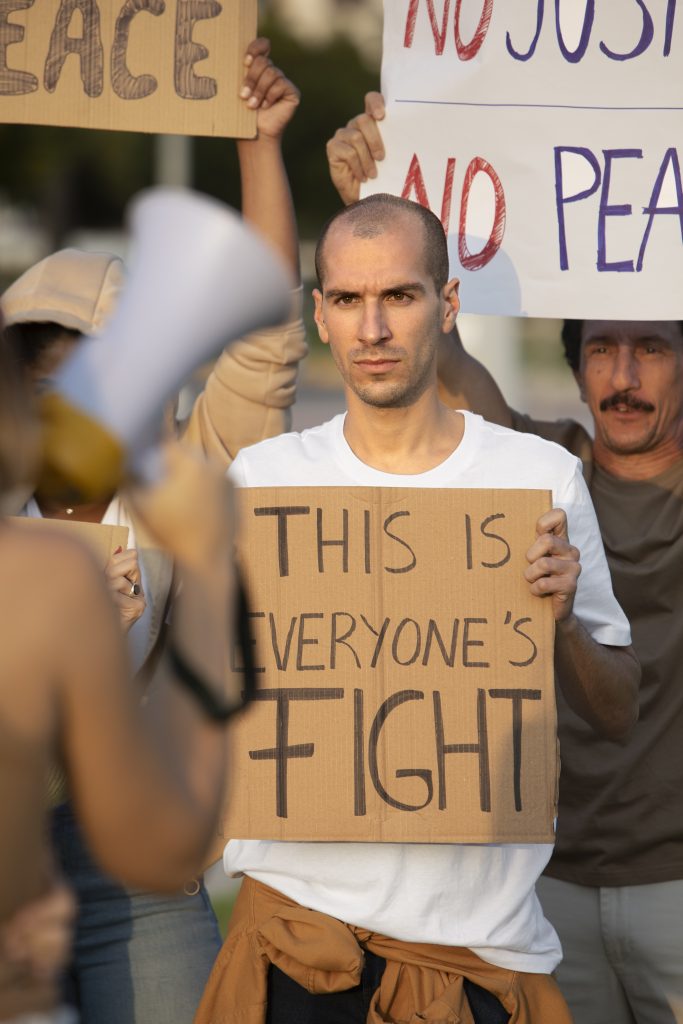
Lastly, human rights are ATTAINABLE, as they begin with us, with the small, everyday choices we make, from treating others with respect, to speaking up against unfairness, and listening to those whose voices are often ignored. Everyday choices and voices matter more than you may realise; they build a culture of dignity and fairness around us. But human rights also depend on collective action, when communities, movements, and nations come together to demand justice and equality.
On this day, the UN commemorates the anniversary of one of the world’s most groundbreaking global pledges, the Universal Declaration of Human Rights (UDHR). Proclaimed by the United Nations General Assembly in Paris on December 10, 1948, the document outlines rights that everyone is entitled to, regardless of race, colour, religion, sex, language, political or other opinion, national or social origin, property, birth, or other status.
Human Rights in Malaysia
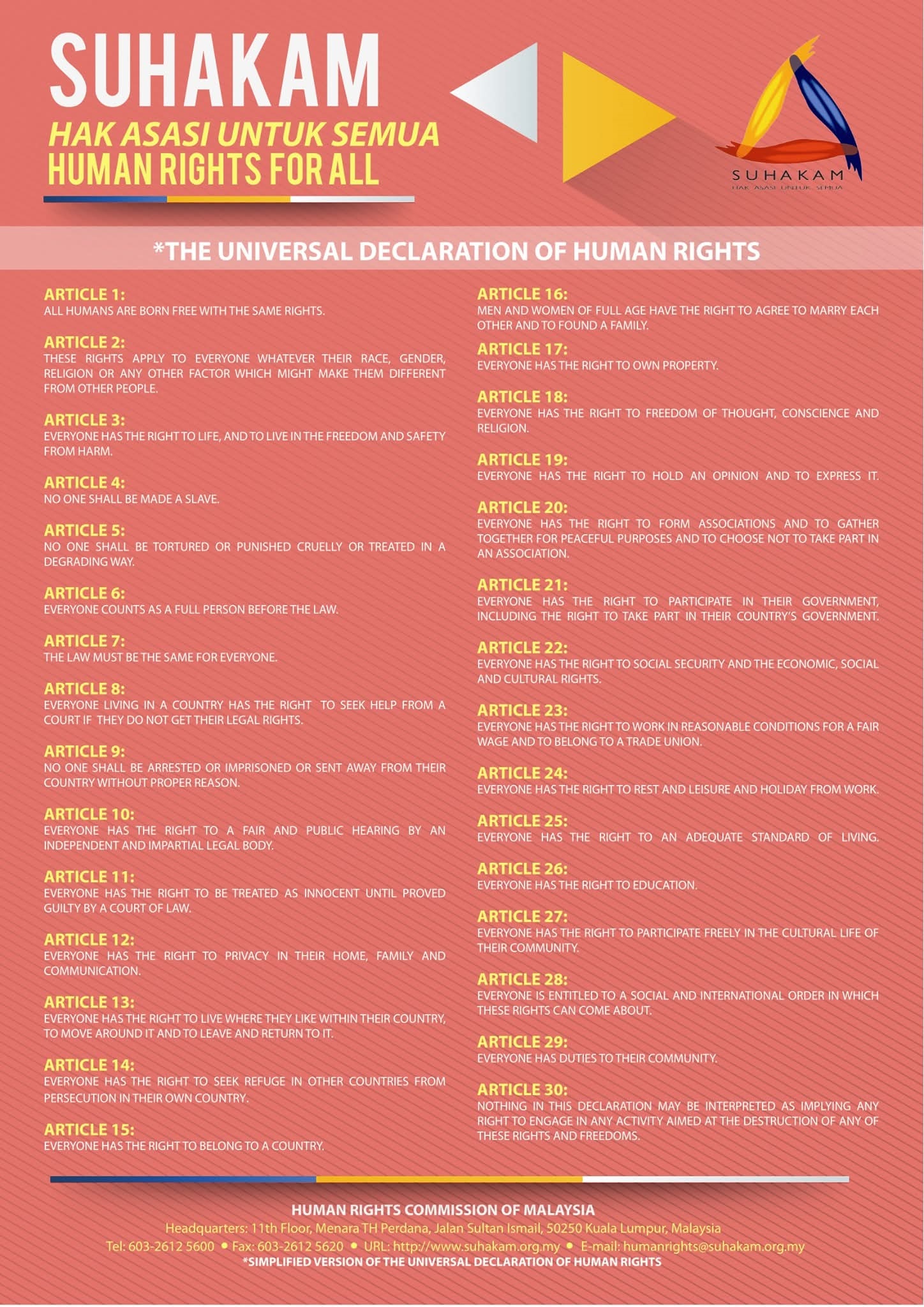
In Malaysia, the Human Rights Commission of Malaysia (SUHAKAM) was established by parliament under the Human Rights Commission of Malaysia Act 1999 (Act 597). SUHAKAM and its members were selected to reflect the diversity and pluralism of the country’s society, as well as the experience, commitment, independence, and integrity of the individual.
Based on the human rights principles set out in the UDHR, the articles are recognised as long as they align with the Federal Constitution — particularly Part II (Articles 5-13), which outlines our Fundamental Liberties and guarantees the basic rights protected by law. In a country as diverse as Malaysia, these principles aren’t just legal provisions; they are the backbone of social unity.
Meanwhile, at SUHAKAM, their current focus areas surround communities and themes such as “violence against children”, “human trafficking”, “corporal punishment”, “freedom of expression”, and many others. In a multi-ethnic, rapidly changing country, these focus areas reflect the evolving shape of human-rights challenges.
In a recent press statement by the commission, touching on Sarawak’s initiative to enhance connectivity in the northern region and close the rural-urban development gap by 2030, SUHAKAM commended this positive development, recognising it as a significant step toward ensuring that communities in remote parts of Sarawak are not left behind due to long-standing infrastructural gaps.
In the same statement, SUHAKAM Sarawak shared support for these efforts as they uphold the rights and dignity of all people in Sarawak, particularly those residing in underserved and remote areas. This reflection underscores the importance of ensuring that development and connectivity initiatives are inclusive, leaving no community behind and reinforcing the principle that human rights must be accessible to everyone, regardless of location or circumstance.
As we reflect on Human Rights Day, it becomes clear that human rights are not abstract ideals reserved for special occasions — they are the very threads that hold our society together. From the words we speak to the policies that shape our communities, every action matters in nurturing a culture of dignity, respect, and fairness. In doing so, we not only honour the legacy of the UDHR but also strengthen the foundation for a more just, inclusive, and harmonious society.