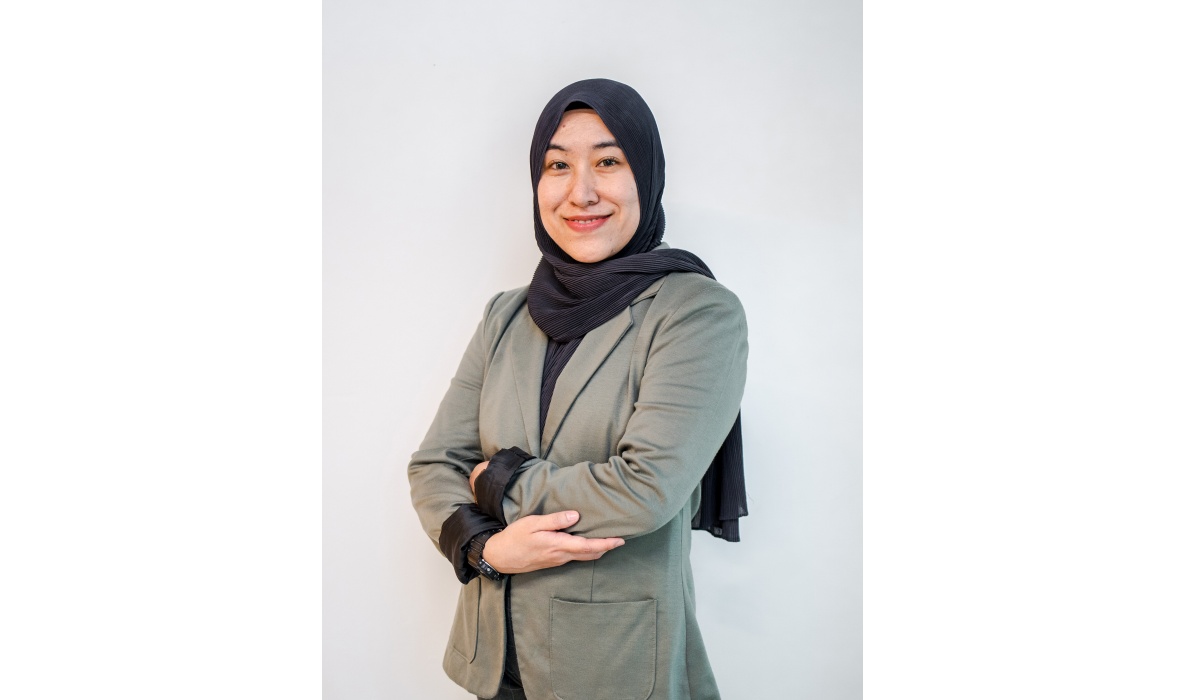
“You cannot undo the moves, but you can make next step better.”
– Sari Caine
THE first time my second child, Hayek, and I played chess, he beat me in four moves.
He was seven years old.
At once embarrassed and proud, I told a friend and fellow father.
Sounds familiar, he said.
His daughter, only six, had defeated him the same way: Playing the white pieces, she ensnared his king with a swift two-pronged attack on the f7 square, the weakest on the board for black (as we both learned).
Hayek wasn’t necessarily going to be the next Bobby Fischer or Beth Harmon.
But he took to chess immediately.
He started playing in first grade, learning from his mother and a teacher at his school.
Ever since his premature birth at 27 weeks – he weighed less than 2 pounds and for a frightening two and a half months clung to life on a ventilator – he has faced physical and behavioural challenges.
Growth hormone deficiency, ADHD, anxiety and lack of impulse control.
In some ways, his difficulties only increased after his mother and I separated by thousands of kilometres, each working in a different corner of the world when he was two.
In other words, from the very start, parenthood was proving vastly different and more trying than I ever imagined it would be.
As the father of such a challenged and challenging kid, I found myself having to toss out the playbook I’d drawn up in my head.
I turned to chess as an audible, a play called on the fly, when my son and I needed a score.

After Hayek trounced me a couple of times, I faced a crossroads: avoid chess altogether, as the father of one of his classmates did after losing soundly to his son, or take up the game myself.
Seeking a connection, I chose to learn.
Years had gone by since I’d last played chess.
At Hayek’s age, I far preferred sports.
Evenings and weekends, I watched sports on a black-and-white TV with my father, a tradition I assumed I’d carry on with my son.
But as it turns out, sports, at least what I understood them to be, aren’t his bag.
For a time, he was passionate about football.
I’ve always made a point to be there when he plays for school – something I reflected on in a column last May.
He took weekly classes in the basement gyms of old churches and schools and on patches of grass staked out in crowded parks.
We spent Saturday afternoons playing pickup games, using our coats, backpacks and water bottles as makeshift goals.
At 10, he played for Dwight School and joined a non-competitive league.
He was so excited for the season he’d ask random people in our neighbourhood in Forest Hills whether they knew what WSSL stood for: West Side Soccer League.
Little did he know the field would be massive and most of the other boys bigger, more agile than he was.
In the first game, he more or less held his own.
But he refused to play after that.
His mother and I persuaded him to go to the second game, yet neither we nor his coaches and teammates could coax him onto the field.
The third game he skipped altogether – and ended up playing street chess instead.
Now 11, Hayek will occasionally watch the La Liga matches (Spanish football league), but with his mother, not me.
He’s a die-hard Real Madrid supporter – maybe it’s the winning mentality that appeals to him.
Either way, it’s been heartening to see football light him up again.
So much for sports being passed down from father to son.
Chess was our chance.
It enabled the two of us, a father and a son who saw each other only three or five days in a few months, to bond over a shared interest.
At bedtime as a toddler, Hayek would ask me to dim the overhead light in his room to the faintest glow.
If he returned to his sister Bella’s bedroom the next morning, the light would stay on all day, unnoticeable until nightfall, when the sight of it made me ache.
Looking back, I think Hayek, too, saw chess as a way for us to connect.
He offered to teach me, setting up the board on our coffee table and demonstrating pins, forks and skewers – tactics he’d learned in school and mercilessly deployed against me.
Eventually, my eye got sharper, yet he was always a move or two ahead.
I’d nab his bishop or knight only to expose my queen: I was walking into his traps.
I also attempted to learn on my own, watching videos of chess openings and attacks, but invariably failed to remember them beyond a few moves.
I tried playing slower, hoping to make fewer blunders.
Hayek, impatient by nature, would have none of it.
“Come on!” he’d cry.
At a school open house early this year, I introduced myself to his chess teacher, Sari Caine.
First, I thanked her for turning him on to the game, then asked if she knew someone who could teach me.
She smiled knowingly and suggested herself.
During our first lesson, Sari set up a board and, with a sweep of her hand, referred to it as a canvas.
She insisted I know its geography: a grid of 64 alternating light and dark squares consisting of eight vertical files (a through h) and eight horizontal ranks (1 through 8).
“If you’re going to play chess, you should really learn notation,” she said, moving a piece from one square to another and calling out the coordinates – “e4, e5, c6, f3.”
I tried to keep up.
We moved on to openings.
Since Hayek, when playing white, was fond of starting with his king’s pawn, Sari taught me a counter-opening for black, the Sicilian Defense.
It seemed straightforward enough, but against Hayek, I bungled it, leaving my king open to a diagonal attack.
He pounced. Checkmate.
“See the whole board,” I could hear Sari saying.
Losing over and over again stung, but seeing how animated Hayek became whenever he played, taught or even talked about chess kept me going.

I bought some chess books and studied puzzles.
I created an account on Lichess.org, an open-source server where, at any given time, upwards of 40,000 games are in play.
I lost prolifically at the start but slowly started to improve.
One game I won in seven moves, employing a fork trick called the Fried Liver that Hayek had taught me.
From time to time, his interest in chess has waned.
He’s binged on other games, like Uno or Exploding Kittens.
More likely these days, screens monopolise his attention, particularly during the school holidays, since he can join friends online.
But chess keeps calling him back.
With chess, Hayek finds an equilibrium that eludes him in other areas of his life.
Rather than criticise or curse impulsively, he becomes absorbed in the game.
Chess contains him.
Endlessly complex and bound by a set of rules he accepts, it stimulates his analytical mind.
That same spark shows up when this Elon Musk admirer programming drones, stacking commands that tell them how high to fly, when to twist, where to land.
On the chessboard, he’s quick, nimble and strong.
Over time, our games have become more competitive.
I’ll push my pawns to control the crucial centre squares and sidestep some of his attacks before he can launch them.
If we play three games, I might win one and, just maybe, draw a second.
Needless to say, he has noticed.
“Last year I hustled you; now, not so often,” he said the other night.
“And sometimes you hustle me.”
Hayek, for all his explosiveness, manages not only to block out distraction but to take losing well, extending a hand and saying “gg” (good game).
Once more, I’m learning from him. Mostly, chess has become an ongoing conversation between us.
One evening, when he and Bella visited his mother at the hospital, I checked my email and found a note from him.
He’d been studying the queen vs. pawn endgame and wanted to show me how it worked.
His room down the hall was dark and the house felt empty without him, but for a moment, he was right beside me, getting the pieces ready.
The views expressed here are those of the columnist and do not necessarily represent the views of Sarawak Tribune. The writer can be reached at med.akilis@gmail.com