When Love Is Not Absent, Just Postponed
MANY people don’t fall out of love.
They simply become too busy to feel it.
Between deadlines, responsibilities, caregiving, and expectations, love is often pushed to the background – not rejected but postponed.
Couples promise each other, “After this project… after this phase… after things settle down.”
But life rarely settles.
And slowly, love waits – quietly – until it feels forgotten.
In Love Forensic™, this is not a failure of commitment.
It is the psychological tension between duty and emotional presence.
The Forensic Reality of Modern Responsibility
In today’s society, duty is praised.
Working hard, providing, sacrificing, staying strong – these are virtues.
But emotionally, the nervous system does not measure love by intention.
It measures love by availability.
You can be loyal, faithful, and hardworking – yet emotionally absent.
And for the partner on the receiving end, absence feels the same whether it’s intentional or not.
How Duty Slowly Replaces Desire
Psychologically, prolonged stress narrows emotional bandwidth.
When the brain is constantly managing:
- Work pressure
- Financial responsibility
- Family obligations
- Social expectations
It prioritises survival over intimacy.
Oxytocin (bonding hormone) drops.
Cortisol (stress hormone) rises.
This creates a relational shift:
- Touch becomes functional
- Conversations become transactional
- Affection becomes scheduled, not spontaneous
Love doesn’t disappear – it goes dormant.
The Silent Misunderstanding Between Partners
One partner often says:
“I’m doing all this for us.”
The other feels:
“But I feel alone.”
Both are telling the truth.
This is one of the most painful relational paradoxes:
👉 Sacrifice does not automatically translate into emotional connection.
Love needs to be felt, not just proven.
Gender, Culture, and Role Expectations
In many cultures, especially within Asian and collectivist societies, duty is deeply tied to identity.
Men often equate love with provision.
Women often equate love with presence and emotional attunement.
When stress rises:
- Men withdraw to solve problems.
- Women seek reassurance to feel secure.
Without awareness, this creates a loop:
Withdrawal → Anxiety → More Withdrawal → Emotional Distance.
In Love Forensic™, this is called role-based emotional blindness – loving through duty while missing emotional signals.
The Emotional Cost of “Later”
One of the most common phrases in burnt-out relationships is “later”.
- “Later we’ll talk.”
- “Later we’ll go away together.”
- “Later things will be better.”
But emotionally, later feels like never.
Over time, the partner stops asking. Not because they no longer care – but because asking hurts too much.
That is when love becomes quiet, compliant, and emotionally distant.
Rebalancing Love and Duty: The Forensic Way
Love does not require less responsibility.
It requires intentional emotional presence within responsibility.
Here’s how couples recalibrate:
- Redefine Love Signals
Ask each other: “What makes you feel loved – practically and emotionally?”
Don’t assume. Clarify. - Micro-Presence Matters
Five minutes of full attention is more powerful than hours of distracted time. - Name the Pressure Together
Say: “This season is hard, but I don’t want us to disappear in it.” - Protect Emotional Rituals
Shared meals, check-ins, bedtime conversations – these anchor connection. - Stop Using Sacrifice as Proof
Love is not measured by exhaustion.
It’s measured by emotional availability.
A Difficult but Necessary Question
Ask yourself honestly:
If my partner stopped needing me practically, would they still feel emotionally chosen?
Duty keeps relationships functioning. Presence keeps them alive.
++++
Dr Ben’s Reflection
Love does not compete with duty – it suffers when duty is not balanced with presence.
Providing is important, but being emotionally available is irreplaceable.
The heart does not ask for perfection – it asks to be remembered.
🔎 Next Week in Love Forensic™
“When Love Is Unequal – The Emotional Cost of Overgiving”
Why do some people give endlessly while feeling increasingly empty?
Next Saturday, we examine emotional imbalance, people-pleasing, and why love must be mutual to survive.
Journey Continues:
Responsibility → Awareness → Emotional Balance
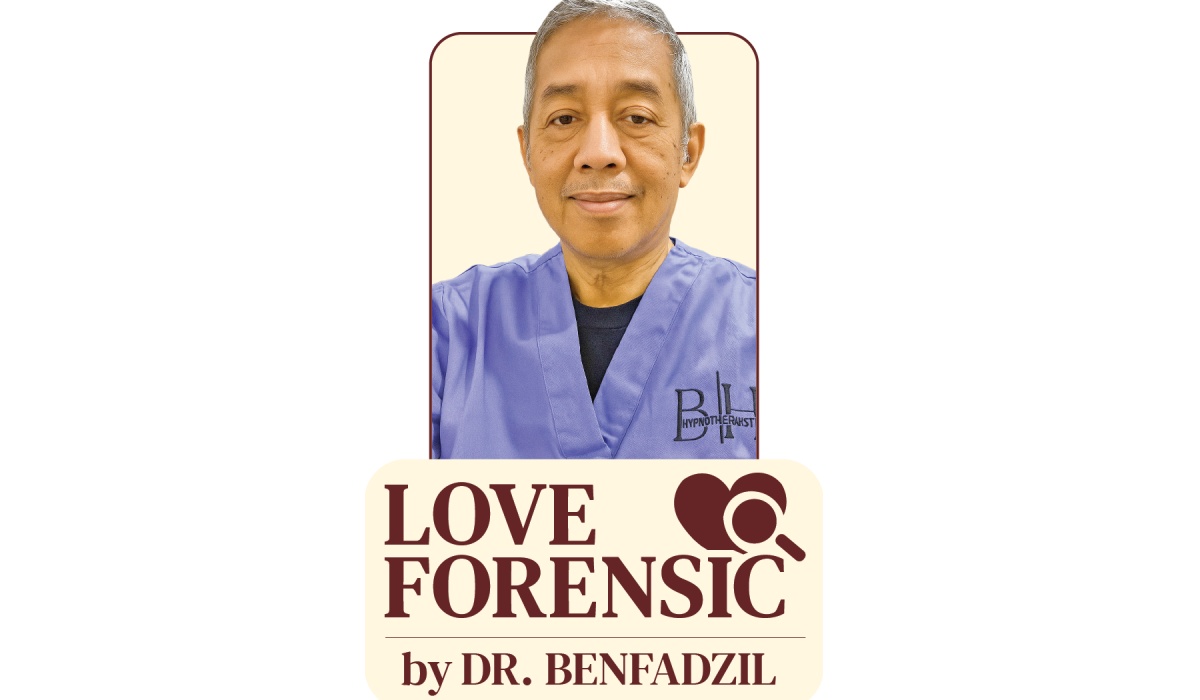
●Dr Benfadzil Mohd Salleh, Forensic Psychologist & Founder of Benfadzil Academy, (Love Forensic™ – Where Science Meets Emotion), Kuching, Sarawak
H/P: 012 2350404; Email: drbenfadzil@gmail.com
The views expressed here are those of the writer and do not necessarily represent the views of Sarawak Tribune.