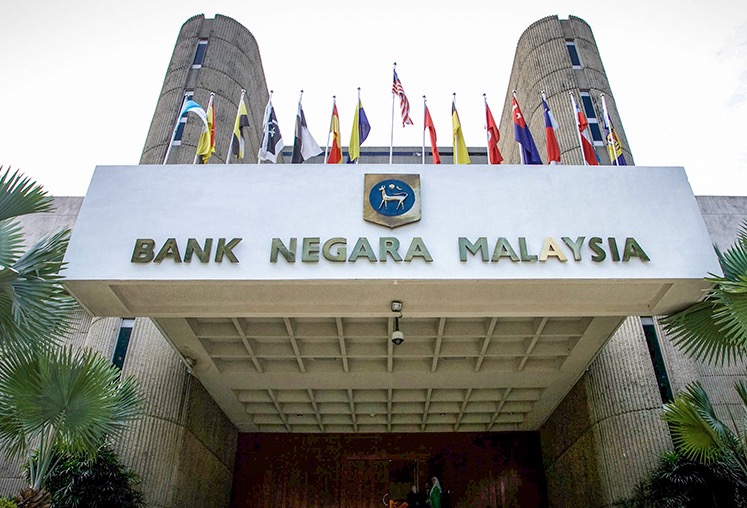
KUCHING: The recent announcement of Bank Negara Malaysia’s (BNM) rate cut may help the economy, but much of East Malaysia risks being left behind without better banking access.
This sentiment was voiced by Nivakan Sritharan, a lecturer at Swinburne University of Technology Sarawak, Faculty of Business, Design and Arts who posited that BNM’s decision to reduce the Overnight Policy Rate (OPR) by 25 basis points to 2.75 per cent reflects a strategic, pre-emptive response to rising global uncertainties.
“While Malaysia’s domestic economy remains on a steady footing, the external environment, particularly geopolitical tensions and volatile commodity prices, poses potential risks to growth.
“Lowering the OPR helps to cushion these risks by making borrowing more affordable for consumers and businesses, which can stimulate spending, investment, and overall economic activity,” he told Sarawak Tribune.
He said inflation remained moderate in the first five months of the year, with headline and core inflation averaging 1.4 and 1.9 per cent respectively.
“It gives BNM room to ease monetary policy without risking price instability,” he added.
“By acting now, the central bank is not only safeguarding Malaysia’s current growth trajectory but also ensuring that future developments, such as the rationalisation of fuel subsidies or changes in the global trade landscape, do not derail economic momentum,” he pointed out.
As for Sarawak, Nivakan noted that the rate cut would provide a supportive boost by lowering the borrowing costs for businesses and households.
“This move is expected to stimulate domestic demand and investment in key sectors across the state.
“For instance, lower interest rates on home loans could encourage property purchases in urban areas like Kuching, Miri, and Bintulu, revitalising the housing and construction sectors,” he said.
He said small and medium-sized enterprises (SMEs), particularly those in manufacturing, agro-based industries, and food processing, may benefit from more affordable financing to expand or upgrade facilities.
“In the agriculture sector, which remains vital in rural Sarawak, lower financing costs may encourage smallholders and cooperatives to invest in mechanisation and downstream processing, enhancing productivity.
He asserted that consumer-facing sectors such as retail and tourism may also see a positive spillover.
“Lower interest on personal loans and hire-purchase financing may encourage household spending, while tourism operators might take advantage of easier credit conditions to invest in marketing and service upgrades.
He said the rate cut sends a positive signal to Sarawak’s business community and consumers, reinforcing confidence and easing liquidity constraints.
“This monetary easing complements the national strategies by enabling a more conducive environment for growth across Sarawak’s diverse economic landscape.
In East Malaysia overall, Nivakan believed that the cut could meaningfully stimulate domestic consumption and lending, though the impact will vary by region and income group.
“In urban and semi-urban areas of Sarawak and Sabah, where banking infrastructure is stronger and financial literacy is higher, we can expect to see a more immediate uptick in consumer spending and SME borrowing.
“Consumption could rise, particularly among younger and lower-income groups who are increasingly utilising credit facility like credit cards and Buy Now, Pay Later schemes.
However, he stressed that easy access to credit without adequate financial literacy may lead to overspending and debt stress.
“Rural areas in Sarawak still face serious challenges with financial inclusion, as about 42 per cent of the rural population lacking access to basic banking.
“For the rate cut to have broader and more equitable impact, these structural barriers must be addressed,” he said.
He added that the ongoing public and private investments, including infrastructure projects, renewable energy initiatives, and digital economy development, are well-positioned to benefit from lower capital costs, potentially accelerating regional growth.
In hindsight, turning to the risk of loosening policy too soon, Nivakan said the interest rate gap between Malaysia and the United States remains a concern.
“The US Federal Reserve has raised its policy rate aggressively to a range of 5.25 to 5.50 per cent, while Malaysia’s increases have been more measured.
“This gap makes US financial assets more attractive, prompting capital outflows and contributing to the ringgit’s depreciation, as seen in October 2023,” he said.
He stated that a further reduction in the OPR, if not carefully calibrated, could worsen pressure on the ringgit and raise the cost of imports.
“This is especially critical at a time when palm oil prices are rising moderately, which helps the trade balance but may not fully offset external pressures.
He also cautioned that premature easing could reduce BNM’s monetary policy space if global conditions deteriorate.
“While the OPR cut is defensible given Malaysia’s moderate inflation and stable domestic outlook, the risk lies in underestimating the impact of external financial dynamics.
“A cautious, data-driven approach, aligned with BNM’s historical prudence, will be key to avoiding unintended consequences,” he remarked.