AS the people prepare to mark another Malaysia Day celebration on September 16, the nation is once again reminded of its journey of unity, struggle and diversity.
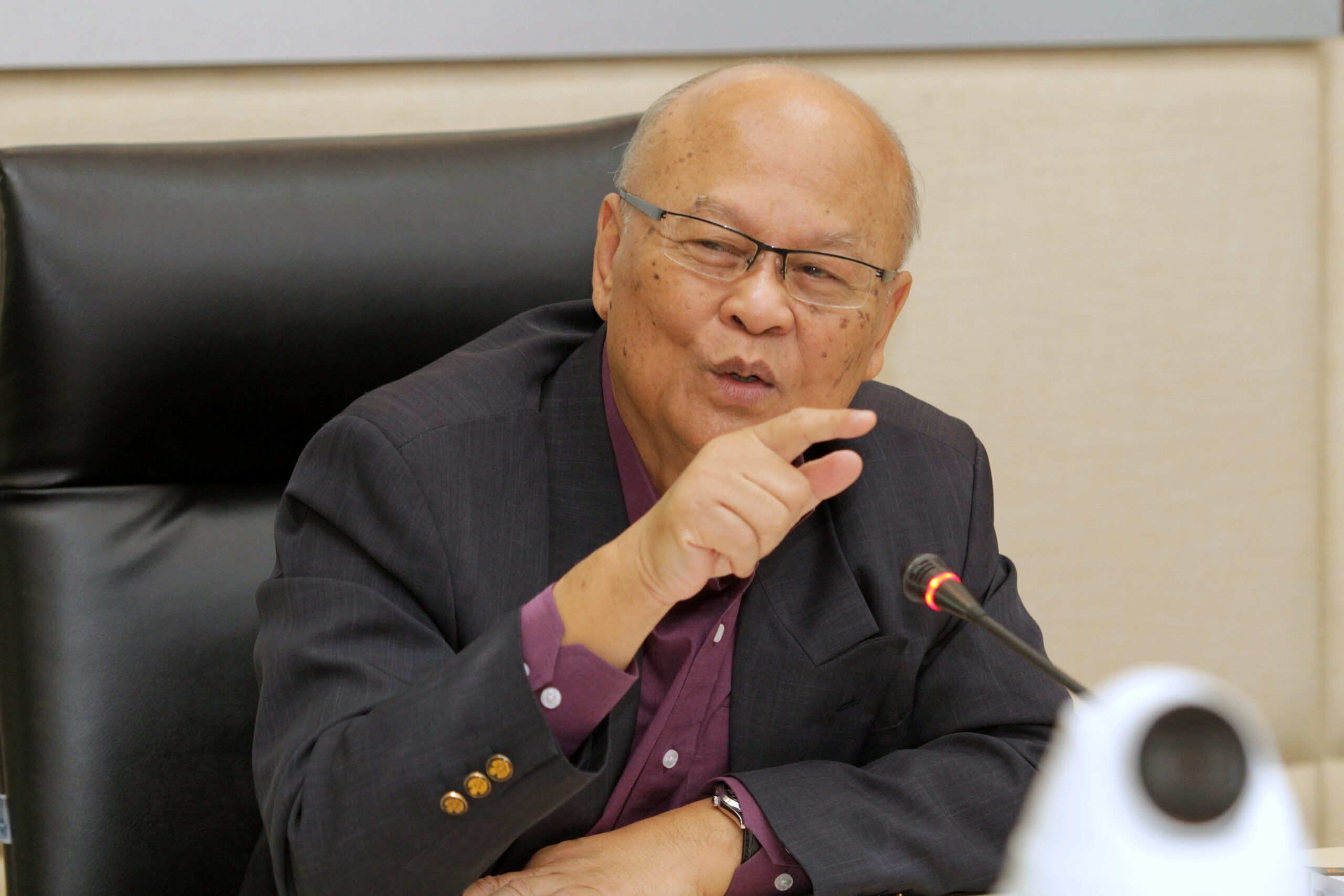
For Iban writer and researcher, Janang Ensiring, Malaysia Day is not just about political milestones – it is also about safeguarding the cultural and linguistic heritage of indigenous communities, which form an essential part of the Malaysian story, particular in Sarawak.
Here, the story of the 76-year-old is not just about one man’s struggle and achievement. It is also a mirror of Malaysia’s journey – the challenges of starting from little, the determination to progress and the ongoing effort to hold diverse communities together.
As Malaysia celebrates Malaysia Day, his reflections offer a reminder that true unity cannot be achieved without valuing every voice, including those of indigenous communities whose languages, stories and traditions form the foundation of the country’s shared identity.
“We must keep learning, reading and writing. That is how we preserve our culture, our language and our unity,” he told Sarawak Tribune in an interview recently.
And in that effort, Malaysia’s nation-building continues – not just through policies and politics, but through words, culture and the enduring voices of its people.
A journey rooted in struggle
Born in a small village in Saratok, Janang’s personal journey reflects the resilience and perseverance often associated with Malaysia’s own nation-building story.
His education, he recalls, “came in a very hard way”.
Illness disrupted his schooling, forcing him to abandon formal studies after attending Form 3.
Yet, refusing to give up, he pursued private study, passed the qualifying test, and eventually sat for the Senior Cambridge examination, achieving Division Two, and soon after passed the Higher School Certificate examination – a remarkable feat for a private candidate.
“I told myself then, if others can do it, I must also try. That spirit has carried me throughout my life,” he said.
His determination took him far beyond the banks of the Krian River and the shores of Sarawak.

“I started as a teacher, then became a headmaster, secondary school principal, and later as a district education officer in several areas across Sarawak.
“My career eventually took me to Kuala Lumpur, where I became the first educational television producer at Angkasapuri.
“I once produced ETV programmes that were broadcast to Sabah. That was the beginning of educational television in Malaysia,” he said.
After several years, he was awarded a full-pledged sponsorship scholarship by the Tun Jugah Foundation to further his studies in the United States, at Asbury University in Kentucky and Indiana University at Bloomington in Indiana, specialising in linguistic and human resource management.
Upon returning to Malaysia, Janang chose not to continue in education administration but instead to serve the Tun Jugah Foundation.
“That’s where my true work began – researching, preserving and promoting Iban language and culture,” he said.
A life dedicated to words
Janang’s legacy is most strongly defined by his writing. Over the decades, he has authored or edited between 20 and 30 books, spanning novels, poetry, dictionaries, translations and cultural studies.
He writes in Iban, Malay and English, bridging worlds through language.

“When I first started writing, I was only in Form 2. My first manuscript was titled ‘Mabung Remaung Panggau’ in 1964, earned third place in a competition organised by the Borneo Literature Bureau. That was my starting point,” he said.
Since then, his work has spanned traditional Iban oral forms such as ensera (folktales), jaku tuai (classical narratives), and dindang (pantun), alongside novels, poems, essays and translations.
He has also contributed to the compilation of a monolingual dictionary called ‘Bup Sereba Reti Jaku Iban’, and a bilingual dictionary titled ‘A Comprehensive Iban/English dictionary’.
His formal training in lexicography was earned from Melbourne University in Australia.
Currently he serves as chief editor of the bilingual journal Ngingit, which has produced nearly 20 editions.
In addition, he has translated important literary works from Dewan Bahasa dan Pustaka (DBP) into the Iban language.
“I am proud to have contributed towards enriching the Iban language heritage.
“But I am still not fully satisfied, as there has yet to be a work that truly makes a profound impact on society,” he said.
He referred to ‘Uncle Tom’s Cabin‘ by Harriet Beecher Stowe as an example, a work that once sparked the American Civil War in the United States.
“I want Iban literature to also inspire and raise awareness in that way, but so far, there has not been one,” he said.
A need for more Iban writers
Yet for all his accomplishments, Janang is concerned about the lack of Iban writers today.
“We Iban still lack Iban writers. If you look at material written in Iban today, it is very limited,” he said.
He observed that while a few younger Iban writers have found recognition in Bahasa Malaysia – winning short story competitions, but very few produce books in Iban itself.
Genres such as stage drama or contemporary poetry in Iban are almost absent, he added.
“Nobody is writing stage dramas in Iban anymore. Even poetry and short stories are scarce. That is why I keep writing, even though I don’t know if people like it. At least the works exist,” he said.
Part of the problem, he observed, lies in the reading culture.
For Janang, the issue is not just cultural but existential. Without writers and readers in Iban, the language risks being sidelined, and may consequently become moribund in due course.
“The younger generation’s command of Iban is weak. This is a challenge. That’s why I keep urging, don’t be lazy to read, and don’t be afraid to write in our own language,” he said.
Writing as nation-building
To Janang, writing is not merely about expression – it is about shaping minds, preserving identities, and inspiring change.
“I want my books to mean something, to inspire people, not just to entertain. But I still fail to produce that kind of book,” he admitted humbly. Still, I try,” he said.

This conviction underpins his work with the Tun Jugah Foundation, which focuses on culture and language preservation.
Through books, journals, translations, and dictionaries, Janang and his colleagues ensure that the Iban voice remains part of Malaysia’s cultural landscape.
Over the decades, Janang’s works and contributions to Iban literature and culture have been widely recognised through numerous awards and honours.
He had later clinched first place for his novels namely ‘Emperan Assam Panas’ in 1976 and ‘Tanang Belimpah’ in 1977.
Janang’s writings continued to garner recognition well into later years. His short story ‘Korban Pulau Cherindak’ received a consolation prize in 2013 from DBP Sarawak, while his talent in essay writing was proven when he won first place in the Iban category of the essay writing competition organised by the Sarawak Information Department in 1995.
More recently, in 2024, he won third place in DBP Sarawak’s writing/retelling Sarawak folktales competition.
At the state level, Janang is a two-time recipient of the Sarawak Writer’s Award in the Iban language category, first in 1993 and again in 2021.
His lifelong dedication was further honoured when he was conferred the Pingat Kebesaran Negeri Sarawak (PBS) by the then Head of Sarawak, Tun Pehin Sri Abdul Taib Mahmud, on April 10, 2019.
A Malaysia Day message: Unity without segregation
Asked for his Malaysia Day message, Janang’s wish is that the people in the country should keep united all the time.
“No segregation here and there. No quarrelling here and there,” he said.
He expressed concern that even after six decades of independence, Malaysians still struggle with petty issues.
“We are a multiracial country, so everybody must act in a multiracial manner. If not, we cannot be truly united,” he said.
For him, Malaysia Day is not only a political commemoration but also a call to action: to live together with respect, to embrace diversity as strength and to move beyond old divisions.
A hope for the Iban community
While Janang’s message for Malaysia is unity, his advice for the Iban community is one of self-reflection.
He worries about the disintegration of longhouses, once the heart of Iban social life, into smaller, divided units.
“Jealousy and lack of trust among the community leaders is still ‘very thick’ among the Iban community and this can weaken their collective strength,” he said.
Janang also points to education as a critical issue, while saying: “The children of the Iban community are not like the children of the Chinese community, who are pushed to study hard. This is holding us back.”
Despite these concerns, his hope remains strong that through reading, writing, and a commitment to preserving culture, the Iban community can grow stronger and contribute meaningfully to the nation.