MALAYSIA’S engagement under the Agreement on Reciprocal Trade (ART) with the United States (US) aims to safeguard key exports and strategic sectors amid global trade uncertainties.
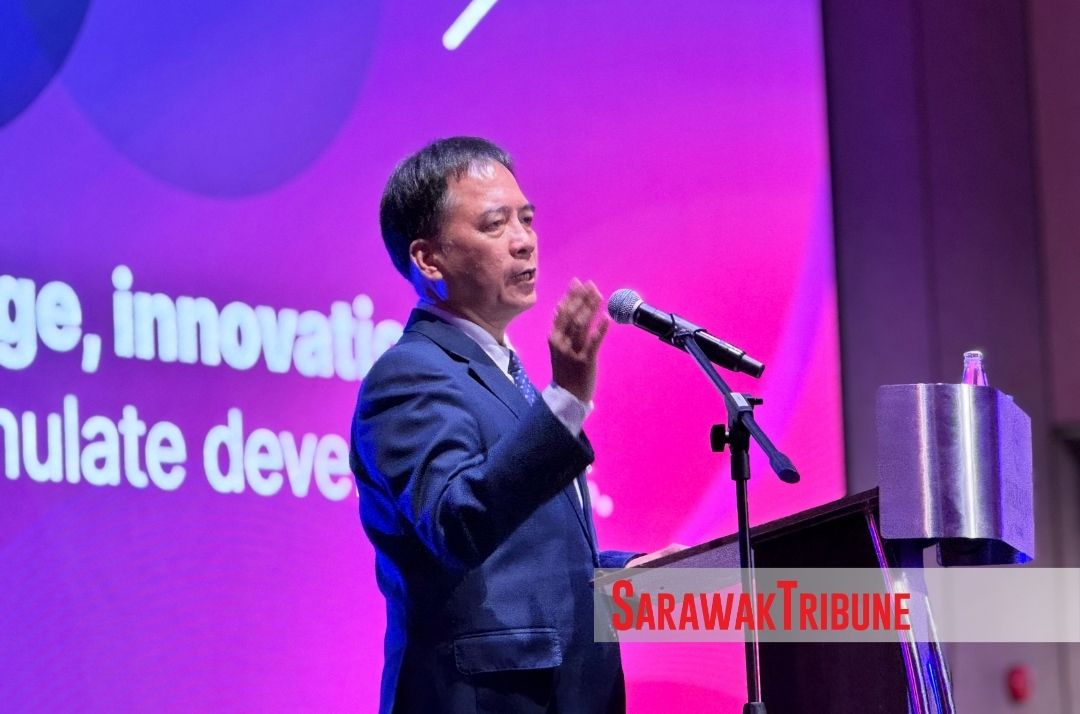
The issue was discussed at the ‘Navigating Trade Uncertainty: Malaysia’s Response to Global Tariff Policies and Geopolitical Conflicts’ forum, held during the Sarawak Budget Conference 2026 at the Borneo Convention Centre Kuching (BCCK) today.
Deputy Secretary-General of Trade at the Ministry of Investment, Trade and Industry (MITI), Datuk Mastura Ahmad Mustafa, said the government had to act decisively following the imposition of a 24 per cent reciprocal tariff by the US on countries with which it recorded a trade deficit.
“It totally encroached into our interests and our rights. I told my minister I could not do this,” she said, referring to the initial US proposal.
Mastura stressed that failure to engage the US could have placed thousands of industries at risk, including local SMEs, with almost one million jobs potentially affected.
“We have three choices. One is to retain it. Second, to do nothing. And third, to engage the US. Retaliation is not an option for Malaysia,” she said.
She noted that Malaysia’s tariff rate was moderate compared to other countries, but warned that losing competitiveness was a real risk if other nations successfully negotiated lower rates with the U.S.
“If Indonesia, Vietnam or Japan succeeds in negotiating lower tariffs, then whatever advantage Malaysia has will disappear,” she added.
The government’s negotiations, she said, spanned five months, aiming to ensure Malaysian sovereignty, economic interests, and international trade relationships were not compromised.
The effort resulted in exemptions covering 1,711 tariff lines, including semiconductors, the country’s largest export to the US, which are currently under investigation separately.
Non-resident Senior Fellow of the Malaysian Institute of Economic Research (MIER), Azizul Amiluddin, highlighted Malaysia’s resilient export performance despite global disruptions.
“Electrical and electronics exports have grown by about 25 per cent this year, with markets like Vietnam and Mexico seeing strong demand,” he said, noting that Malaysia’s position in global supply chains had allowed it to capitalise on shifting market dynamics.
Associate Professor of Practice at the University of Nottingham Malaysia, Dr Tricia Yeoh, said the ART, while sometimes seen as lopsided, was essential to mitigate losses.
“If you decide to do nothing, your tariffs would remain at 24 per cent and you would not get the exemptions we successfully negotiated,” she said.
She added that engagement under ART was also an opportunity for Malaysia and Sarawak to enhance regional leadership, improve regulatory consistency, and strengthen credibility in the global market.