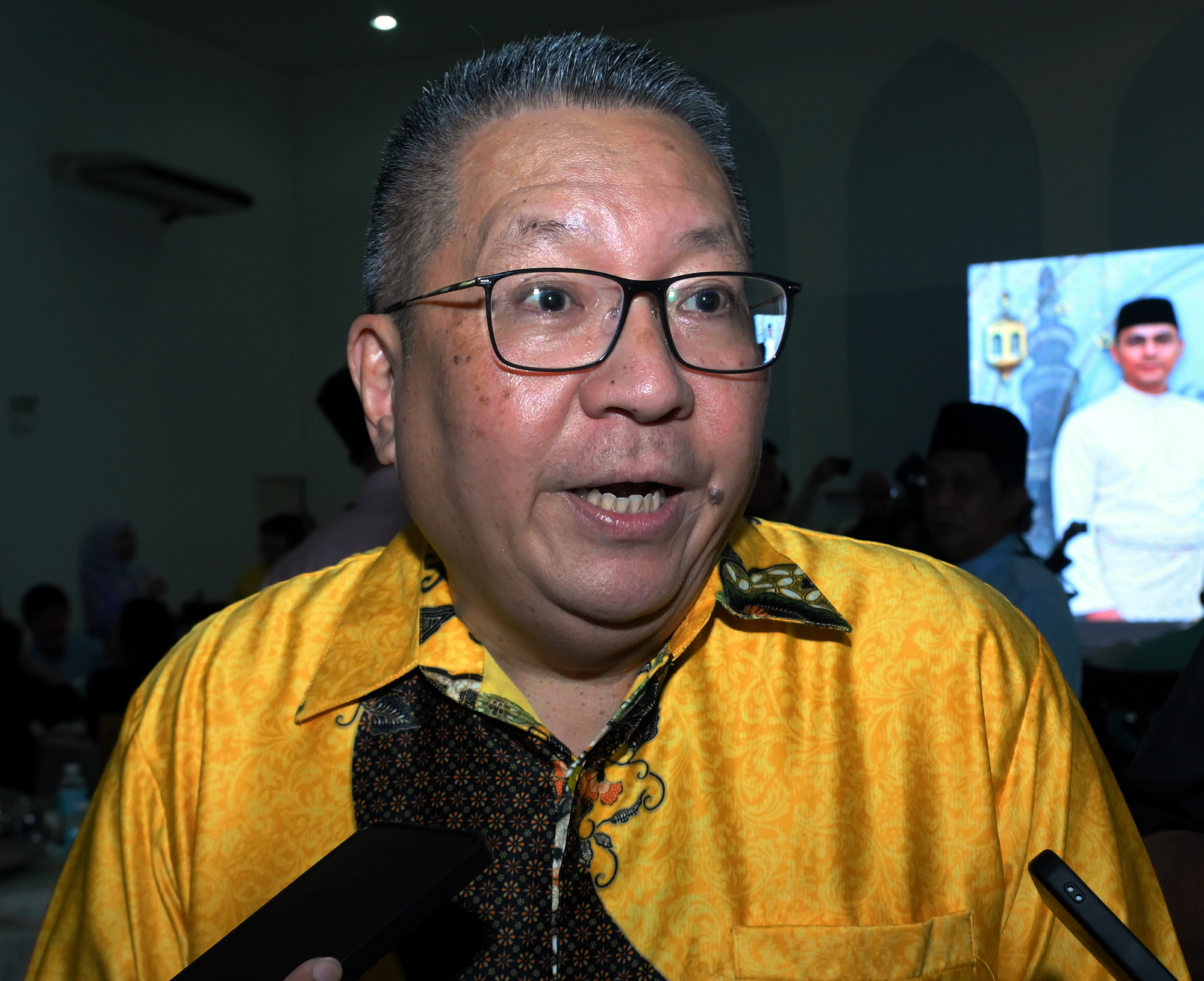
KUCHING: Malaysia is not at risk of facing “water bankruptcy” as feared globally, as the country still has sufficient raw water resources, says Deputy Prime Minister Datuk Amar Fadillah Yusof.
In a statement today (Mar 24), he said the real challenge lies in improving integrated water resource management, protecting river basin areas and enhancing the efficiency of the nation’s water delivery systems.
According to him, Malaysia receives an average annual rainfall of over 2,500mm, with renewable water resources estimated at more than 580 billion cubic metres per year, indicating that the country is not facing a physical shortage of water.
“The main issue is not water scarcity, but how we manage, protect and optimise these resources strategically to ensure long-term water security, adaptability and sustainability,” he said.
The statement was issued in response to a report highlighting concerns over global “water bankruptcy”, which also touched on water quality issues due to pollution.
Fadillah, who is also Minister of Energy Transition and Water Transformation, noted that among key concerns requiring attention are diversified water storage management, encroachment into catchment areas, river pollution and the lack of integration among alternative water sources such as groundwater, off-river storage, recycled water, rainwater harvesting and desalination.
He said active dam storage capacity can generally sustain water supply for up to 90 days, while the national Non-Revenue Water (NRW) rate remains high at about 34.3 per cent—equivalent to roughly 6,000 million litres of treated water lost daily.
“This translates to an estimated loss of nearly RM2 billion annually. If NRW can be reduced to 25 per cent, the country could save approximately 2,000 million litres of water per day without the need to build new treatment plants,” he added.
Fadillah also highlighted that national water demand is expected to rise from about 19,372 million litres per day in 2025 to over 25,000 million litres per day by 2030, necessitating more strategic planning for new water sources.
Out of 2,986 river basins nationwide, about 30 per cent of major basins are facing moderate to severe pollution pressure due to industrial discharge and uncontrolled land use, which could affect water treatment plant operations.
He added that current water tariffs for some operators are only sufficient to cover operational costs, underscoring the need to accelerate the implementation of Integrated Water Resources Management (IWRM) across major river basins.
Among the measures proposed are strengthening water storage strategies through the construction of off-river reservoirs, enhancing dam capacity and functions, systematic mapping of groundwater resources and intensifying research into advanced and competitive water management technologies.
He also stressed the need to expand the use of digital technology and artificial intelligence, including the development of a national water sector digital hub to be launched this year, with plans for regional expansion by 2040.
Additionally, new financing approaches such as public-private partnerships and performance-based funding should be expanded to accelerate NRW reduction projects and the development of alternative water sources.
Fadillah said continuous public awareness programmes are also crucial, noting that domestic water usage in Malaysia remains at around 225 litres per person daily, compared to the World Health Organisation’s sustainable target of 165 litres.
“Malaysia is not a country that will face water bankruptcy. However, without comprehensive and integrated reforms in water resource management, supply pressures may emerge in certain areas by 2030,” he said.
He added that under the AIR 2040 framework, aligned with the Malaysia MADANI aspirations, the country has the potential not only to secure its water future but also to emerge as a regional hub of excellence in the water sector by 2040.