BY AMMAR MIRZA ABDUL TAIP
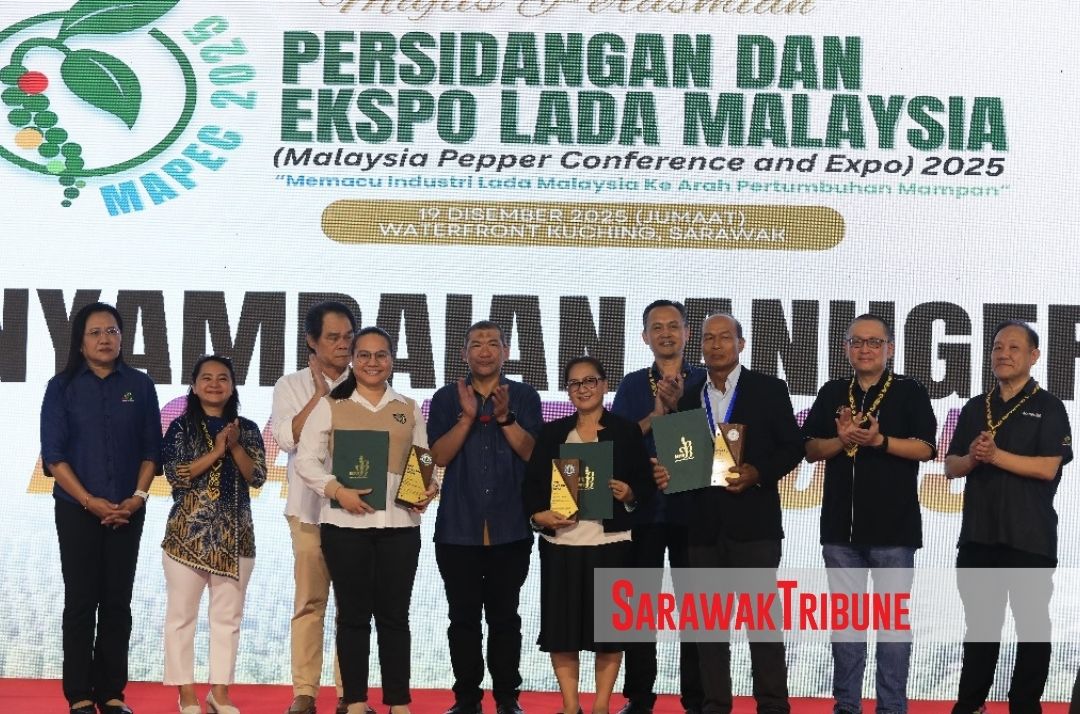
KUCHING: The signing of two Memorandums of Understanding (MOUs) between the Malaysian Pepper Board (MPB) and World Wide Fund for Nature, Malaysia (WWF-Malaysia) aims to strengthen cooperation in advancing sustainable pepper farming at Ulu Sungai Menyang, Batang Ai and Ulu Katibas, Song.
WWF-Malaysia’s Conservation Director, Dr Henry Chan, said the MOUs, that take effect for three years starting today, aimed to encourage responsible and sustainable practices of pepper farming while actively contributing to the conservation of the land, forests and rivers.
“The project at Ulu Sungai Menyang, Batang Ai, Lubok Antu involves a formal partnership with the Ulu Ai Conservancy (UAC), MPB and WWF-Malaysia to build the capacity of 32 existing and 26 new pepper farmers from villages across six Iban longhouse communities.
“The six longhouse communities involved in the project are in Nanga Jambu, Nanga Sumpa, Nanga Delok, Pala Taong, Menyang Sedi and Menyang Taih, with the focus on pesticide-free pepper farming while supporting local livelihoods.
“Ulu Sungai Menyang has its own unique charm as it is home to the Bornean orangutan subspecies, Pongo pygmaeus pygmaeus, that is outside totally protected areas,” he said in a statement released today.
Meanwhile, at Ulu Katibas, Song, there was a formal partnership between MPB and WWF-Malaysia in 2022, which benefitted 22 pepper farmers from two Iban longhouse communities, namely, from Rumah Dagum, Nanga Makut and Rumah Peter, Nanga Nging.
“The new initiative aims to significantly improve the livelihoods of the communities by employing a three-pronged approach, mainly focusing on adoption of sustainable practices to enhance pepper farm productivity, strengthening market access for high-quality pepper and providing comprehensive capacity-building and technical training.
“In addition, the initiative will also explore opportunities for eco-certification, especially Malaysian Good Agricultural Practices (MyGAP), improved market access and adding value for sustainably produced pepper,” he added.
Commenting on the importance of pepper industry to Sarawak, Chan said that pepper farming was a heritage of Sarawak and Sarawak pepper had maintained its status as one of the top 10 best peppers in the world.
“It is farmed by Sarawakians in their family farms amidst forests with functioning ecosystems, thus reflecting the balance between human welfare, conservation of nature and economic benefits,” he said.
Meanwhile, MPB Director-General, Vincent Sawat, said the initiative was important in improving rural livelihoods through sustainable farming that was designed to equip farmers with the skills needed to sustainably grow their pepper crops, increase yield and boost their incomes.
“MPB recognises the importance of sustainable pepper farming in improving rural livelihoods as it has been a vital part of the economic activities for indigenous communities in Sarawak’,” he added.
Director of UAC and Borneo Adventure, Emong Tinsang then said that the main goal of Borneo Adventure and UAC since the beginning had always been to improve local livelihoods by providing farmers with knowledge to improve their pepper farming techniques through the project for the benefit of the community, conservation and business.
The exchange ceremony for the MOUs took place during the Malaysia Pepper Conference and Expo 2025(MAPEC 2025) at Kuching Waterfront in the presence of Deputy Chief Secretary (Plantation and Commodity), Datuk Razali Mohamad and chairman of MPB, Datuk Anyi Ngau.
The parties were formally represented by Henry, Vincent and Emong, while others present as witness from each organisation were WWF-Malaysia head of conservation, Sarawak, Cynthia Chin, MPB deputy director general (development), Florence Sanjan and UAC project coordinator, Sigar Malang.