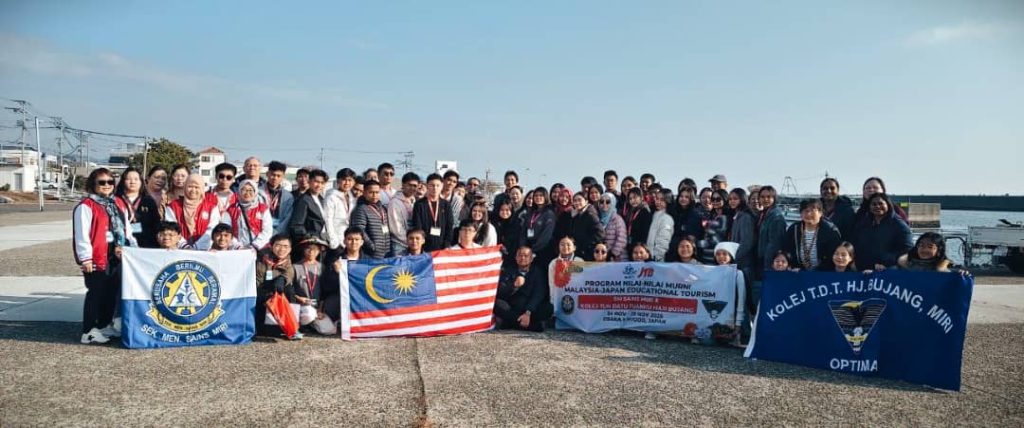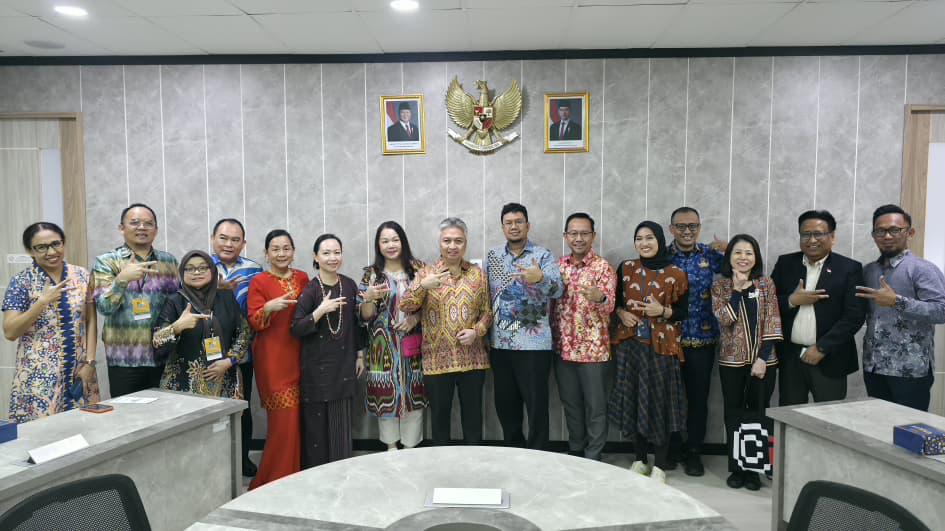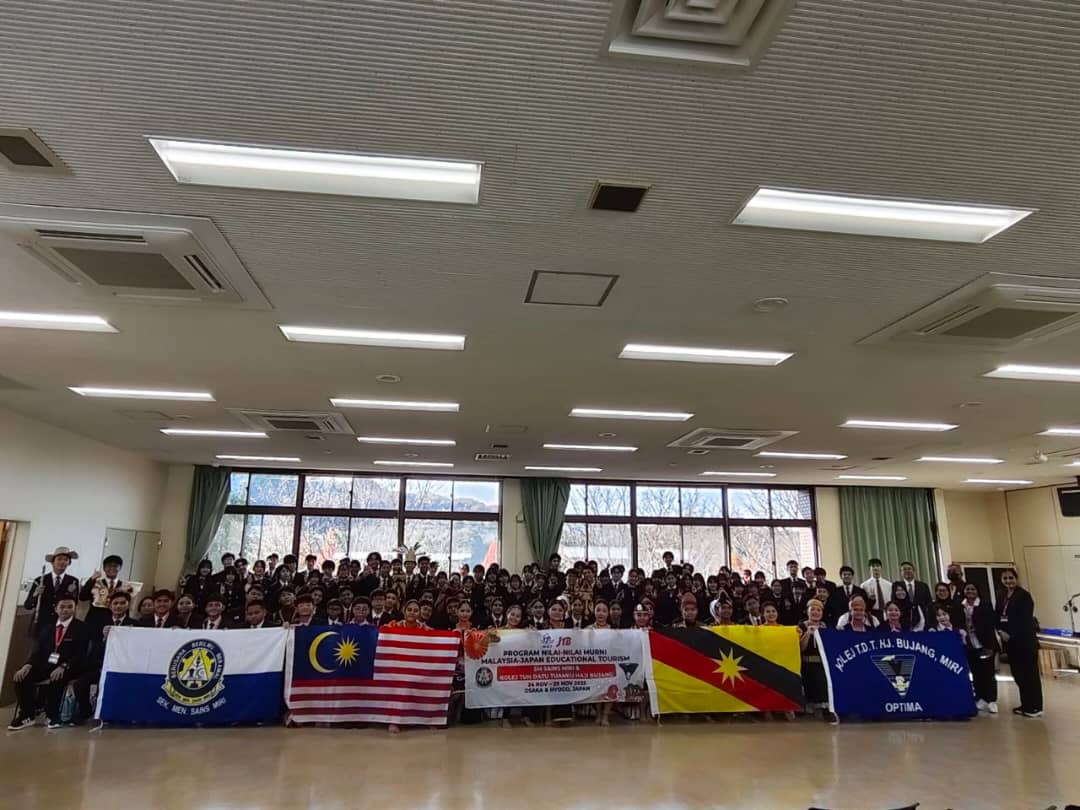
MIRI: A 64-member Malaysian delegation has wrapped up a high-impact educational mission to Osaka and Hyogo, giving students from Kolej Tun Datu Tuanku Haji (TDTH) Bujang Miri and SM Sains Miri rare exposure to Japan’s education system, culture, history and technological strengths.
The visit, held from November 24 to 29 under the Malaysia-Japan Educational Tourism Programme, carries formal endorsement from the Ministry of Education, signalling its strategic importance for cross-border learning.
The group comprised 47 students aged 13 and above, eight teachers, seven parents, and two Japan Travel Bureau (JTB ) trainers.
The programme was coordinated by Mani Arasi of Kolej TDTH Bujang Miri and joined by the principals of both participating schools, Jumari Hashim and Puan Dayang Laila Kahar.
The initiative was designed to deepen understanding of Japan’s schooling culture, economic landscape, and societal values while strengthening ties between Malaysian and Japanese institutions.
Students were pushed to step up, lead and present in both Japanese and English, reinforcing communication skills and building confidence in a real-world international setting.
The itinerary combined academic exposure with immersive cultural engagement.
A visit to Himeji Castle gave students a clear window into Japan’s historical narrative and architectural legacy.
At the University of Hyogo’s High School and Junior High School, Malaysian students presented an overview of their schools, highlighted Sarawak’s cultural diversity, and delivered dance and cultural performances.
Teachers from both sides agreed that the exchange created a productive platform for future collaboration.
The homestay in Awajishima proved a defining moment. Students lived with Japanese foster families, experiencing daily routines, social norms and traditions first-hand.
For many, the experience offered a deeper understanding of Japanese courtesy, discipline and community cohesion than any classroom lesson could provide.
The delegation also visited the Hokudanshinsai Earthquake Memorial Park, where students learned about Japan’s approach to disaster preparedness and the technologies that underpin the country’s resilience.
The session reinforced how innovation and long-term planning shape modern Japanese society.
Teachers reported a marked boost in students’ confidence, maturity and adaptability.
Many students who had never spoken Japanese publicly took on leadership roles during presentations, surprising even themselves with their progress.
As the group returned to Sarawak, school leaders noted that the programme has opened new channels for cooperation with Japanese partners.
Plans for continued exchanges, virtual engagements and joint cultural initiatives are already under discussion.
For the students, the experience offered more than a study tour.
It delivered a first-hand look at how discipline, innovation and respect for community remain central to Japan’s identity, leaving a lasting impression that many say will shape their outlook long after the trip.