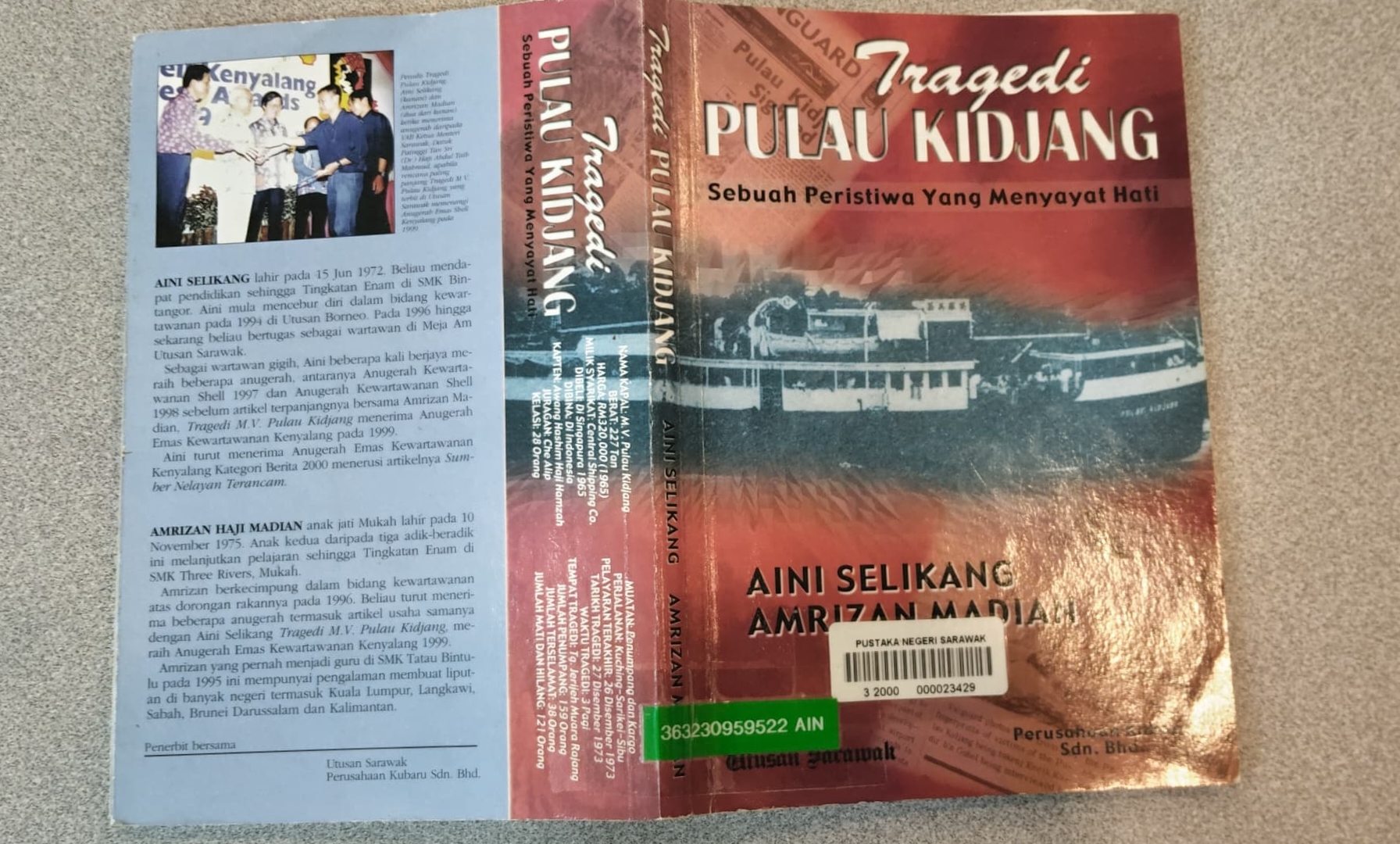
More than five decades after it claimed 121 lives, the sinking of M.V. Pulau Kidjang remains one of Malaysia’s deadliest yet least remembered maritime disasters. Through survivor accounts and newly documented testimonies, this feature revisits the tragedy often described as Malaysia’s Titanic — and the lessons it still carries today.
Lost at Sea, Forgotten on Land
When I was first assigned to write about the Pulau Kidjang Tragedy, the immediate question that crossed my mind was a simple one: what exactly is Pulau Kidjang?
Was it a remote island somewhere off the waters of Sarawak?
It is a question many — especially younger readers — might also ask, having never heard the name before. The answer, however, lies not on a map, but in history.
The truth is revealed in the 173-page book Tragedi Pulau Kidjang: Sebuah Peristiwa Yang Menyayat Hati by Aini Selikang and Amrizan Haji Madian. Pulau Kidjang was not an island at all, but the name of a passenger and cargo vessel — M.V. Pulau Kidjang — once the lifeline of river transport in Sarawak.
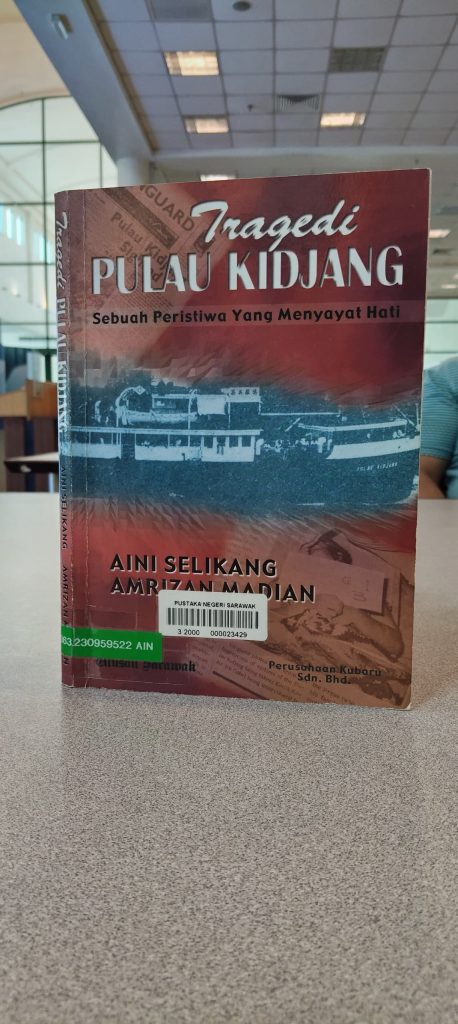
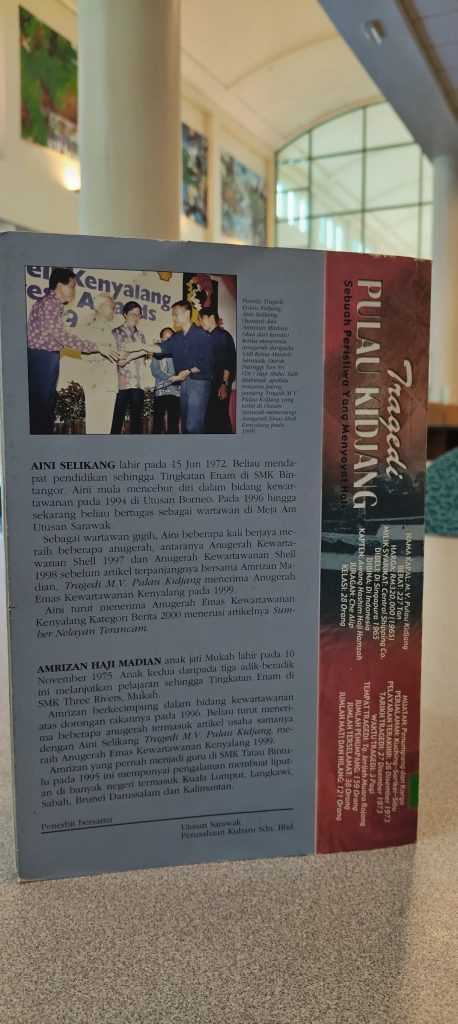
Weighing 227 tonnes and capable of carrying around 150 passengers at a time, the vessel served for nearly nine years, connecting vital routes between Kuching, Sarikei and Sibu, long before proper road networks existed. For riverside communities, the ship was more than transport; it symbolised hope, family reunions and survival.
Everything changed in the early hours of 27 December 1973, just two days after Christmas.
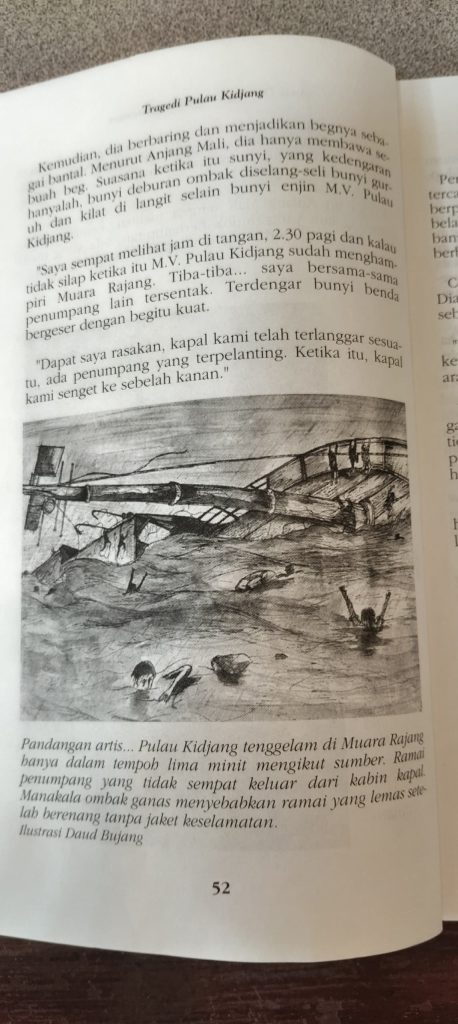
At around 3am, amid darkness, torrential rain, violent storms and towering waves at the Rajang estuary, M.V. Pulau Kidjang sank. Of the 159 passengers on board, 121 lost their lives.
More than five decades later, the tragedy — which claimed so many lives — has largely faded from public memory, as though it sank together with the wreck at the bottom of Malaysia’s longest river. Few remember this dark chapter of history, earning it the haunting title of “Malaysia’s Titanic.”
The sinking is believed to have been caused by extreme weather during the monsoon season. In chaos and pitch darkness, passengers fought for their lives with little access to proper safety equipment. Only 41 bodies were recovered; the rest were lost forever to the river, leaving families without graves to mourn.
Just 38 people survived, including crew members, each carrying memories of terror that would remain with them for life.
Among the most poignant stories is that of Hazemi Endon, who was just 10 years old at the time. Known today as Abang Mojol among residents of Kampung Pulo, Kuching, Hazemi was the youngest and only child survivor of the disaster. As anxious crowds waited for news in Sarikei, he became known simply as “The Small Boy.”
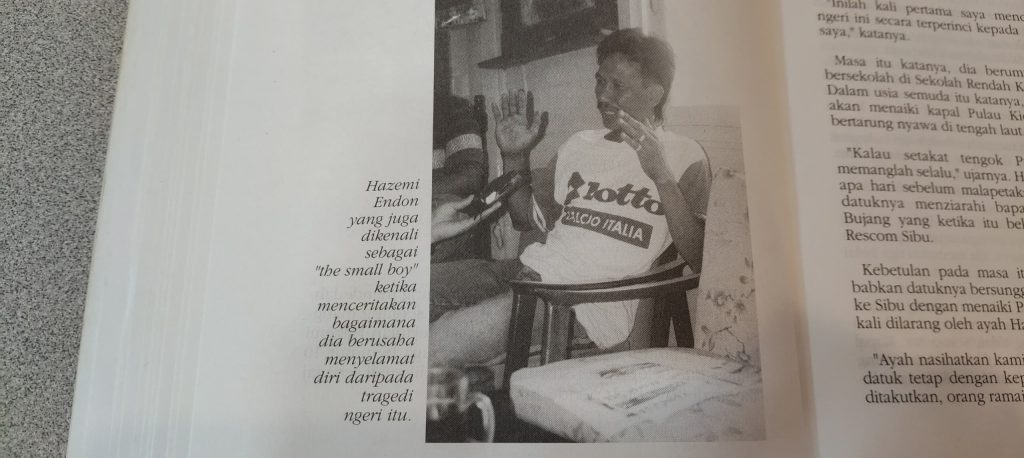
Now believed to be around 62 years old, efforts to locate him revealed that he is currently receiving treatment at the Heart Hospital.
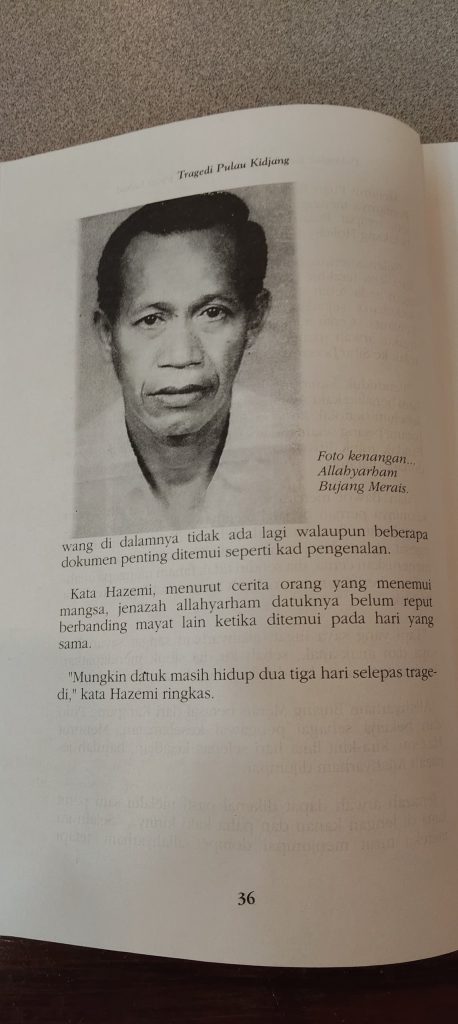
According to the book, Hazemi had boarded the vessel with his grandfather, the late Bujang Merais, intending to visit an uncle serving as a soldier at the Rescom Camp in Sibu. What was meant to be a simple journey turned into a desperate fight between life and death. Hazemi survived by clinging to a large buoy, battered by relentless waves.
The tragedy shaped his understanding of the importance of safety measures in river transport — small boats, life jackets and preparedness — lessons learned at a devastating cost.
His survival, however, came with deep loss. Bujang Merais did not make it home.
His wife, Bawoi Siling, only learned of the tragedy a week later. Upon hearing of her husband’s death, she nearly collapsed, her tears flowing endlessly as she struggled to accept the fate written for her. Her grief mirrored that of hundreds of other families who lost loved ones without even a body to bury.
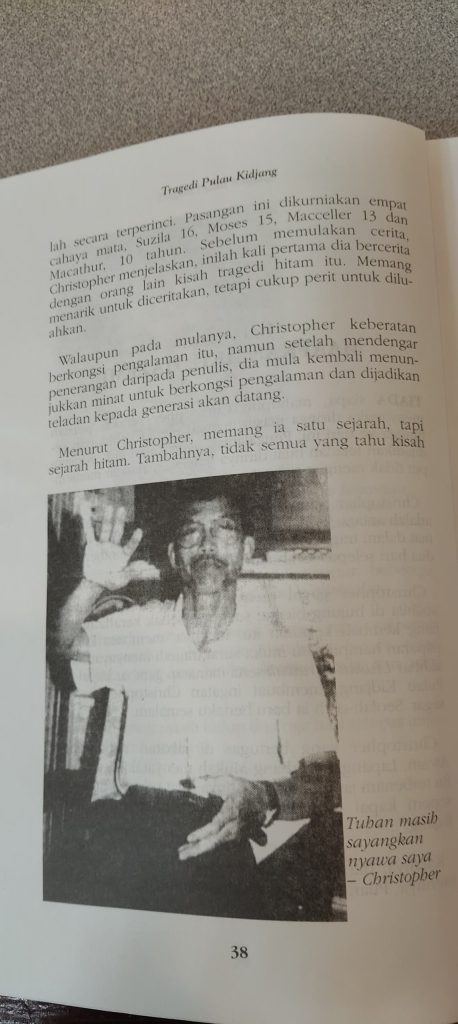
Another survivor, Christopher, was 24 years old at the time and working with the Public Information Department at Mukah Airport. He had boarded the ship to celebrate Christmas with his brother in Kuching, unaware it would be the vessel’s final voyage.
As panic erupted, Christopher jumped into the sea, sinking several metres before resurfacing. Disoriented and surrounded by lightning and heavy rain, he swam aimlessly until finding a buoy carrying other survivors. In the confusion, he once kicked a child in shock — only to later realise it was Hazemi, whom he then saved. The moment, he said, continues to haunt him.
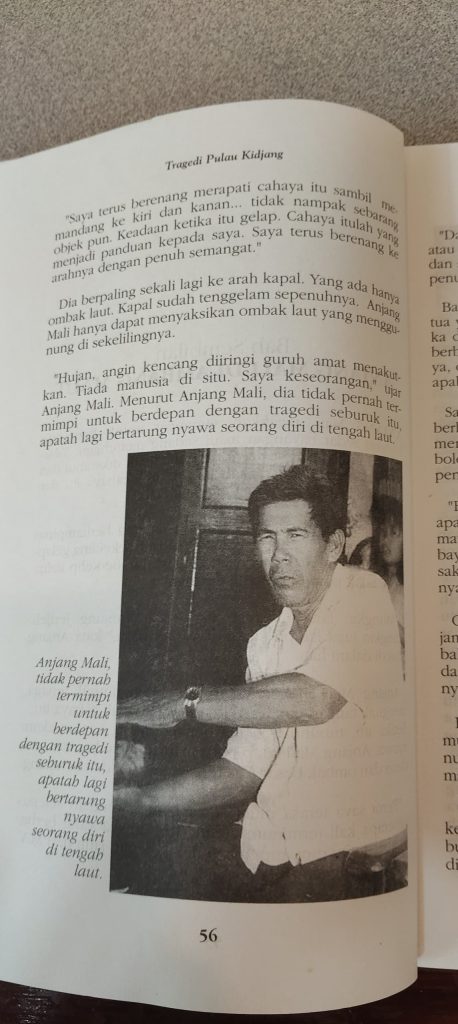
The book also recounts the extraordinary endurance of Anjang Mali, also known as Marali Lambak, from Saribas. A husband and father, he swam for nearly three hours, battling pain, fear and exhaustion, guided only by the lighthouse glow and low-flying birds that seemed to point the way.
His wife, Masnah Kerni, endured agonising uncertainty before learning that her husband had survived and returned home.
Equally harrowing are the accounts of security personnel and volunteers involved in the search and rescue operations. Former police sergeant Awangku Basar Pengiran Sulaiman recalled the painful duty of informing families of deaths, as thousands gathered at Sarikei Police Station during the nearly two-week-long search.
The final victim found was Cathrine Chia, a nurse discovered by divers inside the ship’s cabin.
Former Fourth Ranger Saidol described the horror of retrieving decomposed and shattered bodies using large nets, airlifted by helicopter to Sarikei’s Central Field. The stench of death clung to clothing; the sound of breaking bones and damaged bodies left scars that never healed.
Village head Haji Embong Jamal of Kampung Selalang also shared his experience, joining the efforts out of humanity, even as he feared for the life of his own child.
Today, the Rajang estuary has changed. Sand has buried much of Pulau Kidjang, while the sunken wreck has altered the river’s structure, forming sandbanks that narrow navigation routes. Yet more tragically, the memory of the disaster has faded with time.
Tragedi Pulau Kidjang is more than a book — it is a written memorial to 121 lives lost. It stands as a reminder that progress means little if safety is neglected, and that human lives must always come first.
Like the Titanic, this is a story filled with lessons, tears and reflection.
Pulau Kidjang deserves to be remembered — not to reopen old wounds, but to ensure that history is not repeated, and that no life is ever treated as expendable again.