KUCHING: As the holy month settles in, households across the city are navigating a familiar balancing act between rising costs and the deeply rooted culture of generosity that defines this time of year.
For Dayang Nurazzah, 54, a marketing executive and mother, the daily question of whether to cook at home or head to the nearest Ramadan bazaar comes down to one simple factor which is time.
“If I have the time, I will cook at home. If not, then I will buy from the bazaar,” she said.
Yet for Dayang Nurazzah, the greater driver of her Ramadan expenses is not convenience – it is conviction.
She acknowledges that her household knowingly sets aside more money during this month and the reason goes well beyond feeding her own family.
“Sometimes we buy more quantities to get the reward of giving and sharing – to relatives, and to those in need,” she explained.
“We believe that the reward is not only returned in the form of money but in blessings, health and reward in the hereafter.”

Meanwhile for Abdul Taip, 62, councillor and father, Ramadan has taken on a quieter, more understated rhythm in recent years.
“Nowadays, with my children working away from home, it is just my wife and me. We have always had our meals at home, so Ramadan is no different in that regard,” he said.
Apart from that, Abdul Taip and his wife regularly have their iftar at the local masjid, a practice that has not only helped to reduce their daily expenses but also allows them to fully embrace the blessings of the holy month.
“Having iftar at the masjid means we spend less but we also gain so much more.
“By breaking fast there, we are able to perform ‘solat berjemaah’ straight after, and the reward of praying in congregation during Ramadan is something you would not want to miss,” he added.
For Rapiah Itli, 54, teacher and mother, Ramadan is less about managing expenses and more about the bonds that the holy month strengthens.
“We always cook for ourselves and sometimes share our food with our neighbours, especially during Ramadan,” she said.
Rising prices, she acknowledged, were a reality that no household could escape, but they are hardly a deterrent.
“The prices of items may increase year by year, but it does not stop us from sharing our blessings with one another,” she added.
The spirit of togetherness extends to her own family as well.
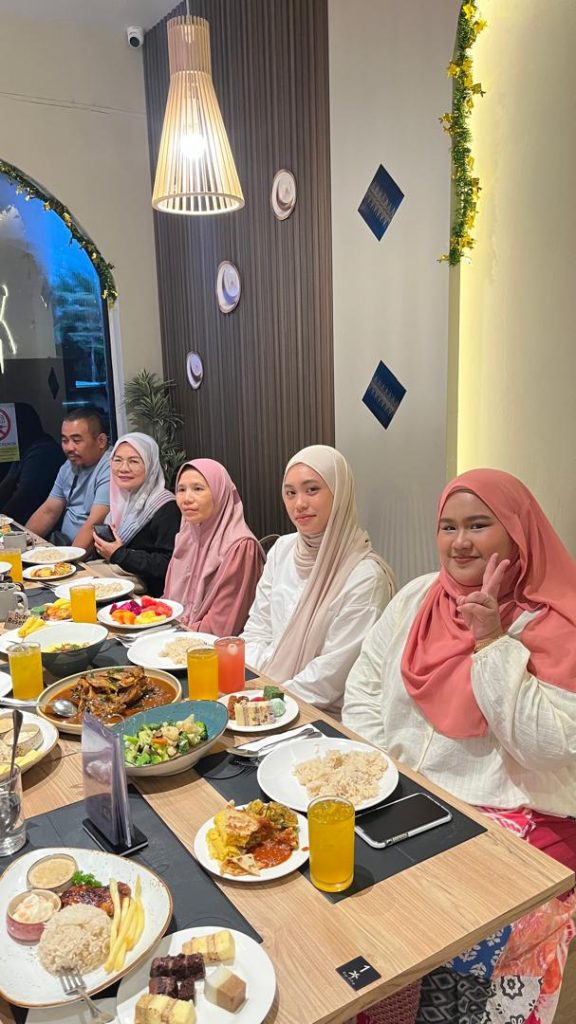
Beyond neighbourly gestures, Rapiah and her siblings make it a point to gather for iftar every so often throughout the month, using the occasion to reconnect and reaffirm the ties that bind them.
“Sometimes my siblings and I will hold an iftar gathering every now and then to celebrate each other and to keep the familial bond alive,” she said.