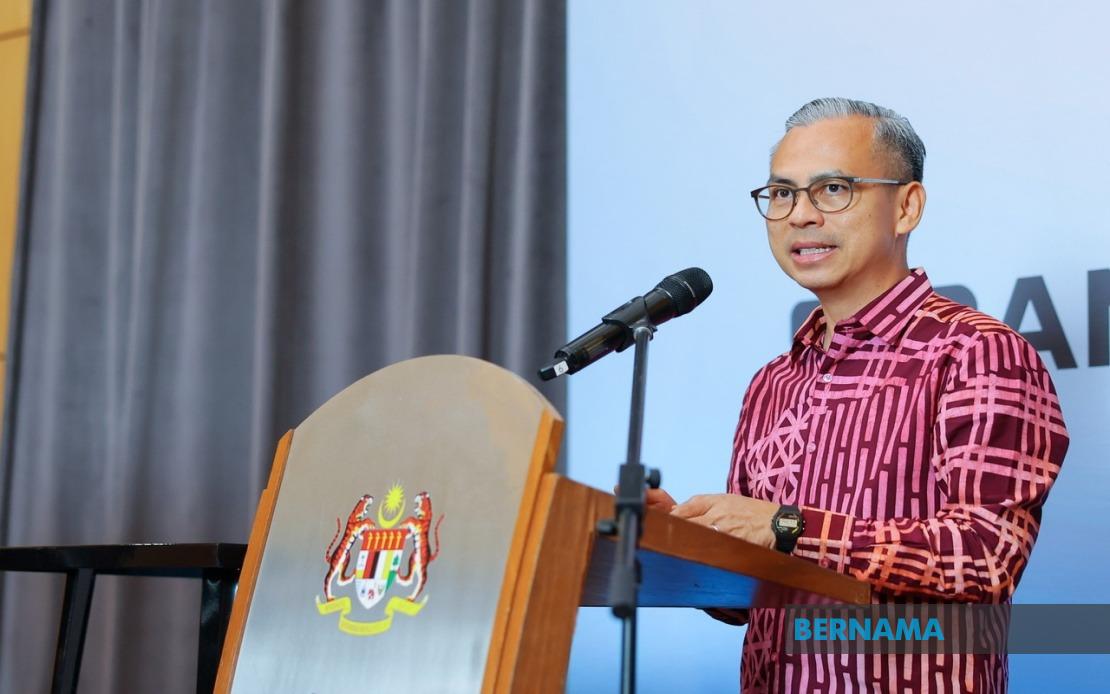
KUALA LUMPUR, July 2 (Bernama) — The government is finalising the regulatory framework under the Online Safety Act 2025 (Act 866), including a new set of regulations on private messaging features to clarify digital platforms’ obligations in tackling harmful content, Communications Minister Datuk Fahmi Fadzil said.
He said the Malaysian Communications and Multimedia Commission (MCMC) is conducting a public consultation on the Online Safety (Other Characteristics of Private Messaging Features) Regulations.
The consultation, which began on June 19, will run until July 20 before the regulations are finalised.
Ad Banner
Ad Banner
“These subsidiary legislation, codes and guidelines are intended to spell out the duties and obligations of licensed service providers under Act 866, while providing clear guidance on compliance with their statutory responsibilities.”
Fahmi said this in reply to Rodziah Ismail (PH-Ampang), who asked about the progress of subsidiary instruments under Act 866, including regulations, guidelines and implementation mechanisms, during the Minister’s Question Time in the Dewan Rakyat today.
Fahmi said the proposed regulations are among 10 subsidiary instruments comprising regulations, codes and guidelines that complement Act 866, four of which came into force alongside the Act on Jan 1 this year.
They are the Online Safety (Fees) Regulations 2025, the Online Safety (Form of Undertaking) Regulations 2025, the Online Safety (Online Safety Appeals Tribunal) Regulations 2025, and the Online Safety (Time Period) Regulations 2025.
“Two additional subsidiary regulations took effect yesterday, namely the Online Safety (Compounding of Offences) Regulations 2026 and the Online Safety (Online Safety Plan) Regulations 2026,” he said.
Fahmi stressed that the implementation of Act 866, together with its subsidiary regulations, codes and guidelines, would place greater responsibility on social media platforms to create a safer digital ecosystem by proactively detecting and removing harmful content.
He said online platforms should no longer rely on the MCMC to identify harmful content and request its removal, but instead deploy automated detection and enforcement systems.
“It is not the MCMC’s responsibility to deal with harmful content. That responsibility should lie with the platforms themselves,” he said.
Fahmi said that from Jan 1 to yesterday, the MCMC identified 345,712 items of harmful content and requested their removal from digital platforms, with each request taking between 30 and 45 minutes, as officers must prepare supporting documents and justify why the content is classified as harmful.
“Based on 345,712 requests at 30 minutes each, the MCMC has spent the equivalent of 19.7 years of working time filing requests to remove content believed to be harmful since Jan 1,” he noted.
The minister said about 91 per cent of the content flagged for removal involved online gambling and scam-related material repeatedly generated by criminals and promoted through digital platforms.
He added that the MCMC is exploring the use of agentic artificial intelligence (AI) to improve the efficiency of complaint management and reduce officers’ workload, while encouraging social media platforms to adopt AI to detect and remove content that breaches community guidelines more quickly.
— BERNAMA